It is regarded as one of the greatest British television series ever made, exploring the decline of the Labour party, sleaze, social decay, dodgy developers, injustice and how idealism can so easily turn to disillusionment and cynicism.Our Friends in the North will return this year in a new guise and will be just as relevant, its writer believes, as it was 30 years ago.“That’s not because I’m particularly prescient in any way,” Peter Flannery told the Guardian. “It’s because fuck all has changed. The world I wrote about has not changed, it is still as bent and corrupt today as it was then. No lessons have been learned.”Flannery’s series is being adapted for the stage in Newcastle, the home city of the four characters, played across four decades by the then far less well-known actors Daniel Craig, Christopher Eccleston, Gina McKee and Mark Strong.Live Theatre, one of the only theatres outside London dedicated to new writing, is co-producing an adaptation of the series that will be staged in October at Newcastle’s Theatre Royal.‘The world I wrote about has not changed,’ Peter Flannery said. Photograph: BBC/PAJack McNamara, Live’s artistic director and co-CEO, had the idea of a stage version and approached Flannery who he said was receptive, although in a “rightfully cautious” way. “He did not leap at it, but he was open to a conversation,” McNamara said. “I kind of attacked him with my enthusiasm.”Flannery said he had made clear he had no interest in writing anything exploring the later lives of Nicky, Mary, Tosker and Geordie. “I said I’m done with the characters, I don’t have any more to say.” He was also concerned about the show’s legacy. “I don’t want the audience thinking: why didn’t they quit while they were ahead?”McNamara said it was clear that squishing the whole series into an “epic Peter Brook-style production with four intervals” was not a good idea.Flannery said he had been impressed by McNamara’s passion, track record and the idea of adapting two of the later Thatcher-years episodes into one stage play. He admitted being “thrilled” at the prospect of the play being staged at such a magnificent theatre, with its incredible facade and Frank Matcham-designed auditorium.Our Friends in the North began as a stage play when Flannery was in his 20s and a writer-in-residence at the Royal Shakespeare Company. It took 15 years to get it on television – described by Flannery as a “monumental struggle” – and cost £8m, a huge amount for TV at the time. Its impact was immediate, with audiences gripped and critics calling it a classic straight away.“That’s the brilliant thing,” said Jacqui Kell, Live Theatre’s co-CEO. “We can bring it to a different age group because the themes are so current, younger people will be able to recognise them.”The series followed the characters from being teenagers to middle age and was included in the BFI’s list of the best British TV of the last century (topped by Fawlty Towers). The Guardian named it the third best TV drama ever (after The Sopranos and Brideshead Revisited).Flannery said he remained “astonished” and “grateful” that it was still held in high regard today.Jacqui Kell and Jack McNamara, co-CEOs of Live Theatre, are excited about bringing Our Friends in the North to a different age group. Photograph: Chris OrdMcNamara said the planned production was too big to put on Live’s small stage, hence co-producing with Marianne Locatori of the Theatre Royal and Jamie Eastlake of Eastlake Productions.Flannery said he was despondent about the future of the Labour party and believed the return of what he would see as an authentic Labour party was “still out of our grasp – in fact even further out of our grasp. People cannot remember what a socialist government was like.”McNamara, who was a child growing up in Switzerland when Our Friends in the North was first televised, sees the series through a more optimistic lens. “I found it weirdly reassuring how much they talk about the death of the parties. This is what happens today … it makes you realise people have been saying this for decades.“There’s so much political uncertainty at the moment but it’s not new. You can so often feel that we’re reaching ‘end times’ or it’s the worst it’s ever been, but they said that 30 and 50 years ago,” he said.“So there’s hope in that for me, I think. It’s been the worst it’s been before. There is always a way out.”
SRCThe Guardian - World News
LANGEN
LEANCenter-Left
WORDS745
ENT6
THU · 2026-02-26 · 07:00 GMTBRIEF NSR-2026-0226-19420
NSR-2026-0226-19420News Report·EN·Political Strategy
‘The world is still as bent and corrupt’: Our Friends in the North returns to the stage
The acclaimed British television series *Our Friends in the North* is being adapted for the stage and will premiere in October at Newcastle's Theatre Royal. Playwright Peter Flannery, who also wrote the original series, believes the themes of corruption and social decay explored in the show remain relevant today.
Mark Brown North of England correspondentThe Guardian - World NewsFiled 2026-02-26 · 07:00 GMTLean · Center-LeftRead · 3 min
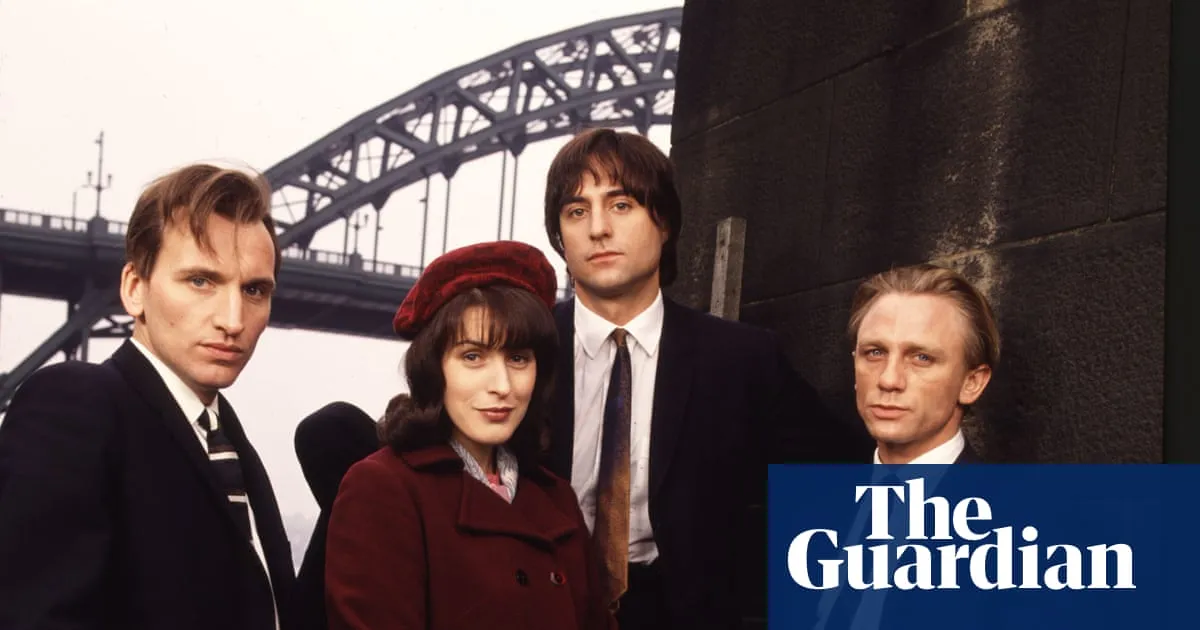
The Guardian - World NewsFIG 01
Reading time
3min
Word count
745words
Sources cited
3cited
Entities identified
6entities
Quality score
100%
§ 01
Briefing Summary
AI-generatedNEWSAR · AI
The acclaimed British television series *Our Friends in the North* is being adapted for the stage and will premiere in October at Newcastle's Theatre Royal. Playwright Peter Flannery, who also wrote the original series, believes the themes of corruption and social decay explored in the show remain relevant today. Live Theatre's artistic director Jack McNamara conceived the stage adaptation and approached Flannery, who agreed to the project focusing on two episodes from the Thatcher era. Flannery expressed no interest in revisiting the characters' later lives, but was impressed by McNamara's vision and the opportunity to stage the play in the historic theater. The original television series, which took 15 years to develop, followed four characters over four decades, played by actors including Daniel Craig and Christopher Eccleston.
Confidence 0.90Sources 3Claims 5Entities 6
§ 02
Article analysis
Model · rule-basedFraming
Political Strategy
Human Interest
Tone
Measured
AI-assessed
CalmNeutralAlarmist
Factuality
0.70 / 1.00
Factual
LowHigh
Sources cited
3
Well sourced
FewMany
§ 03
Key claims
5 extracted01
The series was included in the BFI’s list of the best British TV of the last century.
factual
Confidence
1.00
02
Our Friends in the North began as a stage play when Flannery was in his 20s.
factual
Confidence
1.00
03
Live Theatre is co-producing an adaptation of the series that will be staged in October at Newcastle’s Theatre Royal.
factual
Confidence
1.00
04
Flannery's series is being adapted for the stage in Newcastle.
factual
Confidence
1.00
05
Our Friends in the North will return this year in a new guise and will be just as relevant as it was 30 years ago.
quotePeter Flannery
Confidence
0.90
§ 04
Full report
3 min read · 745 words§ 05
Entities
6 identifiedKey playerOppositionContextPositiveNeutralNegative
§ 06
Keywords & salience
9 termsour friends in the north
1.00
peter flannery
0.90
stage adaptation
0.80
political corruption
0.70
social decay
0.60
newcastle
0.60
television series
0.50
live theatre
0.50
thatcher years
0.40
§ 07
Topic connections
Interactive graph Network visualization showing 14 related topics
View Full Graph Person Organization Location Event|Click node to navigate|Edge numbers = shared articles