10 hours agoKalkidan YibeltalAFP via Getty ImagesWith hope in short supply in Tigray, young people are flocking to the capital Fears of a return to war in northern Ethiopia are driving many people to leave the region of Tigray just over three years after the civil war there ended."Those who can afford it fly, those who can't use buses," one person in the main city of Mekelle told the BBC - going on to explain how large numbers of young people were heading to the capital, Addis Ababa.The prices of goods are rocketing as people stock up on essentials and a run on the banks has meant there is now a daily limit on cash withdrawals of around 2,000 birr ($13; £10) per person.With cash shortages reminiscent of the brutal two-year conflict that ended in November 2022, those wanting to make big transfers often have to pay extra charges to do them electronically.What has happened to the peace deal?The civil war between the Ethiopian government and the Tigray People's Liberation Front (TPLF) saw an estimated 600,000 people killed, according to an envoy from the African Union (AU), and the region driven to the precipice of famine. So great fanfare and relief greeted the agreement that was brokered by the AU in November 2022.After it was signed in South Africa's capital, Pretoria, the guns were silenced, basic services were restored and normality began to return to Tigray.ReutersEach day there are long lines at banks in Mekelle as people are anxious to have cash in case there is a conflictHowever, fears were immediately raised over the absence of two of the warring parties from the signing ceremony:Eritrea, which borders Tigray to the north. Its forces had fought alongside the Ethiopian army for control of the regionAmhara, a region which neighbours Tigray to the west and whose fighters also fought on the side of the Ethiopian army. In the early weeks of the war they seized land in the agriculturally rich area of western Tigray, which remains a source of dispute.The Ethiopian government has since fallen out with both its former ally Eritrea and the armed militias from Amhara.And as the country heads towards elections in June, the government has also been at loggerheads with the TPLF over the failure to resolve the future of disputed areas in Tigray, like those occupied by Amhara forces.It has all led to widespread distrust and means the Pretoria accord is unravelling fast.How have things escalated?There have been reports of a troop mobilisation in the north of Ethiopia and the UN has since described the situation in the region as "highly volatile".In late January brief clashes were reported between federal troops and Tigrayan fighters, who are agitating for the return of areas still under Amhara control.Drone strikes hit the region and flights to Tigrayan cities were suspended for nearly a week.Ethiopia has also accused Eritrea of meddling by backing Tigrayan forces, which it denies. The authorities in Addis Ababa see a growing closeness between the TPLF and Asmara as a threat.Last October, Ethiopia's foreign minister wrote a letter to the UN chief alleging that Eritrea was forging an alliance with "hardliners within the TPLF" to "wage war" against Ethiopia.Last week, TPLF head Debretsion Gebremicheal said war was "looming" over Tigray and "the people… will be under the obligation to resist aggression and defend themselves to maintain their existence".Why is the TPLF upset?It wants back territory it lost during the war, like western Tigray.Around a million people fled that area during the conflict and have been living in poor conditions in makeshift camps throughout Tigray. They have not been able to return home.A decision taken by the election board earlier this week that in June disputed areas would vote independently - not under the jurisdiction of either Amhara or Tigray - has further infuriated many Tigrayans.ReutersScars from the previous war are still present in TigrayThe TPLF, which was designated as a terrorist group during the war, also wants its legal status as a political party to be reinstated.But the process has been dogged by disagreements and the electoral board has revoked the TPLF's licence - meaning it cannot contest the upcoming elections.The TPLF itself has split into factions, with some members setting up a new party, complicating an already tense situation.The party had dominated Ethiopia's political landscape for two decades until Abiy Ahmed became prime minister in 2018 and set up a new party, which TPLF leaders refused to join.Abiy's supporters regard those left in the TPLF as "hardliners", blaming them for failing to properly implement the peace deal and cosying up to Eritrea – leaving allegiances in the region dramatically different to the situation in 2020.Why has Ethiopia fallen out with Eritrea?The two neighbours have long had a volatile relationship - flip-flopping from being friends to enemies.Eritrea officially seceded from Ethiopia in 1993 - but later fought a deadly border war.In fact, Abiy won the Nobel Peace Prize in 2019 for ending the 20-year military stalemate with Eritrea that followed.But friendly relations further forged during the Tigray war have given way to a war of words over the Red Sea.This is because Ethiopia, the world's most populous landlocked nation, lost its Red Sea ports when Eritrea got its independence - taking with it a 1,350km (840-mile) coastlineFor Abiy this has become an existential crisis and he has been pushing for ownership of Eritrea's southern port of Assab - about 60km from the border - and hinted at the desire to take it by force."The Red Sea and Ethiopia cannot remain separated forever," Abiy said during a recent parliamentary address.How is the Amhara region involved?A low-level rebellion has been rumbling on in Amhara since 2023 – linked to anger that the help the region gave the government during the Tigray war has not been properly acknowledged.ReutersAmhara fighters, who took part in the Tigray war, feel betrayed by the governmentThose fighters want the area of western Tigray to be formally recognised as part of Amhara.Ethiopia has also accused Eritrea of involvement in this unrest – which it denies.In January federal security forces in the Amhara region said they had seized 50,000 rounds of ammunition that they alleged had been sent by Eritrea to anti-government militias.What would another war mean for the region?The scars and trauma from the previous war are still present in Tigray. Much of the damaged infrastructure has not been rebuilt and the region's economy has not fully recovered.Chronic unemployment is pushing many young people from the region to attempt dangerous migratory routes seeking better opportunities in Europe and the Middle East.If a full-blown war was to break out between the Ethiopian army and the TPLF, or between Ethiopia and Eritrea, Tigray is likely to be the main battleground, which would devastate the region once again.It could also destabilise the wider Horn of Africa region.Ethiopia's western neighbour Sudan is already blighted by devastating violence that has unleashed the world's worst humanitarian crisis."Any war between Ethiopia and Eritrea involving Tigray and other Ethiopian domestic actors is very likely to connect to Sudan. The two conflicts will be merged," US-based international relations expert Michael Woldemariam told the BBC.What can be done to prevent another conflict?Diplomatic pressure, particularly from the US, was seen as the key driver behind the 2022 peace deal.Gulf countries are now more involved in the region and so pressure from them could also avert another catastrophic conflict.The United Arab Emirates (UAE) is said to have close relations with Addis Ababa while its rival Saudi Arabia is thought to be closer to Asmara.However, Michael is not optimistic.He notes that this time "the AU doesn't have the requisite leverage", the US's attention is elsewhere and the Gulf states are divided.You may also be interested in:Getty Images/BBCBBC Africa podcasts
SRCBBC News - World
LANGEN
LEANCenter
WORDS1 290
ENT9
THU · 2026-02-26 · 00:47 GMTBRIEF NSR-2026-0226-19478
NSR-2026-0226-19478News Report·EN·Conflict
Is Ethiopia heading back to war in Tigray?
Fears of renewed conflict are escalating in Ethiopia's Tigray region, just over three years after the civil war ended in November 2022. The peace deal between the Ethiopian government and the Tigray People's Liberation Front (TPLF) is unraveling due to unresolved disputes over contested territories, particularly those occupied by Amhara forces.
BBC News - WorldFiled 2026-02-26 · 00:47 GMTLean · CenterRead · 6 min
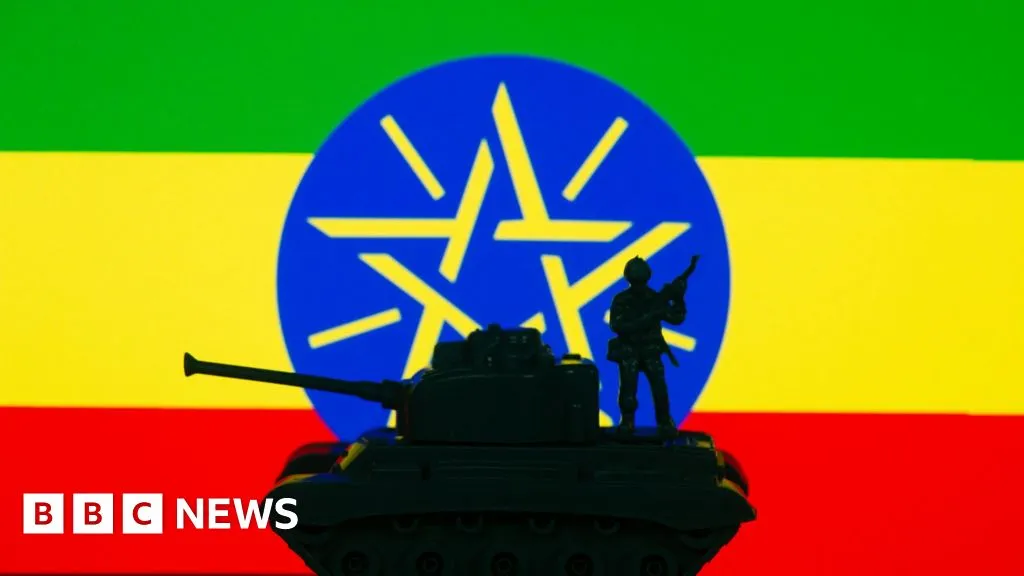
BBC News - WorldFIG 01
Reading time
6min
Word count
1 290words
Sources cited
2cited
Entities identified
9entities
Quality score
100%
§ 01
Briefing Summary
AI-generatedNEWSAR · AI
Fears of renewed conflict are escalating in Ethiopia's Tigray region, just over three years after the civil war ended in November 2022. The peace deal between the Ethiopian government and the Tigray People's Liberation Front (TPLF) is unraveling due to unresolved disputes over contested territories, particularly those occupied by Amhara forces. This has led to widespread distrust and reports of troop mobilization in northern Ethiopia. Residents are fleeing Tigray, stocking up on essentials, and facing cash withdrawal limits due to a run on banks, reminiscent of conditions during the war. The absence of Eritrea and Amhara from the original peace agreement, coupled with the Ethiopian government's strained relations with both, further complicates the situation as the country approaches elections in June.
Confidence 0.90Sources 2Claims 5Entities 9
§ 02
Article analysis
Model · rule-basedFraming
Conflict
Political Strategy
Tone
Mixed Tone
AI-assessed
CalmNeutralAlarmist
Factuality
0.70 / 1.00
Factual
LowHigh
Sources cited
2
Limited
FewMany
§ 03
Key claims
5 extracted01
The Ethiopian government has fallen out with both its former ally Eritrea and the armed militias from Amhara.
factual
Confidence
0.90
02
The civil war between the Ethiopian government and the TPLF saw an estimated 600,000 people killed.
statisticAfrican Union envoy
Confidence
0.90
03
Ethiopia has accused Eritrea of meddling by backing Tigrayan forces.
factual
Confidence
0.80
04
Fears of a return to war in northern Ethiopia are driving many people to leave the region of Tigray.
quoteBBC
Confidence
0.80
05
There have been reports of a troop mobilisation in the north of Ethiopia.
factual
Confidence
0.70
§ 04
Full report
6 min read · 1 290 words§ 05
Entities
9 identifiedKey playerOppositionContextPositiveNeutralNegative
Organizations2
§ 06
Keywords & salience
9 termstigray
1.00
ethiopia
0.90
civil war
0.80
peace deal
0.70
tigray people's liberation front
0.60
amhara
0.50
eritrea
0.50
troop mobilisation
0.40
cash shortages
0.40
§ 07
Topic connections
Interactive graph Network visualization showing 8 related topics
View Full Graph Person Organization Location Event|Click node to navigate|Edge numbers = shared articles