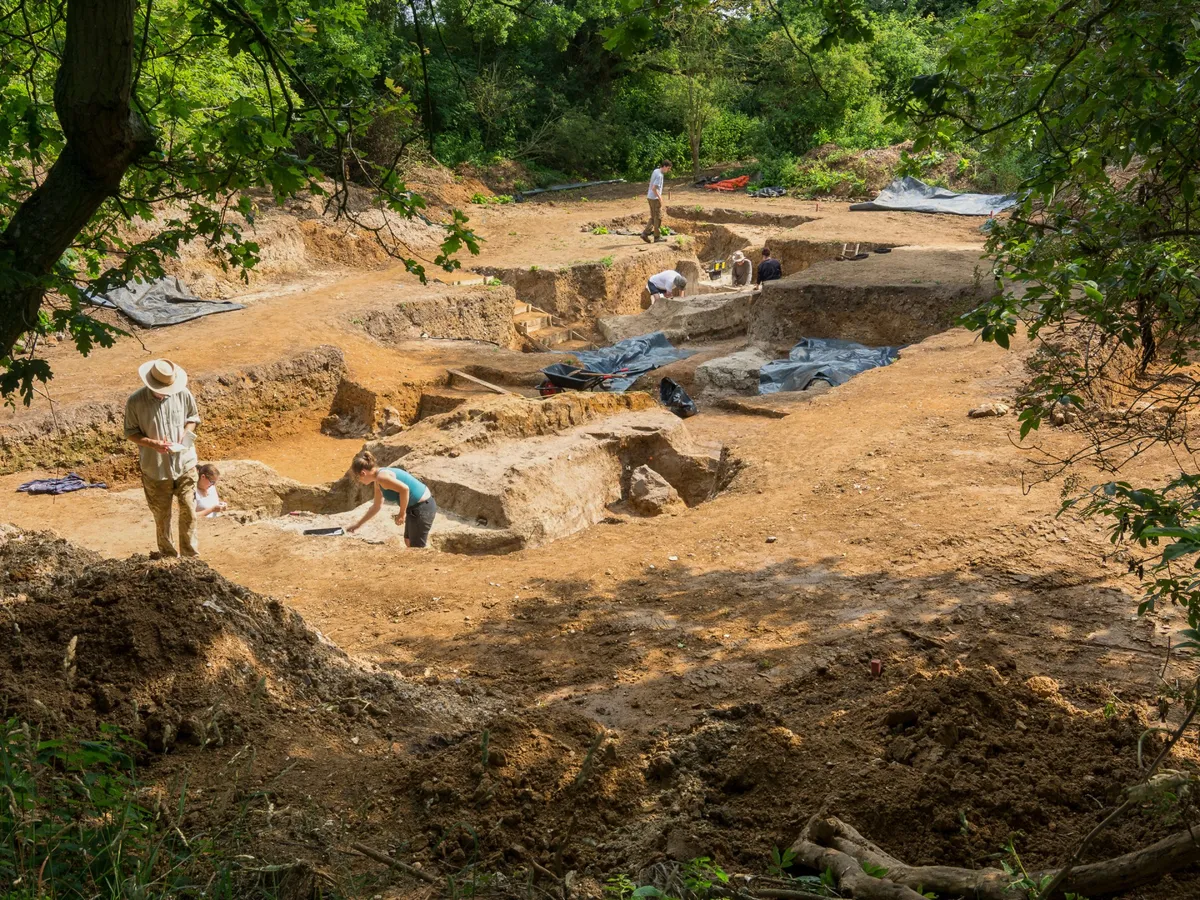
Humans may have made fire 350,000 years earlier than previously thought, scientists say.Published On 10 Dec 2025Scientists have uncovered the oldest-known evidence of deliberate fire-making by prehistoric humans in Suffolk, Britain – revealing it happened some 350,000 years earlier than experts previously believed.The site, a former clay pit near the village of Barnham, contains a hearth made by Neanderthals about 415,000 years ago.Recommended Stories list of 4 itemslist 1 of 4Masked neo-Nazis march through Arkansas communitylist 2 of 4WATCH: Palestine prepare for historic FIFA Arab Cup clash with Saudi Arabialist 3 of 4US federal judge halts Trump’s National Guard operations in Californialist 4 of 4UN rights office in ‘survival mode’ amid deep funding cutsend of listUntil now, the earliest known evidence of humans making fire dated to around 50,000 years ago at a site in northern France, also linked to Neanderthals.Researchers identified the remains of a repeatedly used campfire, including heated clay, flint tools shattered by intense heat and two pieces of iron pyrite – a mineral that sparks when struck against flint to ignite tinder.“We think humans brought pyrite to the site with the intention of making fire. And this has huge implications, pushing back the earliest fire-making,” said archaeologist Nick Ashton, curator of Palaeolithic Collections at the British Museum in London.While there are even older signs of humans using naturally occurring wildfires in Africa, this is the earliest proof that people knew how to start their own fires.Fire was a crucial turning point in human evolution. Controlled flames allowed ancient hunter-gatherers to live in colder environments, cook food, and protect themselves from predators. Cooking also helped our ancestors get more energy from meat, roots and tubers, fuelling the growth of larger brains and enabling communities to support more people.Scientists say fire likely transformed social life as well. It brought people together at night to share warmth, food and conversation, possibly encouraging storytelling, language and cultural beliefs.
SRCAl Jazeera
LANGEN
LEANCenter
WORDS318
ENT4
WED · 2025-12-10 · 19:44 GMTBRIEF NSR-2025-1210-1963
NSR-2025-1210-1963News Report·EN·Technology
Oldest evidence of deliberate fire use found in England
Scientists have discovered the oldest evidence of deliberate fire-making in Barnham, Suffolk, Britain, dating back approximately 415,000 years. This discovery, found in a former clay pit, pushes back the known timeline of human fire creation by 350,000 years.
Caolán MageeAl JazeeraFiled 2025-12-10 · 19:44 GMTLean · CenterRead · 2 min
Al JazeeraFIG 01
Reading time
2min
Word count
318words
Sources cited
1cited
Entities identified
4entities
Quality score
100%
§ 01
Briefing Summary
AI-generatedNEWSAR · AI
Scientists have discovered the oldest evidence of deliberate fire-making in Barnham, Suffolk, Britain, dating back approximately 415,000 years. This discovery, found in a former clay pit, pushes back the known timeline of human fire creation by 350,000 years. The site contains a Neanderthal-made hearth with heated clay, heat-shattered flint tools, and iron pyrite, suggesting the deliberate sparking of fires. Previously, the earliest evidence of human-made fire was found in France and dated to around 50,000 years ago. This finding indicates that Neanderthals understood how to start fires, a crucial skill that enabled them to live in colder climates, cook food, and develop socially.
Confidence 0.90Sources 1Claims 5Entities 4
§ 02
Article analysis
Model · rule-basedFraming
Technology
Human Interest
Tone
Measured
AI-assessed
CalmNeutralAlarmist
Factuality
0.80 / 1.00
Factual
LowHigh
Sources cited
1
Limited
FewMany
§ 03
Key claims
5 extracted01
The earliest known evidence of humans making fire dated to around 50,000 years ago at a site in northern France.
factualnull
Confidence
1.00
02
The site contains a hearth made by Neanderthals about 415,000 years ago.
factualnull
Confidence
1.00
03
Scientists have uncovered the oldest-known evidence of deliberate fire-making by prehistoric humans in Suffolk, Britain.
factualnull
Confidence
1.00
04
Controlled flames allowed ancient hunter-gatherers to live in colder environments, cook food, and protect themselves from predators.
factualnull
Confidence
0.90
05
We think humans brought pyrite to the site with the intention of making fire.
quoteNick Ashton, curator of Palaeolithic Collections at the British Museum
Confidence
0.90
§ 04
Full report
2 min read · 318 words§ 05
Entities
4 identifiedKey playerOppositionContextPositiveNeutralNegative
Organizations1
§ 06
Keywords & salience
9 termsdeliberate fire use
1.00
fire-making
0.90
prehistoric humans
0.80
neanderthals
0.70
human evolution
0.60
archaeology
0.60
iron pyrite
0.50
flint tools
0.50
barnham
0.40
§ 07
Topic connections
Interactive graph Network visualization showing 3 related topics
View Full Graph Person Organization Location Event|Click node to navigate|Edge numbers = shared articles