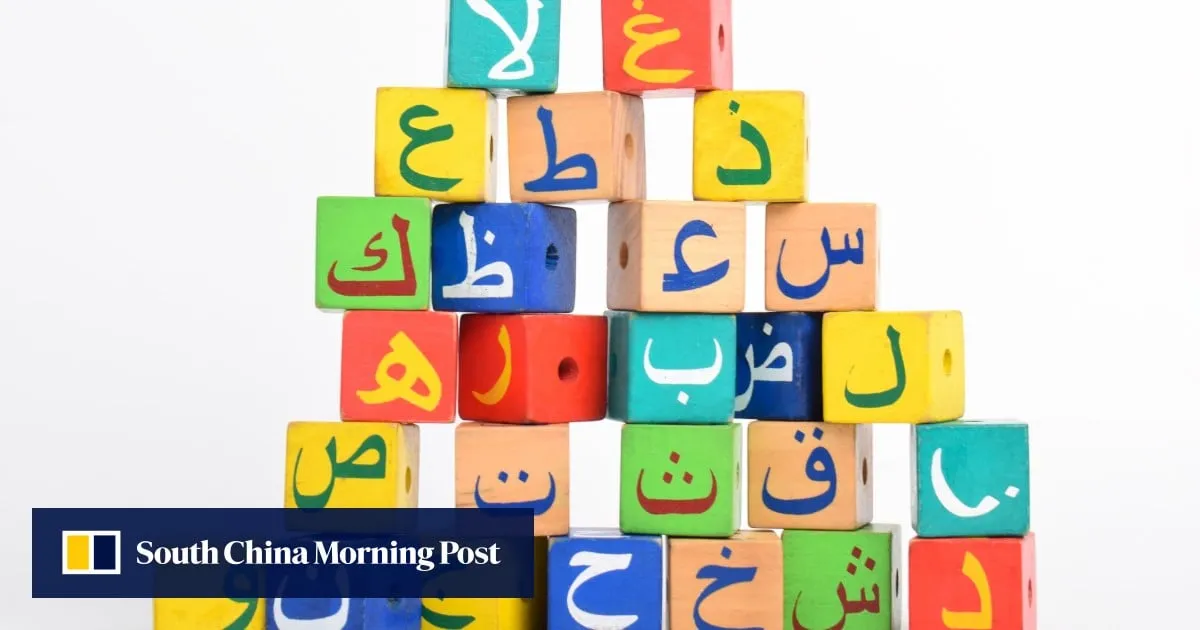
Chinese researchers have released the world’s first open-source text-to-speech (TTS) model that unifies more than 20 Arabic dialects in an AI framework, a move poised to expand China’s technological influence in the Middle East, according to analysts.Led by Shanghai Jiao Tong University’s X-LANCE Lab – one of China’s top audiovisual and language processing research entities – the model is named Habibi, meaning “my dear” in Arabic.In presenting their findings, the research team spearheaded by Chen Yushen described the project in a paper as “the first open-source framework for unified-dialectal Arabic speech synthesis”.“To the best of our knowledge, research on unified-dialectal Arabic TTS is absent, not to mention an open-source framework,” the authors said in the paper, “Habibi: Laying the Open-Source Foundation of Unified-Dialectal Arabic Speech Synthesis”. It was published last month on arXiv, an open-access repository that is not peer-reviewed.01:12World’s first ‘fully biomimetic embodied intelligent robot’ debuts in Shanghai
SRCSouth China Morning Post
LANGEN
LEANCenter-Right
WORDS149
ENT3
SAT · 2026-02-28 · 06:00 GMTBRIEF NSR-2026-0228-19992
NSR-2026-0228-19992News Report·EN·Technology
Meet Habibi – the Chinese AI uniting 20 Arabic dialects in a Middle East first
Chinese researchers at Shanghai Jiao Tong University's X-LANCE Lab have created Habibi, the world's first open-source text-to-speech (TTS) model unifying over 20 Arabic dialects. Published on arXiv, the AI framework aims to address the lack of unified-dialectal Arabic speech synthesis research.
Zhao ZiwenSouth China Morning PostFiled 2026-02-28 · 06:00 GMTLean · Center-RightRead · 1 min
South China Morning PostFIG 01
Reading time
1min
Word count
149words
Sources cited
1cited
Entities identified
3entities
Quality score
100%
§ 01
Briefing Summary
AI-generatedNEWSAR · AI
Chinese researchers at Shanghai Jiao Tong University's X-LANCE Lab have created Habibi, the world's first open-source text-to-speech (TTS) model unifying over 20 Arabic dialects. Published on arXiv, the AI framework aims to address the lack of unified-dialectal Arabic speech synthesis research. The project, led by Chen Yushen, is designed to provide a foundation for further development in this area. Analysts suggest this innovation could expand China's technological influence in the Middle East by facilitating communication across diverse Arabic-speaking regions. Habibi, meaning "my dear" in Arabic, represents a significant step towards accessible and inclusive AI technology for the Arabic-speaking world.
Confidence 0.90Sources 1Claims 4Entities 3
§ 02
Article analysis
Model · rule-basedFraming
Technology
Political Strategy
Tone
Measured
AI-assessed
CalmNeutralAlarmist
Factuality
0.70 / 1.00
Factual
LowHigh
Sources cited
1
Limited
FewMany
§ 03
Key claims
4 extracted01
The research team described the project as “the first open-source framework for unified-dialectal Arabic speech synthesis”.
quoteChen Yushen
Confidence
1.00
02
The model is named Habibi, meaning “my dear” in Arabic.
factual
Confidence
1.00
03
Chinese researchers have released the world’s first open-source text-to-speech model that unifies more than 20 Arabic dialects.
factual
Confidence
0.90
04
Analysts say the move is poised to expand China’s technological influence in the Middle East.
predictionanalysts
Confidence
0.60
§ 04
Full report
1 min read · 149 words§ 05
Entities
3 identifiedKey playerOppositionContextPositiveNeutralNegative
Organizations1
§ 06
Keywords & salience
9 termstext-to-speech
0.90
arabic dialects
0.80
open-source
0.70
ai framework
0.70
middle east
0.60
china
0.60
speech synthesis
0.50
habibi
0.50
technological influence
0.40
§ 07
Topic connections
Interactive graph Network visualization showing 51 related topics
View Full Graph Person Organization Location Event|Click node to navigate|Edge numbers = shared articles