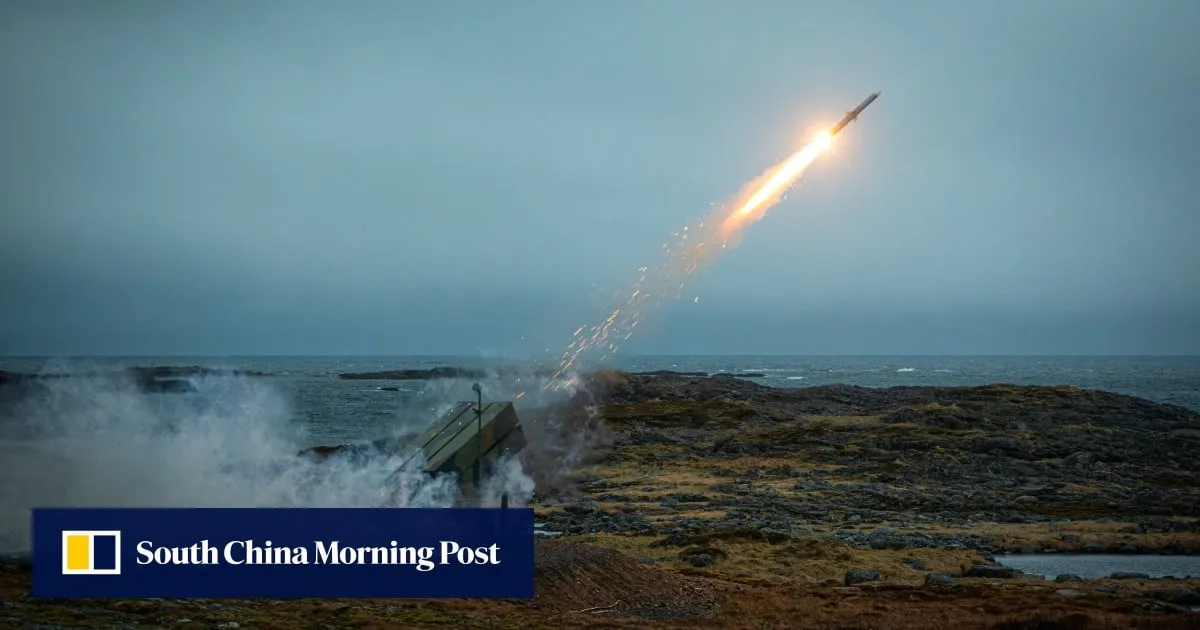
Taiwan’s procurement of three US arms packages has come under renewed scrutiny, with military experts now questioning their effectiveness in deterring Beijing.The debate has sharpened after opposition parties repeatedly blocked a proposed NT$1.25 trillion (US$40 billion) special defence budget in the legislature’s procedure committee last month.At the centre of the latest criticism are three US-approved systems for Taiwan: the Patriot PAC-3 missile defence system and its upgrades, the National Advanced Surface-to-Air Missile System (Nasams) and the M109A7 Paladin self-propelled howitzer.According to Taiwan’s defence ministry and some military analysts, the purchases will strengthen deterrence as military pressure from Beijing intensifies. Critics counter that the bigger danger is buying the wrong mix, at the wrong price, for the wrong threat.“Not only are these weapons expensive, they do not fit the asymmetric warfare concept we say we are pursuing,” said military expert Lu De-yun, a former defence ministry press secretary, giving Taiwan’s new range-extended Patriot interceptors as an example.PLA kicks off military exercises around TaiwanPLA kicks off military exercises around TaiwanLocal media reported the first batch of PAC-3 Missile Segment Enhancement (MSE) missiles arrived in January, with a second delivery expected later this year. According to the reports, Taiwan has procured 102 of the interceptors for about NT$20 billion.
SRCSouth China Morning Post
LANGEN
LEANCenter-Right
WORDS206
ENT6
SAT · 2026-02-28 · 13:00 GMTBRIEF NSR-2026-0228-20101
NSR-2026-0228-20101News Report·EN·National Security
Taiwan is buying expensive US weapons systems, but are they the right ones?
Taiwan's recent procurement of US weapons systems, including Patriot PAC-3 missiles, Nasams, and M109A7 Paladin howitzers, is facing scrutiny. Opposition parties have blocked a proposed defense budget in the legislature, fueling debate over the effectiveness of these systems in deterring Beijing.
Lawrence ChungSouth China Morning PostFiled 2026-02-28 · 13:00 GMTLean · Center-RightRead · 1 min
South China Morning PostFIG 01
Reading time
1min
Word count
206words
Sources cited
2cited
Entities identified
6entities
Quality score
100%
§ 01
Briefing Summary
AI-generatedNEWSAR · AI
Taiwan's recent procurement of US weapons systems, including Patriot PAC-3 missiles, Nasams, and M109A7 Paladin howitzers, is facing scrutiny. Opposition parties have blocked a proposed defense budget in the legislature, fueling debate over the effectiveness of these systems in deterring Beijing. While Taiwan's defense ministry and some analysts believe the purchases will strengthen deterrence amid increasing military pressure from China, critics argue that the weapons are too expensive and don't align with Taiwan's asymmetric warfare strategy. The arrival of the first batch of PAC-3 MSE missiles in January, part of a larger order of 102 interceptors, has further intensified the discussion about the suitability and cost-effectiveness of these defense acquisitions. The debate centers on whether Taiwan is buying the right mix of weapons to address the specific threats it faces.
Confidence 0.90Sources 2Claims 5Entities 6
§ 02
Article analysis
Model · rule-basedFraming
National Security
Political Strategy
Tone
Measured
AI-assessed
CalmNeutralAlarmist
Factuality
0.70 / 1.00
Factual
LowHigh
Sources cited
2
Limited
FewMany
§ 03
Key claims
5 extracted01
Opposition parties blocked a proposed NT$1.25 trillion special defence budget.
factualnull
Confidence
1.00
02
These weapons do not fit the asymmetric warfare concept we say we are pursuing.
quoteLu De-yun, a former defence ministry press secretary
Confidence
0.90
03
Taiwan's procurement of three US arms packages has come under renewed scrutiny.
factualnull
Confidence
0.90
04
Taiwan has procured 102 Patriot interceptors for about NT$20 billion.
factualLocal media reports
Confidence
0.80
05
The purchases will strengthen deterrence as military pressure from Beijing intensifies.
predictionTaiwan’s defence ministry and some military analysts
Confidence
0.60
§ 04
Full report
1 min read · 206 words§ 05
Entities
6 identifiedKey playerOppositionContextPositiveNeutralNegative
Organizations3
§ 06
Keywords & salience
10 termstaiwan
1.00
us weapons systems
0.90
arms procurement
0.80
military deterrence
0.70
patriot pac-3
0.60
defence budget
0.60
beijing
0.50
missile defence system
0.50
asymmetric warfare
0.50
military exercises
0.40
§ 07
Topic connections
Interactive graph Network visualization showing 51 related topics
View Full Graph Person Organization Location Event|Click node to navigate|Edge numbers = shared articles