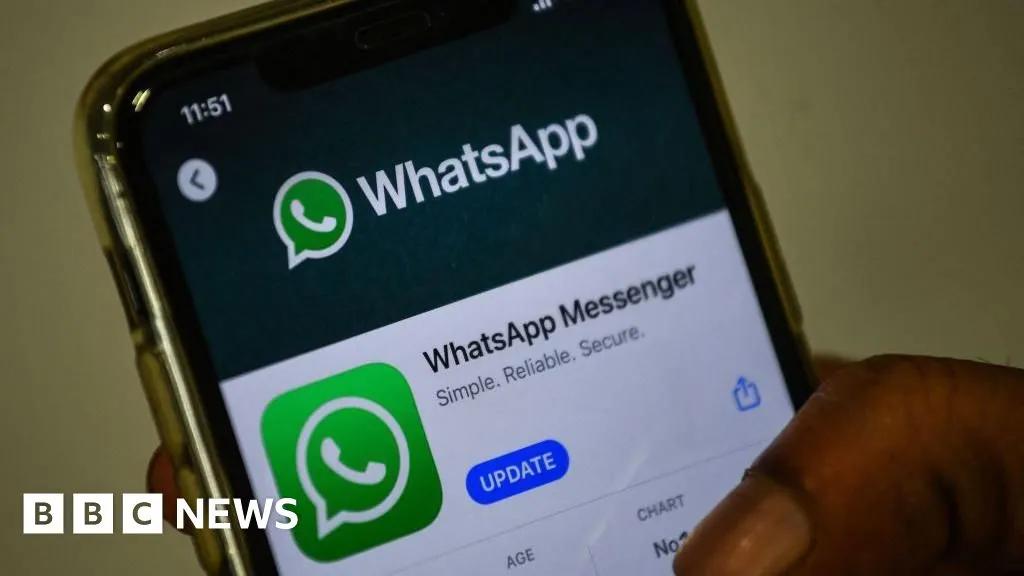
3 hours agoCherylann MollanGetty ImagesWhatsApp's 2021 requires users to agree to share data with Meta for advertising if they want to continue using the appA landmark legal battle over privacy, data control and the business model of big tech is playing out in India as WhatsApp's 2021 faces close scrutiny from the country's top court.At stake is not just WhatsApp's policy, but broader questions over privacy rights, consumer choice and regulation of dominant online platforms. WhatsApp is India's most popular messaging app.A few days ago, WhatsApp told the Supreme Court it would comply by 16 March with an order requiring it to give Indian users greater control over how their data is shared with its parent company, Meta.In an affidavit, seen by the BBC, the messaging platform added that users could continue using the app even if they opted out of sharing data with Meta for advertising.The move comes days after the court criticised WhatsApp's 2021 , warning that it would not allow WhatsApp or Meta to "play with" Indians' right to privacy or "make a mockery" of the Constitution, which guarantees privacy as a fundamental right.The remarks were made during open court hearings on WhatsApp's January 2021 policy update, which required users to share data with Meta companies to keep using the app - a "take it or leave it" approach that India's competition watchdog, the Competition Commission of India (CCI), said left users with "no real choice".The update drew criticism from users who said they felt compelled to accept terms they were uncomfortable with, noting it differed from the 2016 policy, which had allowed existing users to opt out of sharing data with Meta for advertising.The policy has also been criticised by digital rights activists as invasive and a violation of user autonomy, while others argue that leveraging a platform's popularity for advertising is common practice in the internet age.WhatsApp is ubiquitous in India with about 853 million users, according to World Population Review. Rivals such as Signal, Telegram and homegrown platforms like Koo exist, but none match in popularity.Given its vast reach, WhatsApp and its parent company are among the global tech firms closely watched by India's federal government which has, in recent years, tightened digital regulations and pushed platforms for greater accountability.A legal battle over WhatsApp's began in March 2021 when the CCI ordered an investigation, alleging that Meta was engaging in "exploitative and exclusionary conduct". It said forcing users to share data with Meta companies allowed the firm to leverage WhatsApp's dominance in India to deny advertising access to rivals.In November 2024, the CCI fined Meta $25m for "abusing its dominant position" and ordered it and WhatsApp to implement behavioural remedies within three months. It barred WhatsApp from sharing user data with Meta entities for five years and directed the company to clearly specify the purposes of data sharing in its .WhatsApp and Meta challenged the order before a company law tribunal, which upheld the penalty but stayed the five-year data-sharing ban. In January 2026, the firms moved the Supreme Court to contest the fine.While hearing the case earlier this month, the Supreme Court criticised WhatsApp's "take it or leave it policy", saying that it was a way of "committing theft of private information". The court also voiced concern over personal communications being used for targeted advertising and directed WhatsApp to establish a consent-based framework for data sharing. Getty ImagesWhatsApp has a 97% penetration rate among internet users in IndiaIn an affidavit to the Supreme Court, WhatsApp reiterated that personal messages are protected by end-to-end encryption and said it would implement the CCI's data-sharing remedies, which aim to give users greater control over their data.The app said it would notify users to allow them to opt out of data sharing and enable them to review or modify their choices through a prominent tab in the app's settings."Sharing of user data collected on WhatsApp with other Meta companies or Meta company products for purposes other than for providing WhatsApp services shall not be made a condition for users to access WhatsApp service in India," the affidavit said."All future policy updates shall also comply with these requirements," it added.It also said WhatsApp does not share user data with Meta for advertising purposes "except where a user chooses to use optional features", and that data will not be shared if those features are not used.The law has been challenged in the Supreme Court by petitioners who argue it violates the rights to information and free speech and could be misused for surveillance. A five-judge bench is set to hear the case in March.The Supreme Court has not yet ruled on the penalty against Meta and the case is still being heard in court.Some users and rights activists have welcomed the move, arguing that big tech companies should not exploit large developing markets solely for profit. Others, including digital rights activist Nikhil Pahwa, say Meta and WhatsApp, as commercial entities, have a legitimate right to monetise user metadata."Advertising is a legitimate business model, and the Internet runs on billions of dollars of advertising," Pahwa says.He also said that since WhatsApp is a messaging service rather than a product, users can opt out and switch to alternatives such as Signal or Telegram if they are uncomfortable with its data-sharing policies."If sharing data to enable better delivery of advertising on a firm's platforms is an abuse of dominance, then Gmail, Google Maps and Search should also be prevented from sharing data with Google's advertising business. Where will this end?" Pahwa asks.
SRCBBC News - World
LANGEN
LEANCenter
WORDS920
ENT6
SUN · 2026-03-01 · 00:21 GMTBRIEF NSR-2026-0301-20224
NSR-2026-0301-20224News Report·EN·Legal & Judicial
Why is WhatsApp's privacy policy facing a legal challenge in India?
WhatsApp's 2021 privacy policy, requiring users to share data with Meta for advertising, is facing a legal challenge in India, where WhatsApp is the most popular messaging app. The Supreme Court is scrutinizing the policy amid concerns about privacy rights and consumer choice.
BBC News - WorldFiled 2026-03-01 · 00:21 GMTLean · CenterRead · 4 min
BBC News - WorldFIG 01
Reading time
4min
Word count
920words
Sources cited
2cited
Entities identified
6entities
Quality score
100%
§ 01
Briefing Summary
AI-generatedNEWSAR · AI
WhatsApp's 2021 privacy policy, requiring users to share data with Meta for advertising, is facing a legal challenge in India, where WhatsApp is the most popular messaging app. The Supreme Court is scrutinizing the policy amid concerns about privacy rights and consumer choice. India's competition watchdog, the CCI, alleges the policy gives users "no real choice" and is "exploitative". WhatsApp has told the court it will comply with an order to give Indian users greater control over data sharing with Meta, allowing users to continue using the app even if they opt out. The court has warned WhatsApp and Meta against violating Indians' constitutional right to privacy. The legal battle, initiated in March 2021, raises broader questions about the regulation of dominant online platforms in India.
Confidence 0.90Sources 2Claims 5Entities 6
§ 02
Article analysis
Model · rule-basedFraming
Legal & Judicial
Human Rights
Tone
Measured
AI-assessed
CalmNeutralAlarmist
Factuality
0.80 / 1.00
Factual
LowHigh
Sources cited
2
Limited
FewMany
§ 03
Key claims
5 extracted01
WhatsApp has about 853 million users in India.
statisticWorld Population Review
Confidence
1.00
02
In November 2024, the CCI fined Meta $25m for "abusing its dominant position".
factualCompetition Commission of India (CCI)
Confidence
1.00
03
The court criticised WhatsApp's 2021 policy, warning it would not allow WhatsApp or Meta to "play with" Indians' right to privacy.
quoteSupreme Court
Confidence
1.00
04
WhatsApp told the Supreme Court it would comply by 16 March with an order requiring it to give Indian users greater control over data sharing with Meta.
factualWhatsApp
Confidence
1.00
05
WhatsApp's 2021 policy requires users to agree to share data with Meta for advertising to continue using the app.
factualCherylann Mollan/Getty Images
Confidence
1.00
§ 04
Full report
4 min read · 920 words§ 05
Entities
6 identifiedKey playerOppositionContextPositiveNeutralNegative
Organizations5
Locations1
§ 06
Keywords & salience
10 termswhatsapp privacy policy
1.00
data sharing
0.80
meta
0.70
privacy rights
0.70
india
0.60
legal challenge
0.60
digital regulation
0.50
data control
0.50
consumer choice
0.50
advertising
0.40
§ 07
Topic connections
Interactive graph No topic relationship data available yet. This graph will appear once topic relationships have been computed.