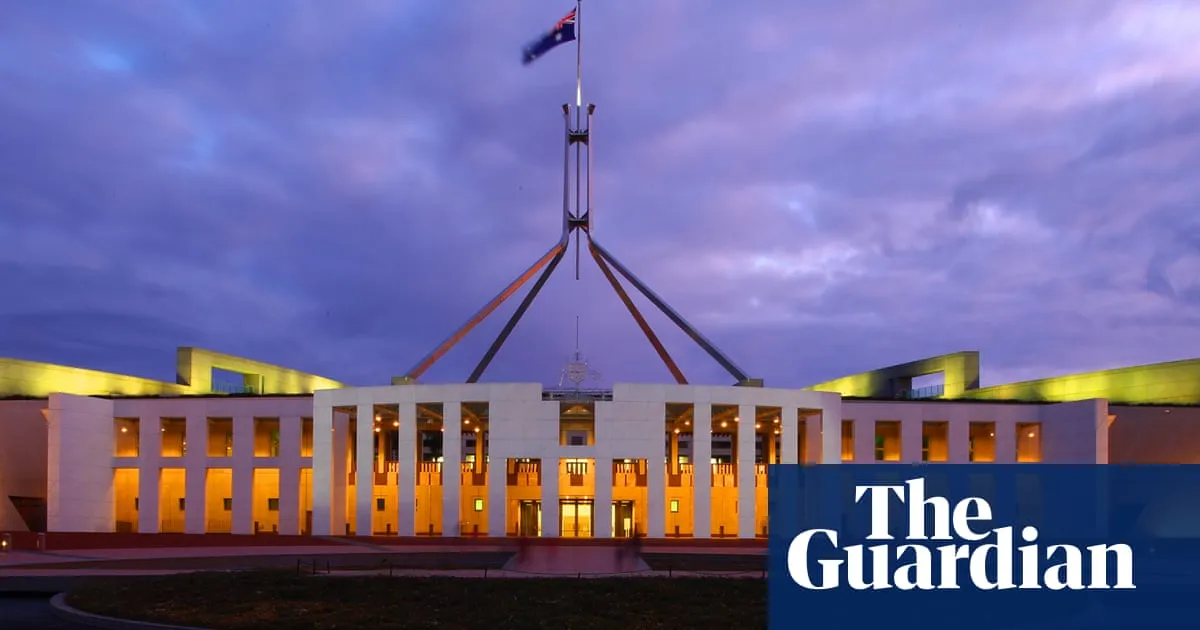
Political lobbyists with unfettered access to Canberra’s halls of power could be exposed to more scrutiny as Anthony Albanese suggests greater “transparency and rigour” of sponsored passholders at Parliament House.The prime minister has written to the house speaker, Milton Dick, and Senate president, Sue Lines, ahead of an upcoming review of the policies governing access to the building’s private areas.Visitors with orange passes, which include political lobbyists, have rights to unescorted access to the non-public areas of Parliament House, allowing them to roam free in the corridors of MPs offices.But details about the passholders, including their identity and which MPs sponsored their access-all-areas privileges, has long been shrouded in secrecy despite calls from crossbenchers and integrity advocates for greater transparency.Several crossbenchers proactively disclose which passes they sponsor, including the ACT senator David Pocock, who last year created an online public register that pressured all MPs to follow suit.“Australians deserve to know who can walk in here and lobby their elected representatives. A strong democracy depends on transparency and accountability,” Pocock said at the time.“A pass sponsored by a parliamentarian provides privileged access. Access that potentially allows certain perspectives to reach decision-makers ahead of others. The public has the right to know who’s being given that privilege.”As of mid-2024, there were more than 2,050 sponsored passes for access to Parliament House, an unknown share of which were held by paid lobbyists.The orange passes are issued to a cross-section of visitors to Parliament House outside of lobbyists, including representatives from non-government organisations, business leaders and volunteers.In his letter to parliament’s presiding officers on Monday, Albanese said unescorted access to parliament’s private areas was a “privilege”.“A growing number of individuals, particularly professional lobbyists, hold sponsored passes on the basis of business requirements, which provide unescorted access to the private areas of Parliament House,” the letter, obtained by Guardian Australia, read.“It is my government’s view that the review provides an opportunity to consider increased transparency and rigour in relation to sponsored passes for Parliament House on the basis of business requirements, particularly in relation to professional lobbyists.“In that context, I also consider that the review provides an opportunity to examine the conditions and requirements for unescorted sponsored access to Parliament House, mindful as always of the importance of security.”The names and clients of political lobbyists are maintained on a public register, however the database doesn’t detail which have access to parliament.The speaker and the president are responsible for setting the policies, meaning any changes to sponsored passes would technically be decided independent of the government.But the prime minister will be difficult to ignore, setting the stage for long-awaited reforms to the opaque system.The Labor government’s record on transparency has been repeatedly called into question during its four years in office, undermining one of Albanese’s core promises ahead of his 2022 election win over Scott Morrison.The existing policy was approved in August 2023 and must be re-examined every three years, hence the timing of the upcoming review.“The review will consider all aspects of the policy to ensure it is relevant to the current environment and is fit-for-purpose,” a spokesperson for the speaker said in a statement to Guardian Australia.“As part of the review, the Department of Parliamentary Services will consult with the Australian Federal Police, key Australian Parliament House stakeholders including parliamentary departments and other Commonwealth entities as relevant.”
SRCThe Guardian - World News
LANGEN
LEANCenter-Left
WORDS554
ENT6
MON · 2026-03-02 · 14:00 GMTBRIEF NSR-2026-0302-20656
NSR-2026-0302-20656News Report·EN·Political Strategy
Free-roaming lobbyists in Australian parliament face tighter restrictions, Albanese says
Australian Prime Minister Anthony Albanese is seeking greater transparency regarding lobbyists' access to Parliament House in Canberra. He has requested a review of the policies governing sponsored passes, which allow unescorted access to private areas, including MPs' offices.
Dan Jervis-BardyThe Guardian - World NewsFiled 2026-03-02 · 14:00 GMTLean · Center-LeftRead · 3 min
The Guardian - World NewsFIG 01
Reading time
3min
Word count
554words
Sources cited
2cited
Entities identified
6entities
Quality score
100%
§ 01
Briefing Summary
AI-generatedNEWSAR · AI
Australian Prime Minister Anthony Albanese is seeking greater transparency regarding lobbyists' access to Parliament House in Canberra. He has requested a review of the policies governing sponsored passes, which allow unescorted access to private areas, including MPs' offices. The move comes amid concerns about the lack of public information on who holds these passes, particularly political lobbyists, and which MPs sponsor them. Crossbenchers and integrity advocates have long called for increased transparency, arguing that Australians deserve to know who has privileged access to lobby elected officials. The review aims to consider increased transparency and rigour in relation to sponsored passes for Parliament House, especially concerning professional lobbyists. As of mid-2024, there were over 2,050 sponsored passes in use.
Confidence 0.90Sources 2Claims 5Entities 6
§ 02
Article analysis
Model · rule-basedFraming
Political Strategy
Human Interest
Tone
Measured
AI-assessed
CalmNeutralAlarmist
Factuality
0.80 / 1.00
Factual
LowHigh
Sources cited
2
Limited
FewMany
§ 03
Key claims
5 extracted01
Australians deserve to know who can walk in here and lobby their elected representatives.
quoteDavid Pocock
Confidence
1.00
02
As of mid-2024, there were more than 2,050 sponsored passes for access to Parliament House.
statistic
Confidence
1.00
03
Visitors with orange passes have unescorted access to the non-public areas of Parliament House.
factual
Confidence
1.00
04
Anthony Albanese suggests greater transparency of sponsored passholders at Parliament House.
factualAlbanese
Confidence
1.00
05
The review provides an opportunity to consider increased transparency and rigour in relation to sponsored passes.
quoteAlbanese
Confidence
0.90
§ 04
Full report
3 min read · 554 words§ 05
Entities
6 identifiedKey playerOppositionContextPositiveNeutralNegative
People3
Organizations1
§ 06
Keywords & salience
9 termspolitical lobbyists
1.00
parliament house
0.90
transparency
0.80
sponsored passes
0.80
access restrictions
0.70
accountability
0.60
anthony albanese
0.50
parliament
0.50
integrity
0.40
§ 07
Topic connections
Interactive graph Network visualization showing 51 related topics
View Full Graph Person Organization Location Event|Click node to navigate|Edge numbers = shared articles