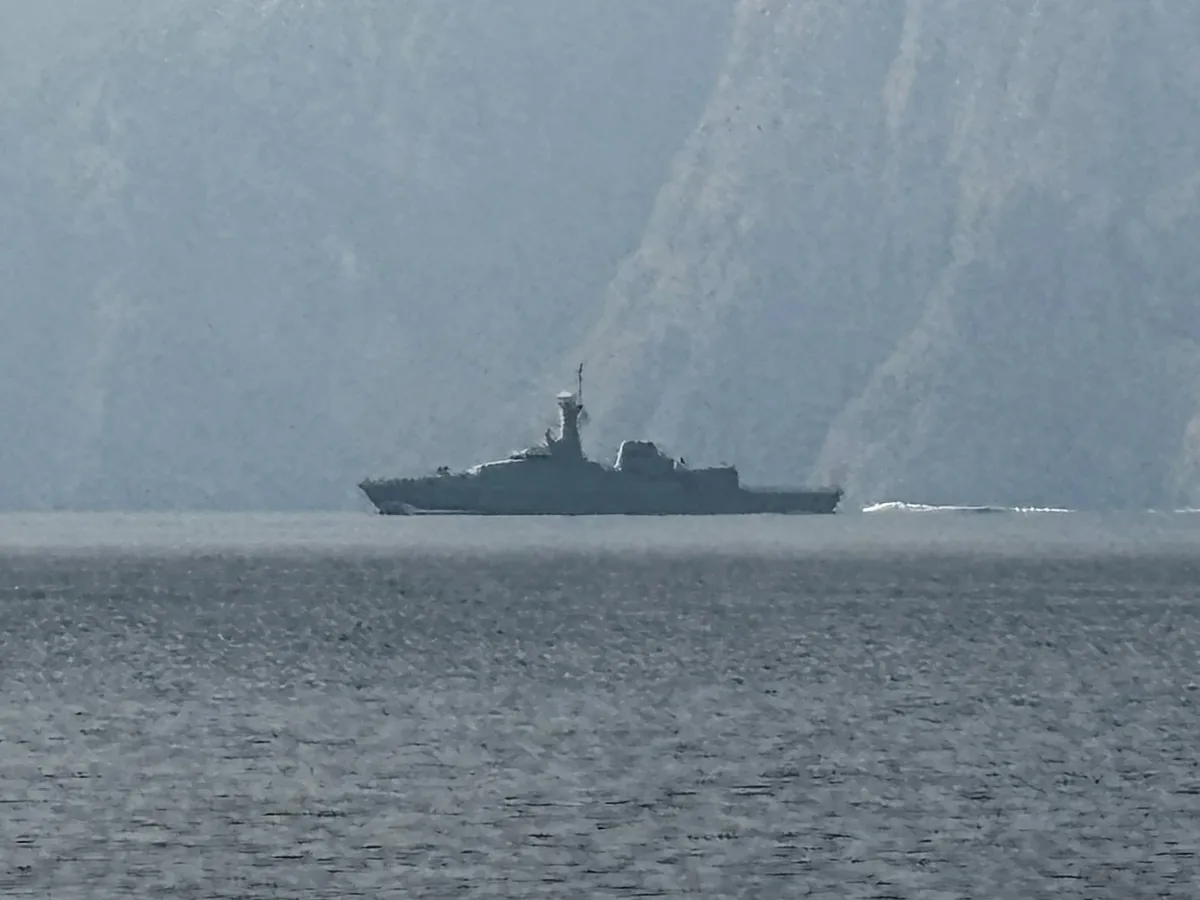
EXPLAINERInsurers announced they were cancelling war risk coverage after the IRGC said the Strait of Hormuz was ‘closed’.Published On 3 Mar 2026Insurance companies are cancelling war risk coverage for vessels in the Middle East Gulf as the widening United States/Israel-Iran conflict disrupts shipping, leaving tankers damaged or stranded and at least two people dead.The conflict entered its fourth day on Tuesday with US and Israeli attacks continuing on Iran, which has retaliated by attacking US assets and other infrastructure in Gulf countries.Shipping through the Strait of Hormuz between Iran and Oman has ground to a near halt after vessels in the area were hit as Iran retaliated against US and Israeli strikes.What has happened in the Strait of Hormuz?A commander in Iran’s Revolutionary Guard Corps (IRGC) said on Monday that the strait was “closed” and that any vessel attempting to pass through the waterway would be set “ablaze”.At least five tankers have been damaged, two personnel killed and about 150 ships stranded around the strait.The disruption and fears of prolonged closure have caused oil and European natural gas prices to jump, with Brent crude futures up as much as 13 percent as the conflict triggers multiple oil and gas shutdowns in the Middle East.About 10 percent of the world’s container ships are ensnared in the broader backups, and cargo could soon start piling up at ports and transshipment hubs in Europe and Asia, Jeremy Nixon, CEO of container carrier Ocean Network Express, known as ONE, said on Monday.The tankers are clustered in open waters off the coasts of major Gulf oil producers, including Iraq and Saudi Arabia, as well as LNG giant Qatar, according to ship-tracking data from the MarineTraffic platform.IRGC said the Honduran-flagged Nova was burning in the Strait of Hormuz after being hit by two drones, Iranian news agencies reported on Tuesday.The US-flagged product tanker Stena Imperative was damaged by “aerial impacts” while berthed in the Middle East Gulf, the vessel’s owner, Stena Bulk, and its US manager, Crowley, said in a statement on Monday. The impact killed a shipyard worker.On Sunday, a projectile hit the Marshall Islands-flagged product tanker MKD VYOM, killing a crew member as the vessel sailed off the coast of Oman, its manager said, and two other tankers were also damaged.Also on Sunday, a projectile hit the Gibraltar-flagged oil bunkering tanker Hercules Star, which supplies fuel to ships, off the UAE coast, manager Peninsula said in a statement. The tanker returned to anchor in Dubai on Sunday morning and the crew were safe, Peninsula added.(Al Jazeera)How are maritime insurers reacting?As a result of these incidents, marine insurers are cancelling war risk coverage for vessels, and the overall cost of shipping oil from the region is set to surge further.Insurance companies including Gard, Skuld, NorthStandard, the London P&I Club and the American Club said cancellation of war risk cover would take effect from March 5, according to notices dated March 1 on their websites.These cancellation notices mean shipping companies with vessels in the region will need to seek new insurance cover, likely at much higher cost.“As a result of this fast-moving situation, each underwriter is invariably increasing rates or, in some instances, for vessels passing through the Strait of Hormuz, even declining to offer terms right now,” said David Smith, head of marine brokers McGill and Partners.War risk premiums have risen as high as 1 percent of the value of a ship in the past 48 hours, from about 0.2 percent last week, industry sources said on Monday, which adds hundreds of thousands of dollars in costs for every shipment. For example, for a tanker worth $100m, the war‑risk premium for a single voyage would jump from roughly $200,000 to about $1m.“The (war insurance) market is facing what is essentially a de facto close of the Strait of Hormuz, based primarily around perception of threat rather than a tangible blockade,” said Munro Anderson of marine war insurance specialist Vessel Protect, part of Pen Underwriting.Meanwhile, costs of shipping oil from the Middle East to Asia – already at a six-year high amid escalating US-Iran tensions and attacks on ships near the Strait of Hormuz – are therefore set to rise even more as the widening Iran conflict deters shipowners from sending vessels to the region, market sources and analysts said.Why is war risk insurance so important?War risk insurance is crucial because it covers losses caused by war and terrorism, which are explicitly excluded from standard marine, aviation and property policies.How could this impact insurance rates?Marcus Baker, the global head of marine at Marsh, told The Guardian newspaper in the UK that insurance rates could rise by 50 to 100 percent, or even more.For instance, before the crisis, a ship might pay about 0.25 percent of its value as war‑risk insurance. Now, the cost could rise to 0.5 percent of its value, marking a 100 percent increase, or 1 percent of its value, marking a 300 percent increase.Why is the Strait of Hormuz important?The strait carries about one-fifth of oil consumed globally as well as large quantities of gas from Gulf producers like Saudi Arabia, Iraq, the UAE, Kuwait and, especially, Qatar. Any disruption affects gas markets in Asia and Europe.The strait could be reopened if the conflict reaches a ceasefire, or if there is a visible US‑led or multinational naval presence to escort or protect shipping.Historically, Iran has at times raised the cost and risk of using the strait, but has not implemented a complete closure.How does this impact energy costs?If the insurance costs increase the way Baker suggests, this would make every journey through the strait more expensive, and in turn raise the cost of delivered oil and LNG. Higher oil and energy prices will in turn mean higher fuel, electricity and heating costs.The strait’s closure comes at the same time as Qatar’s state-run energy firm and the world’s largest LNG producer, QatarEnergy, announced that it had halted LNG production after its operational facilities in Ras Laffan and Mesaieed in Qatar were hit, sending gas prices soaring in Europe and Asia. Iranian officials have publicly denied targeting QatarEnergy.Shortly after the announcement, benchmark Dutch and British wholesale gas prices soared by almost 50 percent, while benchmark Asian LNG prices jumped almost 39 percent.
SRCAl Jazeera
LANGEN
LEANCenter
WORDS1 037
ENT9
TUE · 2026-03-03 · 11:43 GMTBRIEF NSR-2026-0303-20960
NSR-2026-0303-20960News Report·EN·Economic Impact
Maritime insurers cancel war risk cover in Gulf: Will it spike energy cost?
Insurance companies have cancelled war risk coverage for vessels in the Middle East Gulf due to the escalating United States/Israel-Iran conflict. The IRGC announced that the Strait of Hormuz was "closed" and any vessel attempting to pass through would be set ablaze.
Sarah ShamimAl JazeeraFiled 2026-03-03 · 11:43 GMTLean · CenterRead · 5 min
Al JazeeraFIG 01
Reading time
5min
Word count
1 037words
Sources cited
8cited
Entities identified
9entities
Quality score
100%
§ 01
Briefing Summary
AI-generatedNEWSAR · AI
Insurance companies have cancelled war risk coverage for vessels in the Middle East Gulf due to the escalating United States/Israel-Iran conflict. The IRGC announced that the Strait of Hormuz was "closed" and any vessel attempting to pass through would be set ablaze. At least five tankers have been damaged, two personnel killed, and around 150 ships are stranded in the area. The disruption has caused oil and European natural gas prices to jump, with Brent crude futures increasing by up to 13%. The conflict has triggered multiple oil and gas shutdowns in the Middle East. Insurers cancelled war risk coverage after vessels were hit by drones and projectiles, leaving tankers damaged or stranded.
Confidence 0.90Sources 8Claims 5Entities 9
§ 02
Article analysis
Model · rule-basedFraming
Economic Impact
Conflict
Tone
Measured
AI-assessed
CalmNeutralAlarmist
Factuality
0.80 / 1.00
Factual
LowHigh
Sources cited
8
Well sourced
FewMany
§ 03
Key claims
5 extracted01
Brent crude futures are up as much as 13 percent.
statisticAl Jazeera
Confidence
1.00
02
A commander in Iran’s Revolutionary Guard Corps (IRGC) said the strait was “closed”.
quoteIRGC Commander
Confidence
1.00
03
Insurers are cancelling war risk coverage for vessels in the Middle East Gulf.
factualAl Jazeera
Confidence
1.00
04
At least five tankers have been damaged, two personnel killed and about 150 ships stranded around the strait.
statisticAl Jazeera
Confidence
0.90
05
Shipping through the Strait of Hormuz has ground to a near halt.
factualAl Jazeera
Confidence
0.90
§ 04
Full report
5 min read · 1 037 words§ 05
Entities
9 identifiedKey playerOppositionContextPositiveNeutralNegative
§ 06
Keywords & salience
10 termsstrait of hormuz
1.00
war risk coverage
0.90
shipping disruption
0.80
tanker attacks
0.80
maritime insurance
0.70
middle east gulf
0.70
energy cost
0.60
oil prices
0.60
vessel damage
0.50
irgc
0.40
§ 07
Topic connections
Interactive graph Network visualization showing 51 related topics
View Full Graph Person Organization Location Event|Click node to navigate|Edge numbers = shared articles