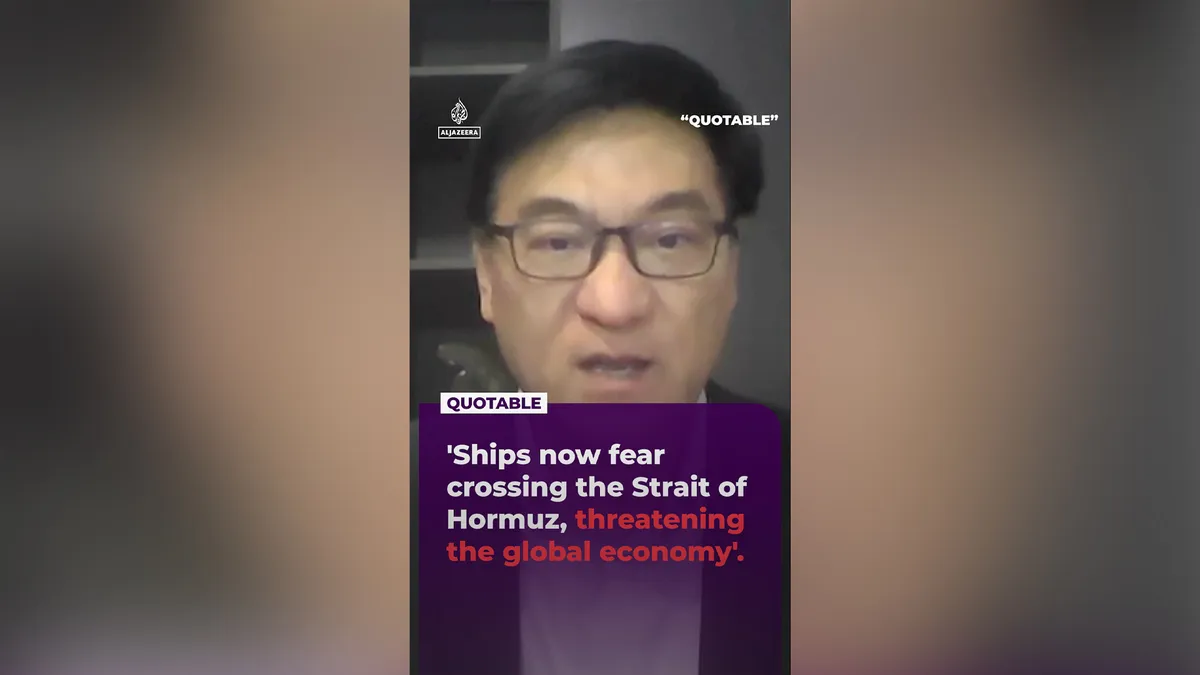
'Ships now fear crossing the Strait of Hormuz'Quotable“Ships are now afraid to cross the Strait of Hormuz, and that has profound implications for the Global Economy.” Professor John Gong, an economics professor at Beijing University of International Business and Economics, warned of the repercussions of continued tensions in the Strait of Hormuz on global energy markets, emphasizing that major industrialized nations cannot sustain high oil prices for an extended period.Published On 3 Mar 2026
SRCAl Jazeera
LANGEN
LEANCenter
WORDS74
ENT3
TUE · 2026-03-03 · 16:30 GMTBRIEF NSR-2026-0303-21054
NSR-2026-0303-21054News Report·EN·Economic Impact
‘Ships now fear crossing the Strait of Hormuz’
According to a report published on March 3, 2026, ships are increasingly hesitant to navigate the Strait of Hormuz. Professor John Gong, an economics professor at Beijing University of International Business and Economics, stated that this reluctance has significant consequences for the global economy.
Al JazeeraFiled 2026-03-03 · 16:30 GMTLean · CenterRead · 1 min
Al JazeeraFIG 01
Reading time
1min
Word count
74words
Sources cited
1cited
Entities identified
3entities
Quality score
100%
§ 01
Briefing Summary
AI-generatedNEWSAR · AI
According to a report published on March 3, 2026, ships are increasingly hesitant to navigate the Strait of Hormuz. Professor John Gong, an economics professor at Beijing University of International Business and Economics, stated that this reluctance has significant consequences for the global economy. He warned that sustained tensions in the Strait could lead to high oil prices, which major industrialized nations would struggle to endure long-term. The Strait of Hormuz is a critical waterway for global oil transportation, and disruptions there can have widespread economic effects. The report highlights concerns about the potential impact on global energy markets.
Confidence 0.70Sources 1Claims 3Entities 3
§ 02
Article analysis
Model · rule-basedFraming
Economic Impact
Conflict
Tone
Mixed Tone
AI-assessed
CalmNeutralAlarmist
Factuality
0.40 / 1.00
Mixed
LowHigh
Sources cited
1
Limited
FewMany
§ 03
Key claims
3 extracted01
Ships are now afraid to cross the Strait of Hormuz.
quoteProfessor John Gong
Confidence
0.80
02
Continued tensions in the Strait of Hormuz have profound implications for the global economy.
predictionProfessor John Gong
Confidence
0.70
03
Major industrialized nations cannot sustain high oil prices for an extended period.
predictionProfessor John Gong
Confidence
0.60
§ 04
Full report
1 min read · 74 words§ 05
Entities
3 identifiedKey playerOppositionContextPositiveNeutralNegative
People1
Organizations1
§ 06
Keywords & salience
7 termsstrait of hormuz
1.00
global economy
0.80
ships
0.70
energy markets
0.70
oil prices
0.70
global energy
0.60
tensions
0.60
§ 07
Topic connections
Interactive graph Network visualization showing 51 related topics
View Full Graph Person Organization Location Event|Click node to navigate|Edge numbers = shared articles