Beijing should increase investment in early childhood education and lifelong learning as AI reshapes the world’s largest labour market, a prominent Chinese economist has said.The real policy test for China is whether it can shift decisively from investing in capital to investing in people, while policy and regulation must steer artificial intelligence (AI) towards empowering rather than replacing workers, according to Cai Fang, an academician at the Chinese Academy of Social Sciences focusing on labour economics.“As [population] ageing accelerates, older workers’ employment, skills and consumption will be critical to growth and social stability,” Cai said during a conversation with Zhao Jing, an associate professor at Tsinghua University’s School of Public Policy and Management, which was shared via the school’s account on the social platform WeChat last week.“Their ability to remain employable and even delay retirement depends on continued participation in the labour market, which is why training for older workers carries high social returns,” Cai added.Education can no longer be seen merely as a private family investment aimed at giving one child an edge over another; it has become a societal imperative to ensure the next generation can withstand and adapt to the disruptions brought by AI, according to Cai.The remarks came as China’s factories and offices integrate AI solutions at an accelerating pace, driving Beijing to treat its impact on jobs as an urgent economic and social policy priority.With global forecasts predicting sweeping churn in the workforce and domestic studies showing AI is changing – not simply replacing – jobs, the labour market’s ultimate trajectory would hinge on how effectively policymakers manage the transition, experts said.
SRCSouth China Morning Post
LANGEN
LEANCenter-Right
WORDS267
ENT6
TUE · 2026-03-03 · 23:00 GMTBRIEF NSR-2026-0304-21155
NSR-2026-0304-21155News Report·EN·Economic Impact
China should up education spending to help population adapt to AI era: economist
A prominent Chinese economist, Cai Fang, advises Beijing to increase investment in early childhood education and lifelong learning to help its population adapt to the AI era. Cai argues that China needs to shift its investment focus from capital to people, particularly older workers, to maintain growth and social stability amidst an aging population.
Luna SunSouth China Morning PostFiled 2026-03-03 · 23:00 GMTLean · Center-RightRead · 2 min
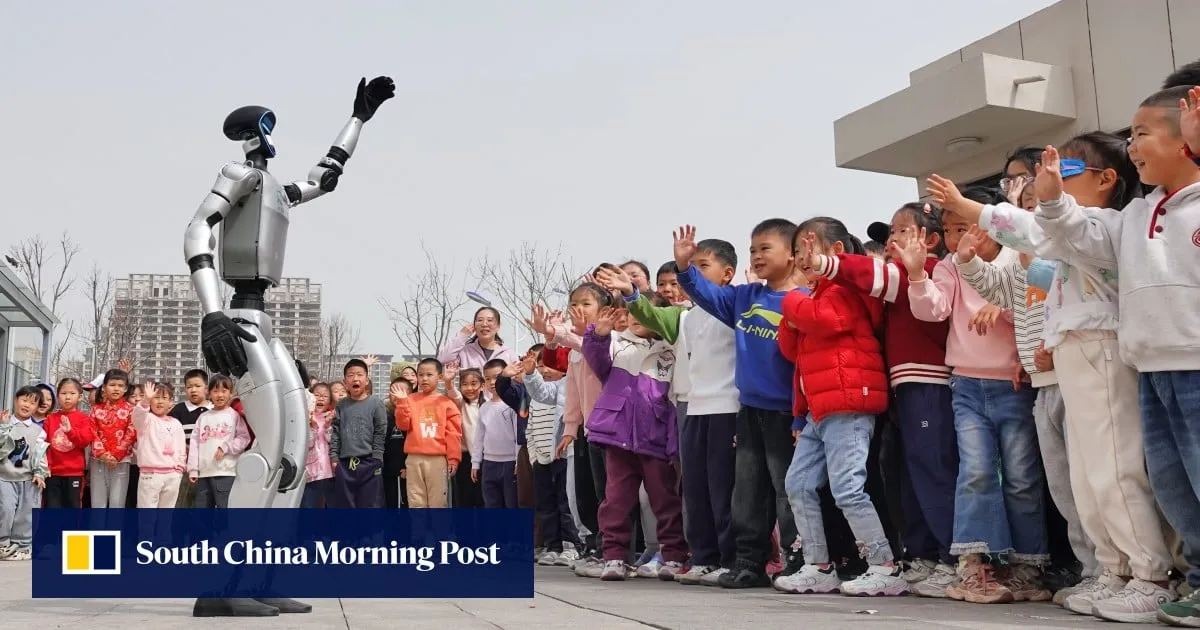
South China Morning PostFIG 01
Reading time
2min
Word count
267words
Sources cited
2cited
Entities identified
6entities
Quality score
100%
§ 01
Briefing Summary
AI-generatedNEWSAR · AI
A prominent Chinese economist, Cai Fang, advises Beijing to increase investment in early childhood education and lifelong learning to help its population adapt to the AI era. Cai argues that China needs to shift its investment focus from capital to people, particularly older workers, to maintain growth and social stability amidst an aging population. He emphasizes that education is now a societal imperative to ensure the next generation can withstand AI disruptions. This recommendation comes as China rapidly integrates AI into its industries, making the impact of AI on jobs an urgent policy concern. Experts suggest the labor market's future depends on how effectively policymakers manage this transition.
Confidence 0.90Sources 2Claims 5Entities 6
§ 02
Article analysis
Model · rule-basedFraming
Economic Impact
Technology
Tone
Measured
AI-assessed
CalmNeutralAlarmist
Factuality
0.70 / 1.00
Factual
LowHigh
Sources cited
2
Limited
FewMany
§ 03
Key claims
5 extracted01
Education has become a societal imperative to ensure the next generation can adapt to AI.
quoteCai Fang
Confidence
1.00
02
Older workers’ employment, skills and consumption will be critical to growth and social stability.
quoteCai Fang
Confidence
1.00
03
Policy and regulation must steer AI towards empowering rather than replacing workers.
quoteCai Fang
Confidence
1.00
04
China should increase investment in early childhood education and lifelong learning.
quoteCai Fang
Confidence
1.00
05
China's factories and offices integrate AI solutions at an accelerating pace.
factual
Confidence
0.80
§ 04
Full report
2 min read · 267 words§ 05
Entities
6 identifiedKey playerOppositionContextPositiveNeutralNegative
Organizations4
§ 06
Keywords & salience
9 termsartificial intelligence
0.90
education spending
0.80
labor market
0.70
older workers
0.60
lifelong learning
0.60
early childhood education
0.60
policy and regulation
0.50
skills training
0.50
social stability
0.40
§ 07
Topic connections
Interactive graph Network visualization showing 51 related topics
View Full Graph Person Organization Location Event|Click node to navigate|Edge numbers = shared articles