Free speech advocates have accused Donald Trump of “shredding civil liberties” and “censorship pure and simple” after the White House said it planned to require visa applicants from dozens of countries to provide social media, phone and email histories for vetting before being allowed into the US.In a move that some commentators compared to China and others warned would decimate tourism to the US, including the 2026 Fifa World Cup, the Department for Homeland Security said it was planning to apply the rules to visitors from 42 countries, including the UK, Ireland, Australia, France, Germany and Japan, if they want to enter the US on the commonly used Esta visa waiver.The checks will be carried out when a traveller applies for their Esta and “will require Esta applicants to provide their social media from the last five years” as well as “telephone numbers used in the last five years” and “email addresses used in the last 10 years”, government documents show.“The seriousness of this move should not be downplayed,” said Jemimah Steinfeld, the chief executive of Index on Censorship in London. “Through a simple search any posts critical of Trump and his administration could be revealed and then what? Will admission to the USA be predicated on being nice about the president? That would be censorship pure and simple and the result will extend far beyond as people start to self-censor to keep the door to the USA open to them.”Amnesty International UK called the plan “wildly out of proportion to any legitimate border need”.“This moment shows how ‘slippery slopes’ on human rights suddenly become cliffs. Years of unchecked data-trawling at borders, including the UK’s, have led us here,” said Javier Ruiz Diaz, the group’s technology and human rights lead.The Big Brother Watch campaign group called the plan “the latest evidence of the Trump administration’s enthusiasm for shredding civil liberties in the name of border control and national security”.“The US government would each year have access to millions of years’ worth of social media content, the vast majority of which includes speech that is legal in the United States,” said Matthew Feeney, the group’s advocacy manager. “This would encourage millions of law-abiding people, including many American citizens, to self-censor criticism of the US government. So much for the Trump administration’s commitment to free speech.”In Brussels, Trump’s move was described as “ironic” given his criticism of the EU’s €120m fine of Elon Musk’s X platform last week as “nasty”. The border measures were “a dramatic overreach and breach of fundamental rights,” said the German MEP Birgit Sippel, a member of the European Parliament’s committee on civil Liberties, justice and home affairs.Minky Worden, the director of global initiatives at Human Rights Watch, said the new entry requirements were “an outrageous demand that violates fundamental free speech and free expression rights”, according to Politico.Trump said on Wednesday: “We want safety. We want security. We want to make sure we’re not letting the wrong people come into our country.”Asked on Thursday how it would protect its employees from the checks, the European Commission described the policy as “floated plans”. “We haven’t seen any confirmation of this plan, so there’s no need for us to further speculate,” a spokesperson said.The UK-based Free Speech Union, led by Toby Young, also declined to comment, saying it had a policy of not commenting on free speech issues in other countries.The move sparked some darkly comic responses. The X account of the UK satirical news programme Have I Got News for You said: “The US border force is considering ‘social media checks’ for visitors before allowing them entry, which is fine because we’ve always said Trump’s ideas are great and he’s a good person.”Seth Bannon, an investor from San Francisco, said: “This is insane. China is preparing to require tourists to hand over five years of social media history, all email addresses and phone numbers used in the last five years, and the freaking names and addresses of family members. No thanks won’t be visiting anytime soon!”He followed up with a post saying: “Oh no whoops no that’s the US, not China.”Jon Cooper, a former campaign chair for Barack Obama, said: “This is insane. It will DECIMATE the US tourism industry.” Paul Barry, an investigative journalist based in Australia, added: “Bang goes that US trip.”Within the past five years, the British prime minister, Keir Starmer, has posted on X that the Trump supporters who rioted at the Capitol in 2021 were part of “a direct attack on democracy and legislators carrying out the will of the American people”.Going back further than the five years of social media posts that would be checked, the health secretary, Wes Streeting, called Trump in 2017 an “odious, sad, little man”. The same year, the technology secretary, Liz Kendall, who is holding meetings in Silicon Valley this week, accused Trump on X of “degrading [the] office of the president” over a tax bill that benefited the super-rich and said: “Trump & Putin don’t want ‘real’ news, they want silence”.Jeremy Bradley, an expert in privacy and the managing director of Zama, a cryptography company based in Paris, said it was wrong to treat someone’s online history as a permanent record of their beliefs, because people’s views changed.“Personal choice and freedom of expression shouldn’t be sacrificed in the name of surveillance, especially when it chills speech and curtails basic freedoms,” he said. “Privacy isn’t just a technical issue; it’s about dignity and the freedom to be human.”X, TikTok and Meta, which operates Instagram, Facebook and Threads, were approached for comment.
SRCThe Guardian - World News
LANGEN
LEANCenter-Left
WORDS924
ENT4
THU · 2025-12-11 · 16:00 GMTBRIEF NSR-2025-1211-2130
NSR-2025-1211-2130News Report·EN·Human Rights
‘Censorship pure and simple’: critics hit out at Trump plan to vet visitors’ social media
The Trump administration is planning to require visa applicants from 42 countries, including the UK, Ireland, Australia, France, Germany, and Japan, to provide social media, phone, and email histories for vetting before entering the US under the commonly used ESTA visa waiver program. The Department for Homeland Security plans to require ESTA applicants to provide social media from the last five years, telephone numbers used in the last five years, and email addresses used in the last 10 years.
Robert Booth and Jakub KrupaThe Guardian - World NewsFiled 2025-12-11 · 16:00 GMTLean · Center-LeftRead · 4 min
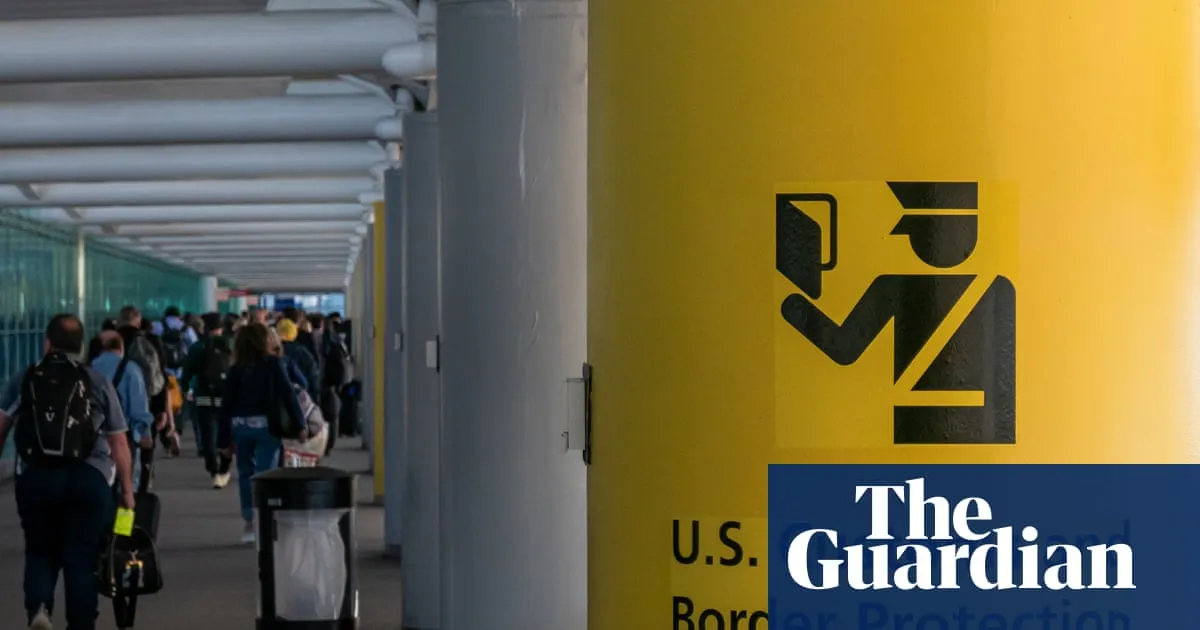
The Guardian - World NewsFIG 01
Reading time
4min
Word count
924words
Sources cited
8cited
Entities identified
4entities
Quality score
100%
§ 01
Briefing Summary
AI-generatedNEWSAR · AI
The Trump administration is planning to require visa applicants from 42 countries, including the UK, Ireland, Australia, France, Germany, and Japan, to provide social media, phone, and email histories for vetting before entering the US under the commonly used ESTA visa waiver program. The Department for Homeland Security plans to require ESTA applicants to provide social media from the last five years, telephone numbers used in the last five years, and email addresses used in the last 10 years. Free speech advocates are criticizing the plan, accusing the administration of censorship and infringing on civil liberties. Critics warn that the policy could lead to self-censorship and negatively impact tourism, including the 2026 FIFA World Cup.
Confidence 0.90Sources 8Claims 5Entities 4
§ 02
Article analysis
Model · rule-basedFraming
Human Rights
National Security
Tone
Mixed Tone
AI-assessed
CalmNeutralAlarmist
Factuality
0.60 / 1.00
Mixed
LowHigh
Sources cited
8
Well sourced
FewMany
§ 03
Key claims
5 extracted01
The US government would each year have access to millions of years’ worth of social media content.
quoteMatthew Feeney, Big Brother Watch
Confidence
1.00
02
This moment shows how ‘slippery slopes’ on human rights suddenly become cliffs.
quoteJavier Ruiz Diaz, Amnesty International UK
Confidence
1.00
03
The checks will require Esta applicants to provide their social media from the last five years.
factualgovernment documents
Confidence
1.00
04
The White House plans to require visa applicants from 42 countries to provide social media, phone and email histories.
factualDepartment for Homeland Security
Confidence
1.00
05
Trump's move was described as “ironic” given his criticism of the EU’s €120m fine of Elon Musk’s X platform.
factualnull
Confidence
0.90
§ 04
Full report
4 min read · 924 words§ 05
Entities
4 identifiedKey playerOppositionContextPositiveNeutralNegative
Locations1
§ 06
Keywords & salience
10 termssocial media vetting
0.90
censorship
0.80
donald trump
0.70
free speech
0.70
visa applicants
0.70
civil liberties
0.60
self-censor
0.60
data trawling
0.50
border control
0.50
national security
0.40
§ 07
Topic connections
Interactive graph Network visualization showing 51 related topics
View Full Graph Person Organization Location Event|Click node to navigate|Edge numbers = shared articles