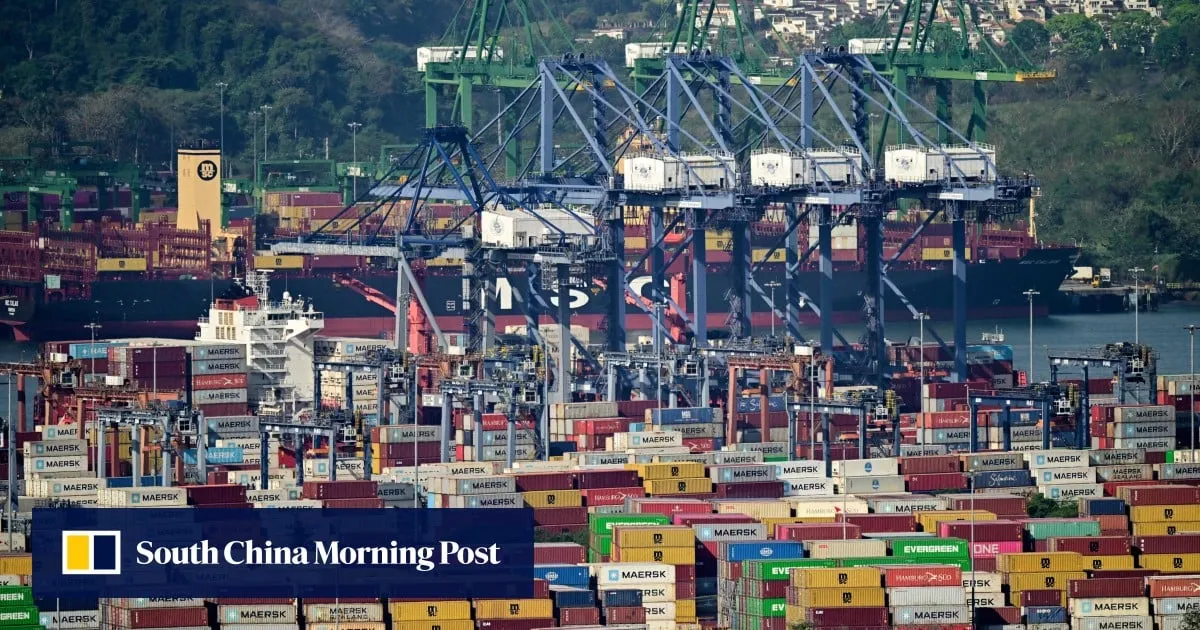
A Hong Kong operator has lost control of the Panama-canal" class="entity-link entity-location" data-entity-id="8414" data-entity-type="location">Panama Canal, one of the world’s most pivotal waterways for merchant ships, but university researchers said this week that Chinese state institutions have funded hundreds of other seaports around the world.Specifically, they have invested a total of US$23.9 billion over the past quarter century in 363 ports and related activities abroad, according to AidData, a research lab at William & Mary University in the United States. AidData called the investments a safeguard against East-West supply chain decoupling.The research team’s just-released study said 45.1 per cent of the Chinese port finance portfolio goes to locales in 20 “high-income” countries including Australia, Brunei, New Zealand, Spain and Singapore. That amount financed 30 individual ports.“China’s nearly ubiquitous presence in the world’s top ports means that the US cannot currently insulate itself from Chinese supply chains, in either peacetime or conflict,” said the study titled Anchoring Global Ambitions, Beijing’s Ports Financing and the Race for Maritime Dominance.Years of China-US trade disputes, rising tariffs and export curbs have raised fears of supply-chain decoupling, which was accentuated in 2025, when US Treasury Secretary Scott Bessent said Washington might push for delisting US-traded Chinese companies.Last month, Panama took control of two ports at the Atlantic and Pacific entrances of the strategic Panama-canal" class="entity-link entity-location" data-entity-id="8414" data-entity-type="location">Panama Canal after a Supreme Court ruling voided the concession of a Hong Kong conglomerate CK Hutchison subsidiary, a move that Washington called “in line with President Donald Trump’s drive to curb Chinese influence”.The most heavily financed sites include Hambantota International Port in Sri Lanka, the Australian ports of Melbourne and Newcastle, the Autonomous Port of Kribi in Cameroon and Israel’s Haifa Port. Financing totals ranged from US$1.13 billion for Haifa to US$1.97 billion for Hambantota, AidData found.
SRCSouth China Morning Post
LANGEN
LEANCenter-Right
WORDS291
ENT9
WED · 2026-03-04 · 23:00 GMTBRIEF NSR-2026-0305-21512
NSR-2026-0305-21512News Report·EN·Political Strategy
Panama out, but study says China investing US$23.9 billion in world’s seaports
A recent study by AidData at William & Mary University reveals that Chinese state institutions have invested US$23.9 billion in 363 seaports and related activities worldwide over the past 25 years. The research indicates that nearly half of this investment is directed towards ports in high-income countries, including Australia, Spain, and Singapore.
Ralph JenningsSouth China Morning PostFiled 2026-03-04 · 23:00 GMTLean · Center-RightRead · 2 min
South China Morning PostFIG 01
Reading time
2min
Word count
291words
Sources cited
2cited
Entities identified
9entities
Quality score
100%
§ 01
Briefing Summary
AI-generatedNEWSAR · AI
A recent study by AidData at William & Mary University reveals that Chinese state institutions have invested US$23.9 billion in 363 seaports and related activities worldwide over the past 25 years. The research indicates that nearly half of this investment is directed towards ports in high-income countries, including Australia, Spain, and Singapore. This extensive port financing is seen as a strategic move to safeguard against potential East-West supply chain decoupling. The study highlights China's significant presence in global ports, suggesting the US cannot currently avoid Chinese supply chains. This news follows Panama's recent reclaiming of control over two ports previously operated by a Hong Kong conglomerate. The most heavily financed ports include locations in Sri Lanka, Australia, Cameroon, and Israel.
Confidence 0.90Sources 2Claims 5Entities 9
§ 02
Article analysis
Model · rule-basedFraming
Political Strategy
Economic Impact
Tone
Measured
AI-assessed
CalmNeutralAlarmist
Factuality
0.80 / 1.00
Factual
LowHigh
Sources cited
2
Limited
FewMany
§ 03
Key claims
5 extracted01
Financing totals ranged from US$1.13 billion for Haifa to US$1.97 billion for Hambantota.
statisticAidData
Confidence
1.00
02
Panama took control of two ports after a Supreme Court ruling voided the concession of a Hong Kong conglomerate CK Hutchison subsidiary.
factual
Confidence
1.00
03
45.1 per cent of the Chinese port finance portfolio goes to locales in 20 “high-income” countries.
statisticAidData
Confidence
1.00
04
Chinese state institutions have invested US$23.9 billion in 363 ports and related activities abroad.
statisticAidData
Confidence
1.00
05
Chinese state institutions have funded hundreds of seaports around the world.
factualuniversity researchers
Confidence
1.00
§ 04
Full report
2 min read · 291 words§ 05
Entities
9 identifiedKey playerOppositionContextPositiveNeutralNegative
Organizations1
§ 06
Keywords & salience
8 termsseaport investment
0.90
china
0.80
supply chain decoupling
0.70
maritime dominance
0.60
port financing
0.60
trade disputes
0.50
panama canal
0.50
aiddata
0.40
§ 07
Topic connections
Interactive graph Network visualization showing 51 related topics
View Full Graph Person Organization Location Event|Click node to navigate|Edge numbers = shared articles