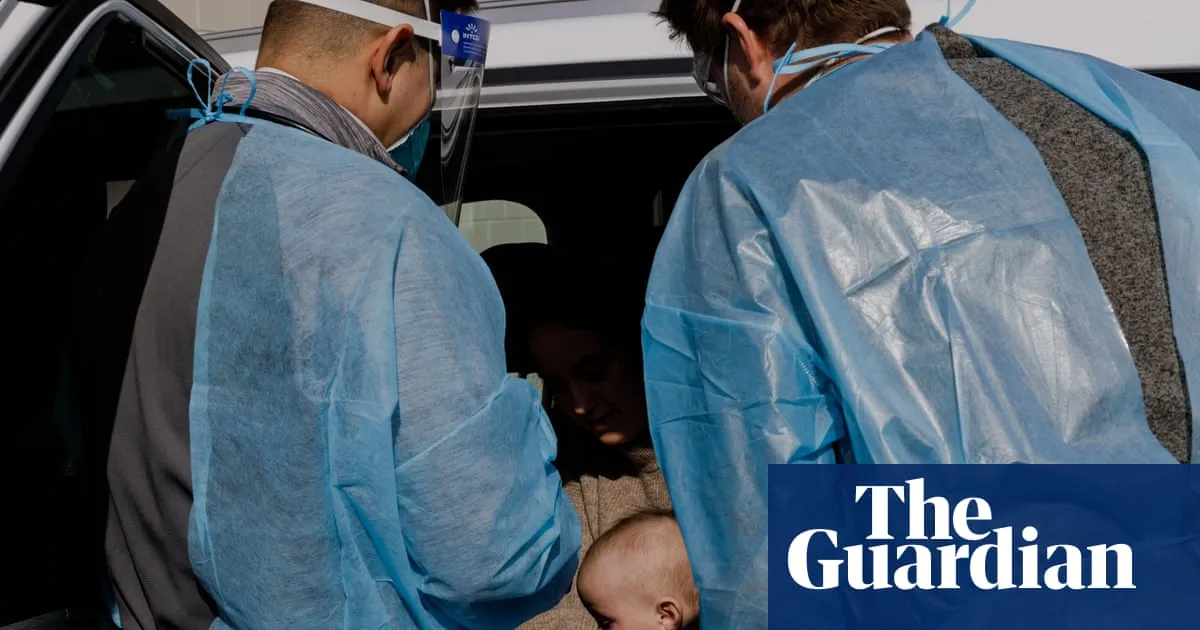
Experts say that the Trump administration has failed to take obvious steps to contain the spread of measles, which is continuing to accelerate in the United States as the number of cases has climbed past 1,000.The administration has revealed a relaxed attitude toward the highly contagious virus both in terms of messaging and funding allocation, experts said.“One of the leaders at [the Centers for Disease Control and Prevention (CDC)] referred to this dramatic and tragic increase in the cases of measles, and, in some states, deaths, as just the ‘cost of doing business’,” noted Alonzo Plough, who has worked in multiple senior public health positions and is currently chief of science at the Robert Wood Johnson Foundation.Plough was referencing a quote from Dr Ralph Abraham, who served as CDC principal deputy director beginning in December 2025, and who resigned in late February. To Plough, hearing that from CDC leadership suggests “that they do not believe that this is a significant issue to track”.Andrew G Nixon, a spokesperson for the Department of Health and Human Services, said it’s “entirely inaccurate” to suggest that the CDC had deprioritized measles.“The CDC’s focus remains on measles prevention and treatment education and targeted public health interventions to protect communities and provide clear, accurate information to all Americans,” Nixon said.Florida’s former surgeon general and a current professor at Brown University’s school of public health, Dr Scott Rivkees, said that current messaging on public health is causing “tremendous confusion to the public”, with “individuals in senior positions who are advocating for things that the medical community will take issue with”, like “alternatives” to the measles vaccine, which is known to be safe and effective.But while Rivkees says messaging has been confusing on the national level, he added that the local health department in Spartanburg County, South Carolina, which is experiencing the most severe US measles outbreak, is doing everything it should, including ramping up vaccination clinics and posting billboards urging people to vaccinate.An HHS spokesperson said: “CDC has provided support to some jurisdictions experiencing large outbreaks based on requests for additional support from them.” South Carolina specifically requested “non-CDC reinforcements” in its battle against measles, Reuters reported.Previously, the CDC would have issued regular reports, alerts and social media posts to help people protect themselves during outbreaks like these. But CDC communications about measles outbreaks over the last year have been minimal.For several months after the first 2025 outbreak, the CDC rarely posted about measles on its X account. One of the few measles-related posts went on the defensive, telling followers that “framing measles as an American policy failure is inaccurate and misleading” while linking to a letter to the Wall Street Journal by former CDC principal deputy director Abraham.In it, Abraham wrote that “we can’t rely exclusively on vaccination [to prevent measles]”. Ninety-four percent of measles cases have occurred among individuals who are unvaccinated or whose vaccination status is unknown. Earlier this month, the CDC’s X account posted a video of CDC acting director Jay Bhattacharya, wherein he encourages people to get vaccinated, though the text of the post does not mention vaccines.Some experts said that the Trump administration’s significant cuts to CDC funding streams, which help public health officials track and contain health problems at the local, state and national levels, last year have greatly contributed to the lack of public communication from the government about measles.“Disease surveillance is a bit of a pyramid,” said Jennifer Nuzzo, director of the pandemic center at Brown University.At the bottom of the pyramid, Nuzzo said, are hospitals that track when children arrive with possible measles symptoms and when they test positive. They share this information with local health departments, and the data sharing goes all the way up to the national CDC level. But cuts have slowed that entire process.“What we’ve seen in the past year is just an erosion of all capacities due to broader funding cuts, not necessarily specifically targeting measles,” Nuzzo continued.Plough echoed Nuzzo on the impact of the cuts to core CDC staff. Those cuts have coincided with delays in reports on morbidity and mortality that the CDC used to release on a routine basis, indicating that the reporting on health data from the CDC “has been severely compromised” Plough said.The experts agree that due to the cuts and the delays in reporting, Americans likely do not know the full gravity of the current measles outbreaks. Nuzzo says that because the US has seen three measles fatalities so far, it suggests a much higher number of total cases than the approximately 1,100 that have been tracked so far.One cost-effective way to fill in those gaps would be to ramp up wastewater surveillance, says Nuzzo. Wastewater data can help estimate cases before they’re detected clinically, and can even be used as a substitute for clinical detection in areas that are lagging behind. Funding streams dedicated specifically to Covid-19 ramped up the country’s wastewater surveillance system, but that supplemental funding expired last year. Additionally, the Trump administration has proposed cuts for this type of surveillance from $125m to $25m annually. Nuzzo said that if the administration took measles containment seriously, it would expand that funding instead.Rivkees believes that US public health systems will be restored to their past efficacy, as Congress recently restored much of CDC’s funding. Plough is less certain.“Yes, some money has been restored,” he said, but “money being restored and money being out into the right areas are two different things”.Since Congress replenished the CDC’s funding package, the Trump administration has looked for other ways to pull dollars from state and local health departments.“I’m usually a big glass-half-full guy, but not particularly on this one,” Plough said.If people more widely vaccinated their children, Nuzzo said, conversations about surveillance funding wouldn’t be needed: “No amount of surveillance is going to end this, unless people get vaccinated, because the only thing that ends this is immunity.”
SRCThe Guardian - World News
LANGEN
LEANCenter-Left
WORDS980
ENT9
THU · 2026-03-05 · 13:00 GMTBRIEF NSR-2026-0305-21710
NSR-2026-0305-21710News Report·EN·Public Health
Trump administration is failing to address spread of measles, experts say
Experts claim the Trump administration failed to adequately address the measles outbreak in the United States, which has surpassed 1,000 cases. They cite relaxed messaging and funding allocation as contributing factors.
Hannah Harris GreenThe Guardian - World NewsFiled 2026-03-05 · 13:00 GMTLean · Center-LeftRead · 4 min
The Guardian - World NewsFIG 01
Reading time
4min
Word count
980words
Sources cited
5cited
Entities identified
9entities
Quality score
100%
§ 01
Briefing Summary
AI-generatedNEWSAR · AI
Experts claim the Trump administration failed to adequately address the measles outbreak in the United States, which has surpassed 1,000 cases. They cite relaxed messaging and funding allocation as contributing factors. One expert referenced a former CDC leader's comment suggesting the agency didn't consider the outbreak a significant issue. While HHS denies deprioritizing measles prevention, another expert points to confusing public health messaging at the national level. However, local health departments, like the one in Spartanburg County, South Carolina, are actively working to combat the outbreak with vaccination clinics and public awareness campaigns. The CDC has provided support to jurisdictions experiencing large outbreaks based on requests.
Confidence 0.90Sources 5Claims 5Entities 9
§ 02
Article analysis
Model · rule-basedFraming
Public Health
Political Strategy
Tone
Mixed Tone
AI-assessed
CalmNeutralAlarmist
Factuality
0.70 / 1.00
Factual
LowHigh
Sources cited
5
Well sourced
FewMany
§ 03
Key claims
5 extracted01
CDC communications about measles outbreaks over the last year have been minimal.
factual
Confidence
0.90
02
The CDC's focus remains on measles prevention and treatment education.
quoteAndrew G Nixon
Confidence
0.90
03
One of the leaders at the CDC referred to the increase in measles cases as just the 'cost of doing business'.
quoteAlonzo Plough
Confidence
0.90
04
Current messaging on public health is causing tremendous confusion to the public.
quoteDr Scott Rivkees
Confidence
0.80
05
The Trump administration has failed to take obvious steps to contain the spread of measles.
factualExperts
Confidence
0.80
§ 04
Full report
4 min read · 980 words§ 05
Entities
9 identifiedKey playerOppositionContextPositiveNeutralNegative
People1
Organizations6
§ 06
Keywords & salience
8 termsmeasles outbreak
1.00
vaccination
0.80
public health
0.70
cdc
0.60
trump administration
0.60
messaging
0.50
public health interventions
0.40
contagious virus
0.40
§ 07
Topic connections
Interactive graph Network visualization showing 51 related topics
View Full Graph Person Organization Location Event|Click node to navigate|Edge numbers = shared articles