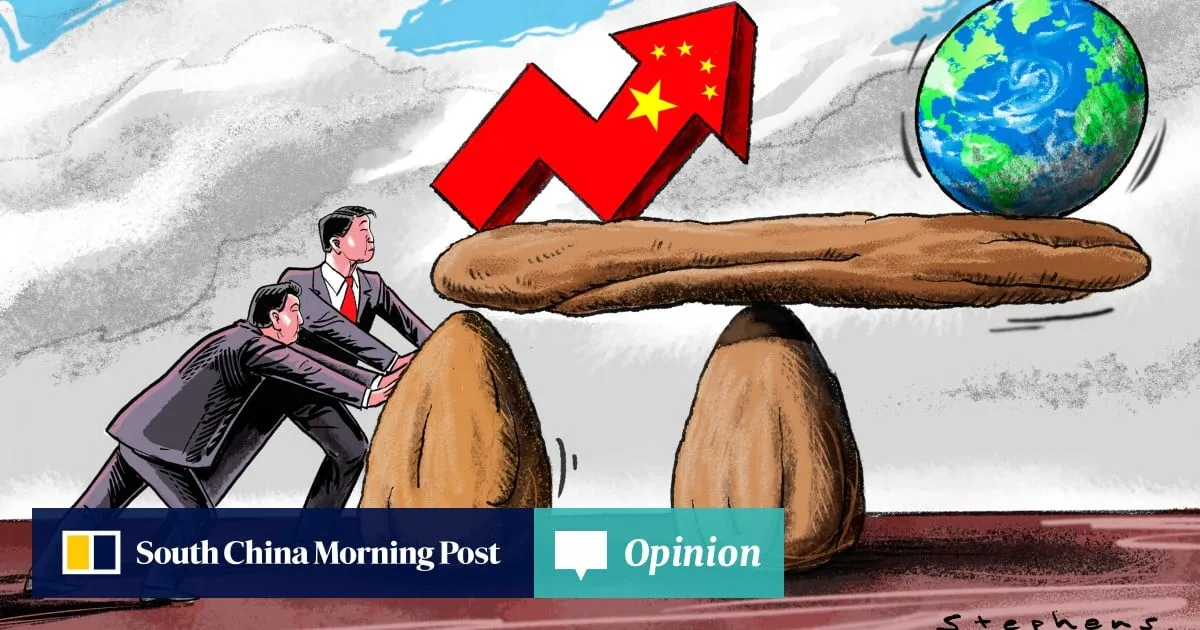
China’s “two sessions” this year presents less of a story of an economic miracle than of transition: from high-speed to high-quality growth, and from dependence on external demand to a more resilient, innovation-driven economy.Against a backdrop of global tensions and fragmenting supply chains, Beijing is using this political moment to signal that it sees opportunity in adversity and is prepared to recalibrate its development model rather than cling to the habits of the boom years.For China, the key question is no longer whether it can hit a headline growth number for a single year, but whether it can reshape the foundations of its economy in a way that is robust to shocks from geopolitics, demographics, finance and climate. Premier Li Qiang’s government work report on Thursday offers a window into how the leadership intends to answer that question. What emerges is a cautiously optimistic vision of slower, steadier growth powered more by chips, data and domestic demand.The 2026 growth target of 4.5 to 5 per cent is not an admission of weakness; it is a marker of economic maturity. Moving away from “growth at all costs” suggests a greater focus on better allocation of capital, improved environmental outcomes and more attention to financial stability.One of the most encouraging aspects of this year’s agenda is the continued emphasis on innovation and technological upgrading as central pillars of China’s long-term strategy. The subtext is clear: the days when China could grow by simply adding more labour and capital to low-tech factories are over. Future gains will come from doing more with less and doing it at the frontier.In practice, this means elevating research and development (R&D) from a supporting role to centre stage. Increased R&D spending, greater emphasis on basic science and support for strategic sectors are all part of the package.
SRCSouth China Morning Post
LANGEN
LEANCenter-Right
WORDS300
ENT3
THU · 2026-03-05 · 12:30 GMTBRIEF NSR-2026-0305-21734
NSR-2026-0305-21734Analysis·EN·Political Strategy
China’s ‘two sessions’ show plans for resilience in a stormy world
China's "two sessions" highlight a shift from high-speed growth to a more resilient, innovation-driven economy amidst global tensions. The focus is on transitioning away from dependence on external demand and recalibrating the development model.
Jianxi LiuSouth China Morning PostFiled 2026-03-05 · 12:30 GMTLean · Center-RightRead · 2 min
South China Morning PostFIG 01
Reading time
2min
Word count
300words
Sources cited
1cited
Entities identified
3entities
Quality score
100%
§ 01
Briefing Summary
AI-generatedNEWSAR · AI
China's "two sessions" highlight a shift from high-speed growth to a more resilient, innovation-driven economy amidst global tensions. The focus is on transitioning away from dependence on external demand and recalibrating the development model. Premier Li Qiang's government work report outlines a vision of slower, steadier growth powered by technology and domestic demand. The 2026 growth target of 4.5 to 5 percent signals economic maturity and a focus on capital allocation, environmental outcomes, and financial stability. Innovation and technological upgrading are central to China's long-term strategy, with increased R&D spending and support for strategic sectors.
Confidence 0.90Sources 1Claims 5Entities 3
§ 02
Article analysis
Model · rule-basedFraming
Political Strategy
Economic Impact
Tone
Measured
AI-assessed
CalmNeutralAlarmist
Factuality
0.40 / 1.00
Mixed
LowHigh
Sources cited
1
Limited
FewMany
§ 03
Key claims
5 extracted01
The 2026 growth target is 4.5 to 5 per cent.
statisticPremier Li Qiang’s government work report
Confidence
1.00
02
Increased R&D spending, greater emphasis on basic science and support for strategic sectors are all part of the package.
factualnull
Confidence
0.90
03
China is transitioning from high-speed to high-quality growth.
factualnull
Confidence
0.80
04
Beijing is using the 'two sessions' to signal opportunity in adversity.
factualnull
Confidence
0.70
05
Future gains will come from doing more with less and doing it at the frontier.
predictionnull
Confidence
0.60
§ 04
Full report
2 min read · 300 words§ 05
Entities
3 identifiedKey playerOppositionContextPositiveNeutralNegative
§ 06
Keywords & salience
9 termseconomic resilience
0.90
innovation-driven economy
0.80
high-quality growth
0.70
two sessions
0.70
r&d spending
0.60
domestic demand
0.60
economic maturity
0.50
technological upgrading
0.50
financial stability
0.40
§ 07
Topic connections
Interactive graph Network visualization showing 51 related topics
View Full Graph Person Organization Location Event|Click node to navigate|Edge numbers = shared articles