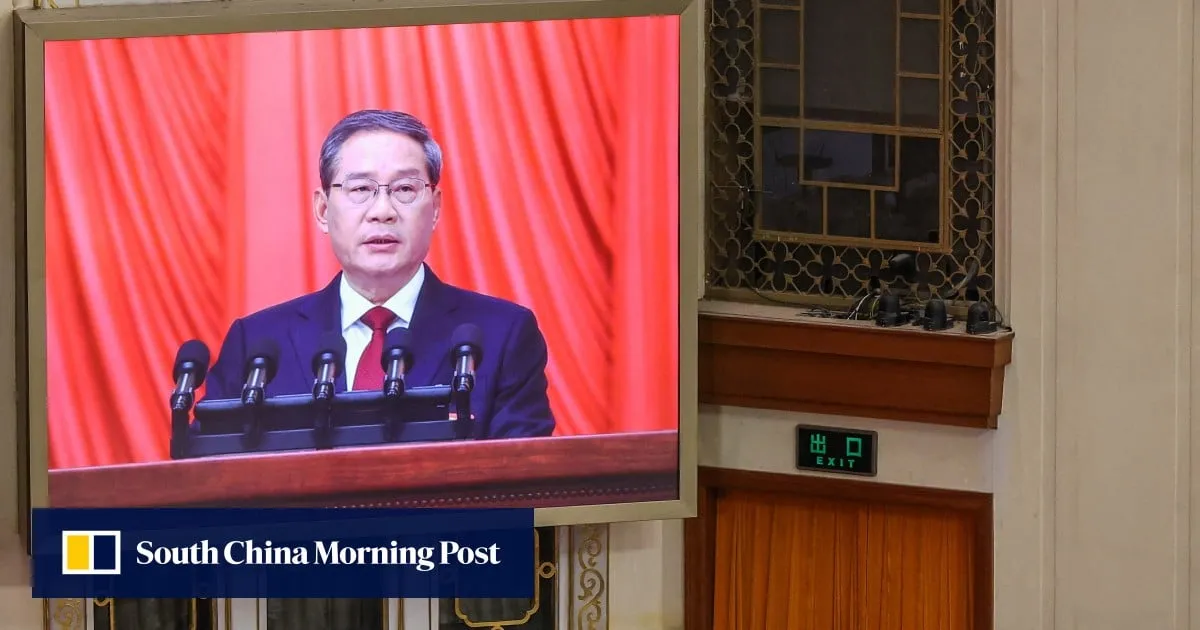
With local governments in China struggling to replenish their treasuries while facing growing public service obligations, Beijing is setting its sights on securing more tax revenue as a major reform goal for 2026 and the four years beyond.Compared with the previous five-year plan period’s emphasis on “tax and fee cuts”, the language in the draft of the full 15th five-year plan – released on Thursday – emphasised “maintaining a reasonable macro tax burden”.The document also pledged to “appropriately strengthen central government authority and increase the proportion of central fiscal expenditures, while reducing central fiscal responsibilities delegated to local governments for implementation”.Revamping China’s tax system has become a delicate balancing act for policymakers, who face the difficulty of raising sufficient revenue without imposing an excessive burden on businesses – a challenge made all the greater by an economic slowdown, a prolonged property downturn and persistent deflationary pressures.Authorities have pinned hopes on tax reform to help address major imbalances in the world’s second-largest economy, including industrial overcapacity, weak consumption and a persistent wealth gap.The government work report, delivered by Premier Li Qiang at the opening ceremony of the National People’s Congress on Thursday, listed “improving the local tax system” and “expanding local tax sources” as policy goals this year.The 2026 budget report, published by the Ministry of Finance on Thursday, also pledged to strengthen the overall planning of funds to better meet local needs.
SRCSouth China Morning Post
LANGEN
LEANCenter-Right
WORDS232
ENT6
FRI · 2026-03-06 · 03:00 GMTBRIEF NSR-2026-0306-21915
NSR-2026-0306-21915News Report·EN·Economic Impact
China’s new 5-year plan targets tax reform as local governments face fiscal strain
China's new five-year plan, starting in 2026, prioritizes tax reform to address fiscal strain on local governments. The plan aims to secure more tax revenue while maintaining a "reasonable macro tax burden," shifting from the previous period's focus on tax cuts.
Ji SiqiSouth China Morning PostFiled 2026-03-06 · 03:00 GMTLean · Center-RightRead · 1 min
South China Morning PostFIG 01
Reading time
1min
Word count
232words
Sources cited
2cited
Entities identified
6entities
Quality score
100%
§ 01
Briefing Summary
AI-generatedNEWSAR · AI
China's new five-year plan, starting in 2026, prioritizes tax reform to address fiscal strain on local governments. The plan aims to secure more tax revenue while maintaining a "reasonable macro tax burden," shifting from the previous period's focus on tax cuts. Beijing intends to increase central government authority and fiscal expenditures, reducing responsibilities delegated to local governments. This reform seeks to balance revenue generation with the need to avoid overburdening businesses amid economic challenges like a slowdown and deflationary pressures. The government hopes tax reform will address imbalances such as overcapacity and weak consumption. The 2026 budget report also pledges to strengthen fund planning to better meet local needs.
Confidence 0.90Sources 2Claims 5Entities 6
§ 02
Article analysis
Model · rule-basedFraming
Economic Impact
Political Strategy
Tone
Measured
AI-assessed
CalmNeutralAlarmist
Factuality
0.80 / 1.00
Factual
LowHigh
Sources cited
2
Limited
FewMany
§ 03
Key claims
5 extracted01
Premier Li Qiang listed “improving the local tax system” as a policy goal this year.
factualPremier Li Qiang
Confidence
1.00
02
The document pledged to increase the proportion of central fiscal expenditures.
factual
Confidence
1.00
03
The draft 15th five-year plan emphasized “maintaining a reasonable macro tax burden”.
quote
Confidence
1.00
04
China's new 5-year plan targets tax reform as local governments face fiscal strain.
factual
Confidence
1.00
05
Authorities hope tax reform will address imbalances like overcapacity and weak consumption.
prediction
Confidence
0.70
§ 04
Full report
1 min read · 232 words§ 05
Entities
6 identifiedKey playerOppositionContextPositiveNeutralNegative
Organizations3
§ 06
Keywords & salience
9 termstax reform
1.00
fiscal strain
0.80
local governments
0.70
tax revenue
0.70
macro tax burden
0.60
five-year plan
0.60
local tax system
0.50
economic slowdown
0.50
central government authority
0.40
§ 07
Topic connections
Interactive graph Network visualization showing 51 related topics
View Full Graph Person Organization Location Event|Click node to navigate|Edge numbers = shared articles