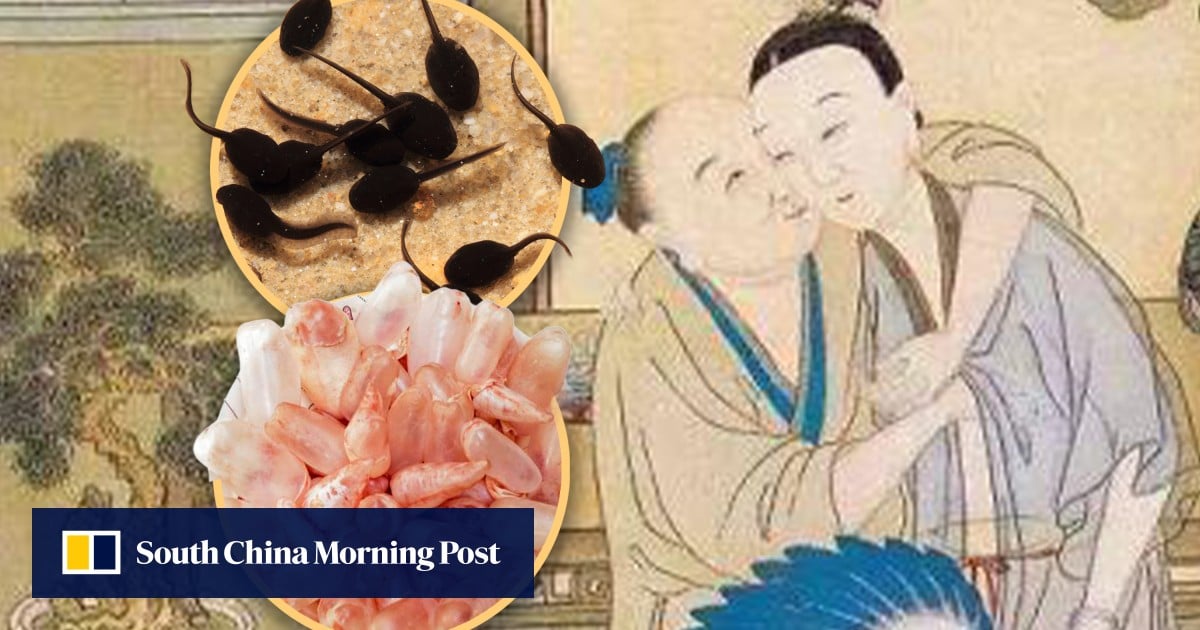
In ancient China, patriarchal and feudal norms limited women’s control over reproduction, forcing many to endure risky contraceptive methods.According to the Classic of Mountains and Seas, one of the earliest known contraceptives in China was a herb called Gurong.Its taste was extremely bitter, its leaves resembled orchids and its roots were similar to those of the balloon flower.During the pre-Qin period (2100–221), people believed that consuming Gurong, a plant that only bloomed but did not bear fruit, could prevent pregnancy, though modern science has not confirmed this.Tubular-shaped dried fish maw, above, were used as an early form of condom. Photo: RedNoteAnother ancient medical text, Essential Formulas Worth a Thousand in Gold for Emergencies, also mentions drinking boiled water made from purple jasmine roots, said to induce abortion.
SRCSouth China Morning Post
LANGEN
LEANCenter-Right
WORDS127
ENT5
MON · 2026-03-09 · 10:00 GMTBRIEF NSR-2026-0309-22769
NSR-2026-0309-22769News Report·EN·Human Interest
Ancient Chinese women used crude contraceptives – from eating tadpoles to ingesting mercury
Ancient Chinese women, facing limited reproductive control due to patriarchal norms, employed various crude contraceptive methods. Historical texts reveal the use of herbs like Gurong, believed to prevent pregnancy if consumed, although modern science hasn't confirmed its effectiveness.
Zoey ZhangSouth China Morning PostFiled 2026-03-09 · 10:00 GMTLean · Center-RightRead · 1 min
South China Morning PostFIG 01
Reading time
1min
Word count
127words
Sources cited
0cited
Entities identified
5entities
Quality score
100%
§ 01
Briefing Summary
AI-generatedNEWSAR · AI
Ancient Chinese women, facing limited reproductive control due to patriarchal norms, employed various crude contraceptive methods. Historical texts reveal the use of herbs like Gurong, believed to prevent pregnancy if consumed, although modern science hasn't confirmed its effectiveness. Another method involved drinking boiled water from purple jasmine roots, thought to induce abortion. These practices, documented in ancient medical texts like Essential Formulas Worth a Thousand in Gold for Emergencies and the Classic of Mountains and Seas, highlight the lengths women went to in ancient China to control their fertility. These methods were used during the pre-Qin period (2100–221) and beyond.
Confidence 0.85Claims 4Entities 5
§ 02
Article analysis
Model · rule-basedFraming
Human Interest
Human Rights
Tone
Mixed Tone
AI-assessed
CalmNeutralAlarmist
Factuality
0.70 / 1.00
Factual
LowHigh
Sources cited
0
No named sources
FewMany
§ 03
Key claims
4 extracted01
In ancient China, patriarchal and feudal norms limited women’s control over reproduction.
factual
Confidence
0.90
02
Essential Formulas Worth a Thousand in Gold for Emergencies mentions drinking boiled water made from purple jasmine roots to induce abortion.
factual
Confidence
0.80
03
One of the earliest known contraceptives in China was a herb called Gurong.
factual
Confidence
0.80
04
During the pre-Qin period, people believed that consuming Gurong could prevent pregnancy.
factual
Confidence
0.70
§ 04
Full report
1 min read · 127 words§ 05
Entities
5 identifiedKey playerOppositionContextPositiveNeutralNegative
Organizations3
§ 06
Keywords & salience
8 termscontraceptives
1.00
ancient china
0.90
women's health
0.70
reproduction
0.60
herbal medicine
0.60
gurong
0.50
abortion
0.50
medical text
0.40
§ 07
Topic connections
Interactive graph No topic relationship data available yet. This graph will appear once topic relationships have been computed.