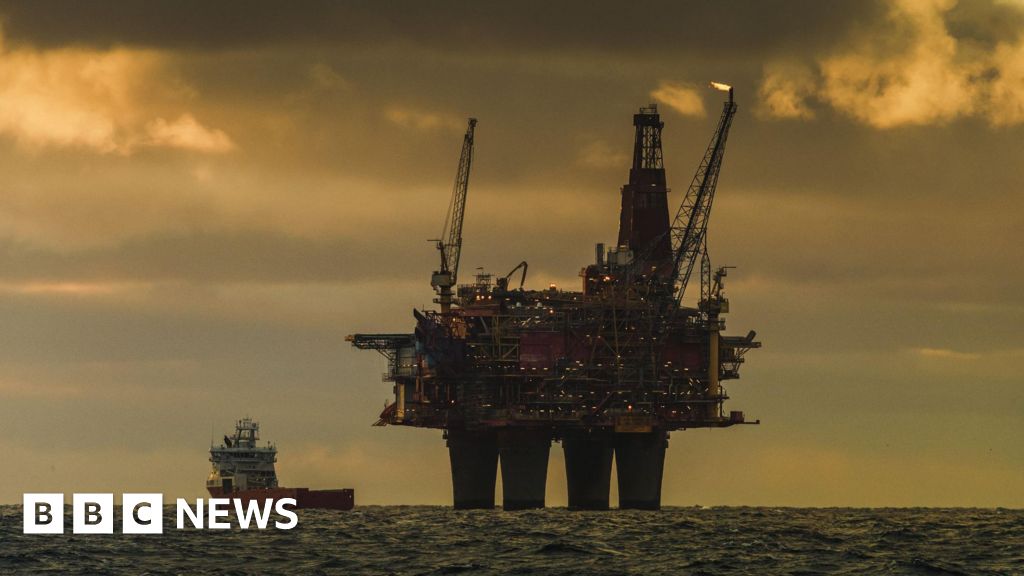
6 hours agoFaisal IslamEconomics editorGetty ImagesIt has been the most volatile day of oil trading in world history. The oil price spiralled to $115 (£86) a barrel at one point early on Monday, but word soon emerged of an emergency meeting of the G7 finance ministers.Reports suggested there could be a 300 million-barrel release of emergency stockpiles co-ordinated by the International Energy Agency.The speculation alone was enough to temper the rise in prices a bit, but they remained much higher than pre-conflict levels.Then, however, word emerged of what sounded like a pivot away from a long-run war by US President Donald Trump, and the oil price went into freefall, dipping below Friday's close. When Monday's trading day started in Asia the oil price was hovering around $90.The spiral up can be of little surprise of course when millions of barrels of crude oil are shut in to the Gulf, and when most Gulf countries are now - at best - reporting a slowing of their production, and at worst declaring force majeure shutdowns - a clause freeing them from liability for failure to supply due to events outside their control.Follow latest updates on the Iran conflictThree hundred million barrels is a massive number. It would have been more than double the record previous intervention made in April 2022 after Russia's invasion of Ukraine. These reserves have only been tapped five times. This would have represented a quarter of stockpiles.However, this also has the potential to be the biggest oil shock in history. Three hundred million barrels is effectively less than three days of global oil consumption (104 million barrels a day), about a fortnight of normal Straits of Hormuz traffic.The G7 finance ministers may not all agree, and they decided against tapping the reserves immediately. Other support is required.Will all ministers want naval escorts through the Strait of Hormuz? Does a new system of insurance solve the problems when drones and missiles are whizzing in the skies above the tankers, and occasionally targeting them?As powerful as the G7 is, China, India, and South Korea remain the key customers for physical supply of Gulf oil and gas. As such, gas tankers from the US that had been bound for Europe are now doing Atlantic U-turns and heading for the Panama Canal to deliver to Asia instead.And what about jet fuels and the raw materials which make fertiliser also shut in to the Gulf?After the G7 meeting, the chancellor told the House of Commons that the best way to help consumers would be a de-escalation of military tensions. The markets have read that into President Trump's comments. Even if the war stopped today, there is still havoc in supply chains, and damage done to energy infrastructure, that will take weeks to unpick.Nonetheless, it does seem that economic considerations are restraining President Trump, as gasoline prices for his core voters spike with the crude oil price.For now the war has not stopped, the markets are calmer, but the situation remains volatile.
SRCBBC News - World
LANGEN
LEANCenter
WORDS498
ENT12
TUE · 2026-03-10 · 00:48 GMTBRIEF NSR-2026-0310-23059
NSR-2026-0310-23059Analysis·EN·Economic Impact
Faisal Islam: Trump comments may have eased oil price surge, but havoc remains
On Monday, oil prices surged to $115 a barrel due to disruptions in Gulf oil production, with some countries declaring force majeure. Speculation about a potential 300 million-barrel release of emergency oil stockpiles by the International Energy Agency, coordinated by the G7 finance ministers, temporarily tempered the price increase.
BBC News - WorldFiled 2026-03-10 · 00:48 GMTLean · CenterRead · 2 min
BBC News - WorldFIG 01
Reading time
2min
Word count
498words
Sources cited
0cited
Entities identified
12entities
Quality score
100%
§ 01
Briefing Summary
AI-generatedNEWSAR · AI
On Monday, oil prices surged to $115 a barrel due to disruptions in Gulf oil production, with some countries declaring force majeure. Speculation about a potential 300 million-barrel release of emergency oil stockpiles by the International Energy Agency, coordinated by the G7 finance ministers, temporarily tempered the price increase. However, prices fell below Friday's close after reports of a possible shift in US policy by President Trump. The G7 considered but ultimately decided against immediately releasing reserves, recognizing that 300 million barrels represents less than three days of global oil consumption. The situation is further complicated by the fact that key customers for Gulf oil and gas are China, India, and South Korea, and by disruptions to jet fuel and fertilizer raw materials.
Confidence 0.90Claims 5Entities 12
§ 02
Article analysis
Model · rule-basedFraming
Economic Impact
Political Strategy
Tone
Mixed Tone
AI-assessed
CalmNeutralAlarmist
Factuality
0.60 / 1.00
Mixed
LowHigh
Sources cited
0
No named sources
FewMany
§ 03
Key claims
5 extracted01
The best way to help consumers would be a de-escalation of military tensions.
quotethe chancellor
Confidence
1.00
02
Three hundred million barrels is effectively less than three days of global oil consumption.
statistic
Confidence
1.00
03
The oil price spiralled to $115 a barrel at one point early on Monday.
factual
Confidence
1.00
04
Gas tankers from the US that had been bound for Europe are now doing Atlantic U-turns and heading for the Panama Canal to deliver to Asia instead.
factual
Confidence
0.90
05
Reports suggested there could be a 300 million-barrel release of emergency stockpiles.
factual
Confidence
0.80
§ 04
Full report
2 min read · 498 words§ 05
Entities
12 identifiedKey playerOppositionContextPositiveNeutralNegative
Organizations2
§ 06
Keywords & salience
9 termsoil price
1.00
oil market volatility
0.80
g7 finance ministers
0.70
emergency oil reserves
0.70
oil supply disruption
0.60
donald trump
0.50
crude oil production
0.50
strait of hormuz
0.50
international energy agency
0.40
§ 07
Topic connections
Interactive graph Network visualization showing 51 related topics
View Full Graph Person Organization Location Event|Click node to navigate|Edge numbers = shared articles