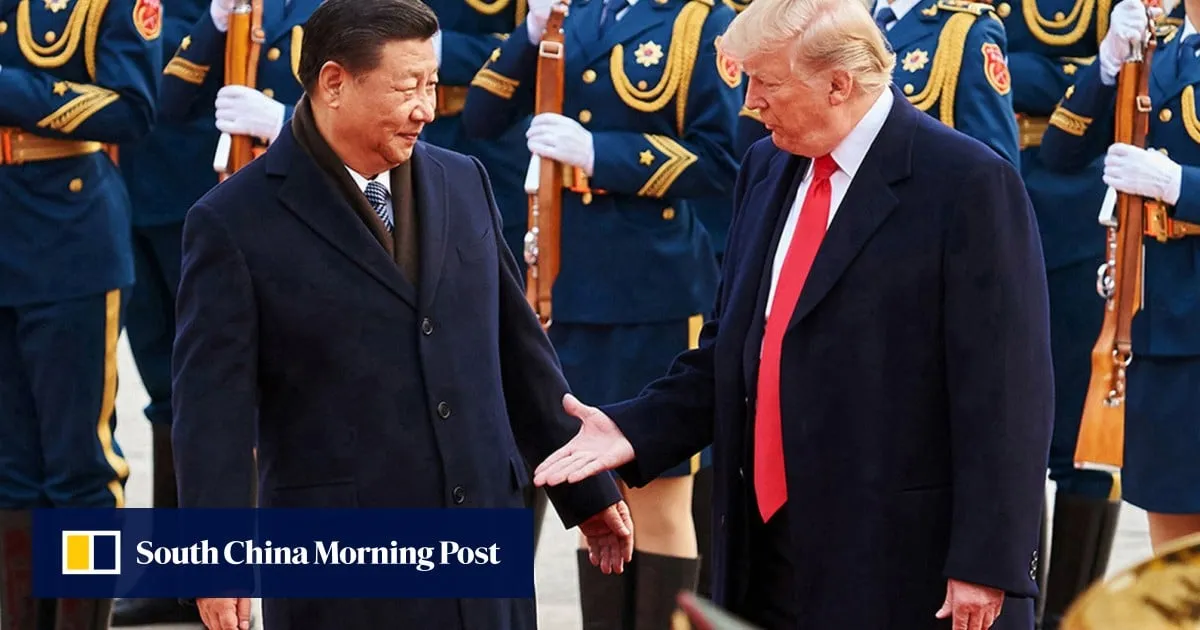
As US President Donald Trump prepares for his first China trip in nearly a decade, Chinese scholars see an opportunity to steer ties away from confrontation and towards a managed coexistence.Speakers at a seminar hosted by the University of Hong Kong’s Centre on Contemporary China and the World last week were cautiously optimistic about prospects for the relationship.That was despite Washington’s strategic pullback, heightened sensitivities over the Taiwan Strait, and intensifying conflict in the Middle East.Da Wei, director of the Centre for International Security and Strategy at Tsinghua University, argued that the “relative stability” in today’s US‑China relations was fundamentally different from the cycles of crisis and summit diplomacy seen under previous administrations.“I think the nature of the relationship has changed,” he said at the event on Friday.Da attributed that shift to the Trump administration’s “strategic retrenchment” which he said “basically ended the international liberalism which [Washington] had honoured for 80 years after World War II”.He said the world’s largest developed country and largest developing country had moved on from the “love and hate” partnership of the post-Cold War era, anchored by hyper-globalisation.
SRCSouth China Morning Post
LANGEN
LEANCenter-Right
WORDS183
ENT10
TUE · 2026-03-10 · 14:00 GMTBRIEF NSR-2026-0310-23167
NSR-2026-0310-23167News Report·EN·Diplomatic
From ‘love and hate’ to nationalism, can Xi and Trump rebalance ties?
Ahead of Donald Trump's upcoming visit to China, Chinese scholars are expressing cautious optimism about the future of US-China relations. Experts at a University of Hong Kong seminar suggested the relationship is evolving beyond previous cycles of crisis and summit diplomacy.
Shi JiangtaoSouth China Morning PostFiled 2026-03-10 · 14:00 GMTLean · Center-RightRead · 1 min
South China Morning PostFIG 01
Reading time
1min
Word count
183words
Sources cited
1cited
Entities identified
10entities
Quality score
100%
§ 01
Briefing Summary
AI-generatedNEWSAR · AI
Ahead of Donald Trump's upcoming visit to China, Chinese scholars are expressing cautious optimism about the future of US-China relations. Experts at a University of Hong Kong seminar suggested the relationship is evolving beyond previous cycles of crisis and summit diplomacy. This shift is attributed to the Trump administration's strategic pullback from international liberalism, a policy that defined Washington's approach for decades after World War II. The experts believe the two nations are moving away from the post-Cold War era's "love and hate" dynamic, potentially towards a more managed coexistence, despite ongoing tensions over issues like Taiwan and the Middle East. The hope is that Trump's visit will foster a rebalancing of ties.
Confidence 0.90Sources 1Claims 4Entities 10
§ 02
Article analysis
Model · rule-basedFraming
Diplomatic
Political Strategy
Tone
Measured
AI-assessed
CalmNeutralAlarmist
Factuality
0.70 / 1.00
Factual
LowHigh
Sources cited
1
Limited
FewMany
§ 03
Key claims
4 extracted01
Da Wei argued that the “relative stability” in today’s US‑China relations was fundamentally different from previous administrations.
quoteDa Wei
Confidence
0.90
02
Chinese scholars see an opportunity to steer ties away from confrontation and towards a managed coexistence.
quoteArticle
Confidence
0.80
03
Trump administration’s “strategic retrenchment” basically ended the international liberalism which [Washington] had honoured for 80 years after World War II
quoteDa Wei
Confidence
0.70
04
The world’s largest developed country and largest developing country had moved on from the “love and hate” partnership of the post-Cold War era
quoteDa Wei
Confidence
0.60
§ 04
Full report
1 min read · 183 words§ 05
Entities
10 identifiedKey playerOppositionContextPositiveNeutralNegative
People3
Organizations2
Locations4
§ 06
Keywords & salience
8 termsus-china relations
1.00
strategic retrenchment
0.70
international liberalism
0.60
managed coexistence
0.60
globalization
0.50
summit diplomacy
0.50
nationalism
0.40
taiwan strait
0.40
§ 07
Topic connections
Interactive graph Network visualization showing 51 related topics
View Full Graph Person Organization Location Event|Click node to navigate|Edge numbers = shared articles