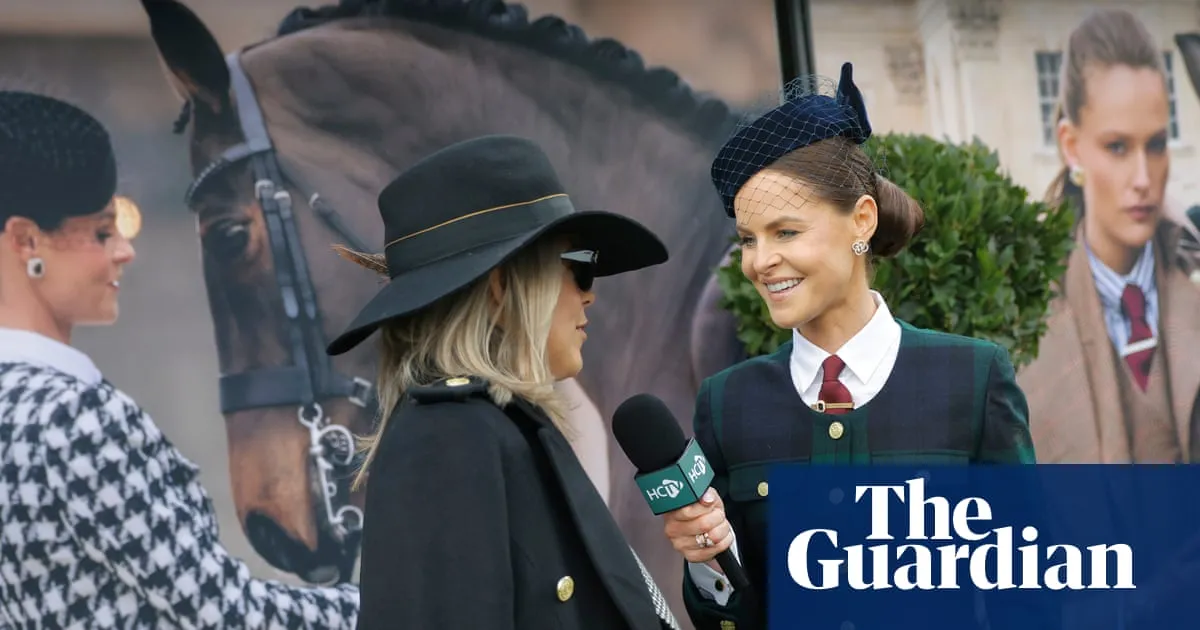
First and foremost, it is a huge sporting event, billed by its fans as the Olympics of jump racing – but it can also act as a social barometer, giving clues as to the state and mood of the nation.This year’s Cheltenham Festival, which began on Tuesday, feels a little like a step back in time with the return of “Ladies Day” after a five-year hiatus and a reduction in the price of a pint.In 2024, a decision by the Jockey Club, which owns the racecourse, to launch a unisex “Style Wednesday” on what used to be Ladies Day was labelled “woke” by some rightwing commentators.The Jockey Club persisted with the free-for-all last year but this time Ladies Day is back and billed as a celebration of “glamour and glory”.Cheltenham is billed by its fans as the Olympics of jump racing. Photograph: Tom Jenkins/The GuardianThere will be prizes for the best-dressed individual, duo and group, and the former jump jockey champion Rachael Blackmore has been appointed “head of Ladies Day”.The Jockey Club denied it had felt under pressure to revive the event because of the “woke” jibes but said it simply wanted to attract more women and girls to racing.Guy Lavender, the chief executive of Cheltenham Racecourse, said: “Our core objective is to get more women and girls coming racing, which we think we can achieve. There is a huge audience of female sports fans that we think will love coming racing.”Sophie Hall and Jordan Wylie. Racing should be for everyone, said Hall. Photograph: Tom Jenkins/The GuardianIn recent years, women have made up only about a quarter of racegoers, and early signs were that the split may be slightly more even this time.Jade Holland Cooper, the founder of the fashion brand Holland Cooper, said the return of Ladies Day felt “incredibly special”. She said: “It’s the moment in the week when everyone truly embraces the occasion and dresses up.“Cheltenham style is often compared to Ascot or Aintree, but it’s actually quite different. It’s much more rooted in heritage: beautiful tweeds, strong tailoring and pieces that work with the elements rather than against them.”Zoë Gibson, a bespoke milliner, in her shop, Peachy Belts, in the indoor shopping village at Cheltenham Racecourse. Photograph: Tom Jenkins/The GuardianSophie Hall, a model and presenter, and Jordan Wylie, best known for his appearances in the Channel 4 show Hunted, were to be found outside the meeting’s Holland Cooper store in matching houndstooth outfits.Hall said: “There have tended to be more men than women at Cheltenham. I think women can sometimes think they don’t know much about the racing so can’t come. But it should be for everyone.”Zoë Gibson, on the Peachy Belts store in the shopping village, said: “Some may ask when is men’s day. But it’s every day, especially in the Guinness Village. If Ladies Day encourages more women to come to racing, it has to be a good thing.”There was little sadness at the loss of the unisex Style Wednesday. Jonny Beardsall, a Yorkshire milliner, backed Ladies Day – but said he hoped Cheltenham had not bowed to the pressure of being called woke. “They shouldn’t take any notice – be more devil-may-care.”Jonny Beardsall, a milliner, in his stall at Cheltenham. He said he hoped the festival had not bowed to the pressure of being called woke. Photograph: Tom Jenkins/The GuardianAnother festival theme is trying to be more cost-effective to compete with the trend to head to places such as Benidorm to watch the racing in the sun with cheaper alcohol.The Jockey Club has reduced the price of a pint of Guinness from £7.80 to £7.50 (nearly 400,000 of them are expected to be sold over the festival’s four days) and has introduced prosecco for the first time, with a bottle costing £46 compared with £85 for a bottle of house champagne.People are being allowed to move more freely around the venue with drinks and a new, more basic undercover bar and food outlet area called the Retreat has been created, a place for racegoers who do not have access to expensive hospitality areas to get out of the rain if it comes in.Lavender said pricing was an emotive issue: “It’s not about selling more pints. It’s about delivering better value. We know that the festival is hugely popular but we have to get the value proposition right.”
SRCThe Guardian - World News
LANGEN
LEANCenter-Left
WORDS724
ENT10
TUE · 2026-03-10 · 15:00 GMTBRIEF NSR-2026-0310-23215
NSR-2026-0310-23215News Report·EN·Human Interest
Ladies Day returns to Cheltenham festival promising ‘glamour and glory’
Cheltenham Festival has brought back "Ladies Day" after a five-year absence, aiming to attract more women to the races. The Jockey Club reintroduced the event, billed as a celebration of "glamour and glory," featuring prizes for best-dressed attendees.
Steven MorrisThe Guardian - World NewsFiled 2026-03-10 · 15:00 GMTLean · Center-LeftRead · 3 min
The Guardian - World NewsFIG 01
Reading time
3min
Word count
724words
Sources cited
8cited
Entities identified
10entities
Quality score
100%
§ 01
Briefing Summary
AI-generatedNEWSAR · AI
Cheltenham Festival has brought back "Ladies Day" after a five-year absence, aiming to attract more women to the races. The Jockey Club reintroduced the event, billed as a celebration of "glamour and glory," featuring prizes for best-dressed attendees. This decision follows criticism of a previous unisex "Style Wednesday" event. The goal is to increase female attendance, which has historically been around a quarter of racegoers. Rachael Blackmore has been appointed "head of Ladies Day". The event emphasizes heritage-inspired fashion like tweeds and tailoring suited for the weather.
Confidence 0.90Sources 8Claims 5Entities 10
§ 02
Article analysis
Model · rule-basedFraming
Human Interest
Social Justice
Tone
Measured
AI-assessed
CalmNeutralAlarmist
Factuality
0.70 / 1.00
Factual
LowHigh
Sources cited
8
Well sourced
FewMany
§ 03
Key claims
5 extracted01
The Jockey Club denied it had felt under pressure to revive the event because of the “woke” jibes.
quoteThe Jockey Club
Confidence
1.00
02
The Jockey Club launched a unisex “Style Wednesday” on what used to be Ladies Day, which was labelled “woke” by some rightwing commentators.
factual
Confidence
1.00
03
Ladies Day returned to the Cheltenham festival after a five-year hiatus.
factual
Confidence
1.00
04
In recent years, women have made up only about a quarter of racegoers.
statistic
Confidence
0.90
05
Cheltenham style is much more rooted in heritage: beautiful tweeds, strong tailoring and pieces that work with the elements.
quoteJade Holland Cooper
Confidence
0.80
§ 04
Full report
3 min read · 724 words§ 05
Entities
10 identifiedKey playerOppositionContextPositiveNeutralNegative
People5
Organizations2
§ 06
Keywords & salience
6 termsladies day
0.90
glamour and glory
0.80
cheltenham festival
0.80
jump racing
0.70
women in sports
0.60
racing industry
0.50
§ 07
Topic connections
Interactive graph No topic relationship data available yet. This graph will appear once topic relationships have been computed.