South Korea grapples with ‘clear reality’ of US forces’ shifting role on peninsulaPresident Lee Jae Myung urges South Korea to boost its own defence amid reports of US military assets being redeployed to the Middle East4-MIN READ4-MIN6 ListenPublished: 8:00am, 11 Mar 2026Updated: 8:48am, 11 Mar 2026South Korean President Lee Jae Myung has bluntly said that Seoul cannot prevent the United States from redeploying military assets from the peninsula, raising concerns about the shifting role of American forces stationed in the country.Analysts say the episode exposes a stark reality for Seoul: US Forces Korea (USFK) are increasingly being used for missions beyond deterring North Korea as Washington pushes for greater “strategic flexibility” for its troops overseas.Lee made the remarks after reports that the US was moving parts of a Terminal High Altitude Area Defence (THAAD) anti-missile system from South Korea to the Middle East amid the ongoing regional crisis.Speaking during a cabinet meeting on Tuesday, Lee said the reported redeployment of US air defence systems had drawn significant public attention.“We have expressed opposition to the relocation of some air defence batteries by the US forces here for their own military needs,” Lee said.“But it is also a clear reality that we cannot fully enforce our position in such matters.”Select VoiceSelect Speed0.8x0.9x1.0x1.1x1.2x1.5x1.75x00:0000:001.00x
SRCSouth China Morning Post
LANGEN
LEANCenter-Right
WORDS210
ENT7
WED · 2026-03-11 · 00:00 GMTBRIEF NSR-2026-0311-23364
NSR-2026-0311-23364News Report·EN·National Security
South Korea grapples with ‘clear reality’ of US forces’ shifting role on peninsula
In March 2026, South Korean President Lee Jae Myung acknowledged the country's limited ability to prevent the United States from redeploying military assets stationed in South Korea. This statement followed reports that the US was moving parts of a THAAD anti-missile system to the Middle East.
Park Chan-kyongSouth China Morning PostFiled 2026-03-11 · 00:00 GMTLean · Center-RightRead · 1 min
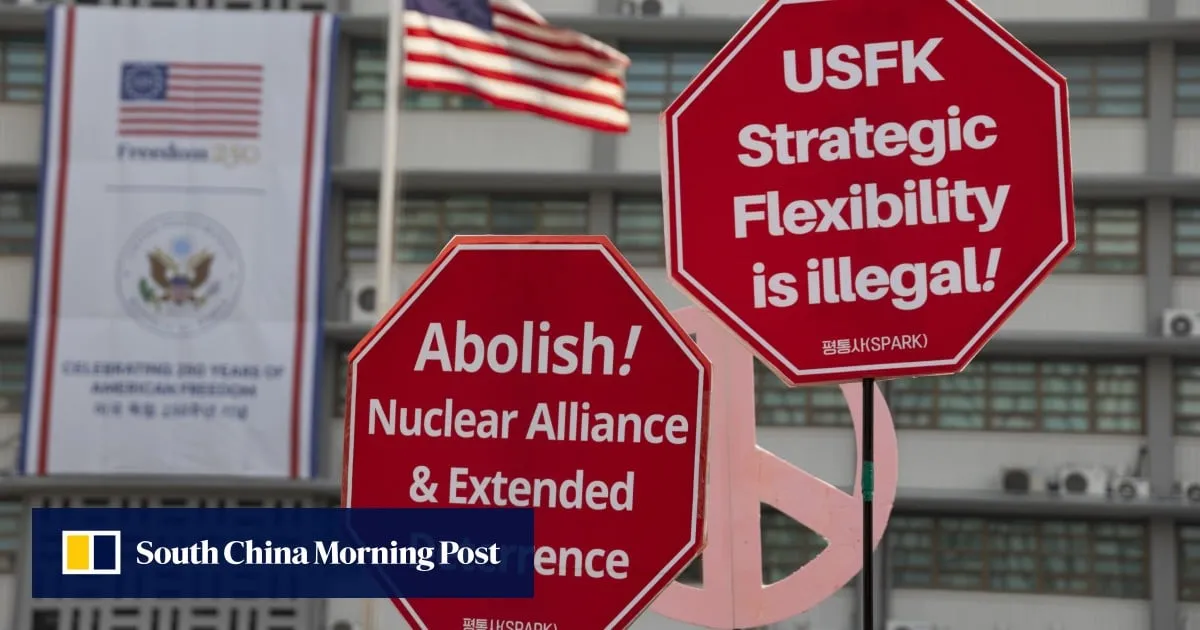
South China Morning PostFIG 01
Reading time
1min
Word count
210words
Sources cited
2cited
Entities identified
7entities
Quality score
100%
§ 01
Briefing Summary
AI-generatedNEWSAR · AI
In March 2026, South Korean President Lee Jae Myung acknowledged the country's limited ability to prevent the United States from redeploying military assets stationed in South Korea. This statement followed reports that the US was moving parts of a THAAD anti-missile system to the Middle East. Lee's remarks highlight a growing concern in South Korea that US Forces Korea (USFK) are increasingly being utilized for missions beyond deterring North Korea. Analysts suggest this shift reflects Washington's push for greater "strategic flexibility" for its overseas troops. Lee urged South Korea to boost its own defense capabilities in light of this changing dynamic.
Confidence 0.90Sources 2Claims 4Entities 7
§ 02
Article analysis
Model · rule-basedFraming
National Security
Political Strategy
Tone
Measured
AI-assessed
CalmNeutralAlarmist
Factuality
0.70 / 1.00
Factual
LowHigh
Sources cited
2
Limited
FewMany
§ 03
Key claims
4 extracted01
South Korea has expressed opposition to the relocation of some air defence batteries by the US forces.
quoteLee Jae Myung
Confidence
1.00
02
South Korean President Lee Jae Myung said Seoul cannot prevent the United States from redeploying military assets from the peninsula.
quoteLee Jae Myung
Confidence
1.00
03
The US was moving parts of a Terminal High Altitude Area Defence (THAAD) anti-missile system from South Korea to the Middle East.
factualReports
Confidence
0.90
04
US Forces Korea (USFK) are increasingly being used for missions beyond deterring North Korea.
factualAnalysts
Confidence
0.80
§ 04
Full report
1 min read · 210 words§ 05
Entities
7 identifiedKey playerOppositionContextPositiveNeutralNegative
Organizations2
§ 06
Keywords & salience
9 termsus forces
0.90
south korea
0.80
military assets
0.70
redeployment
0.70
middle east
0.60
strategic flexibility
0.60
usfk
0.50
air defence systems
0.50
north korea
0.40
§ 07
Topic connections
Interactive graph Network visualization showing 51 related topics
View Full Graph Person Organization Location Event|Click node to navigate|Edge numbers = shared articles