South Korea’s transport ministry cut construction costs and approved improper airport safety structures for more than two decades, the state auditor said in a report on aviation safety management after a Jeju Air crash that killed 179 people.The December 2024 crash involved a Boeing 737-800 which was struck by birds, belly-landed and overran the runway at Muan International Airport, killing almost everyone on board after it struck a concrete support for a localiser antenna. The only survivors were two flight attendants at the rear of the plane.The Board of Audit and Inspection said in a report published on Tuesday that the ministry built a 2.4 metre (8 foot) high concrete embankment upon which to place the localiser – a landing guidance system – at Muan airport to reduce earthwork costs, without adequately reviewing relevant rules.Under international standards, localiser structures should be designed to break apart easily upon aircraft impact.A damaged structure is seen at the end of the runway at Muan International Airport on December 14, 2024, after Jeju Air’s Flight 2216 crashed. Photo: AFPThe Ministry of Land, Infrastructure and Transport is responsible for airport construction. It hands operations to Korea Airports Corporation (KAC) but remains responsible for safety certification.
SRCSouth China Morning Post
LANGEN
LEANCenter-Right
WORDS200
ENT8
WED · 2026-03-11 · 05:38 GMTBRIEF NSR-2026-0311-23385
NSR-2026-0311-23385News Report·EN·Human Interest
Jeju Air crash: South Korean auditor says ministry prioritised cost over safety
A South Korean state audit revealed that the transport ministry prioritized cost reduction over safety for over two decades, leading to improper airport safety structures. This followed a December 2024 Jeju Air crash at Muan International Airport, where a Boeing 737-800 struck birds, belly-landed, and overran the runway, killing 179 people.
ReutersSouth China Morning PostFiled 2026-03-11 · 05:38 GMTLean · Center-RightRead · 1 min
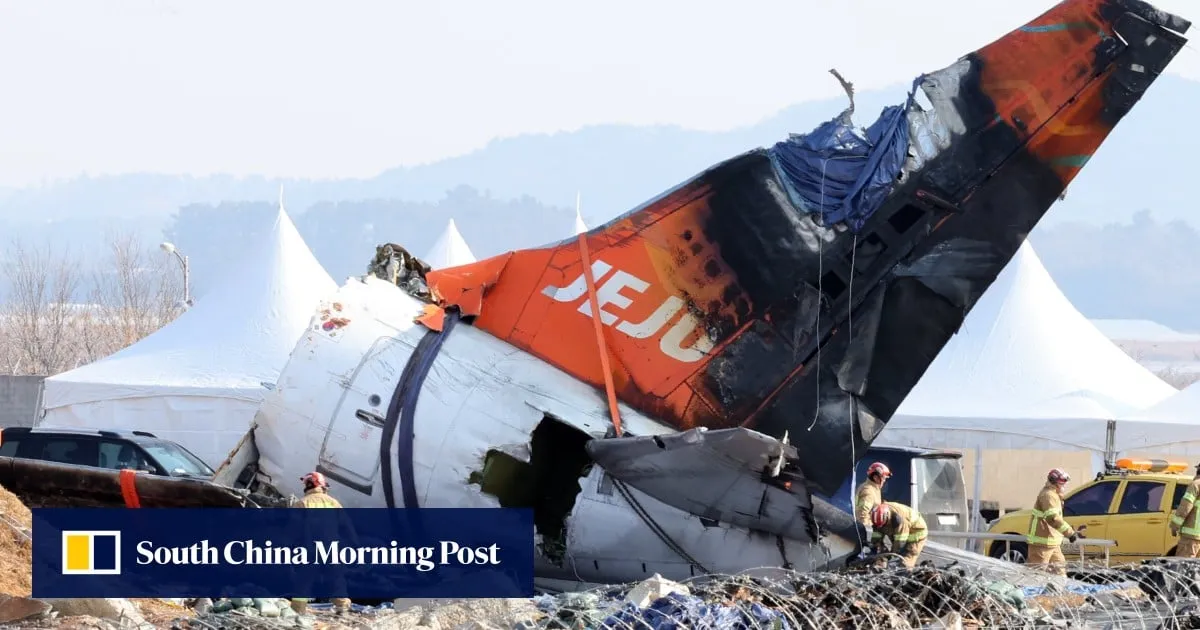
South China Morning PostFIG 01
Reading time
1min
Word count
200words
Sources cited
1cited
Entities identified
8entities
Quality score
100%
§ 01
Briefing Summary
AI-generatedNEWSAR · AI
A South Korean state audit revealed that the transport ministry prioritized cost reduction over safety for over two decades, leading to improper airport safety structures. This followed a December 2024 Jeju Air crash at Muan International Airport, where a Boeing 737-800 struck birds, belly-landed, and overran the runway, killing 179 people. The Board of Audit and Inspection found the ministry built a concrete embankment for a localizer antenna to save on earthwork costs, failing to adhere to international standards that require such structures to break easily upon impact. The localizer antenna support contributed to the severity of the crash. While the Ministry of Land, Infrastructure and Transport is responsible for airport construction and safety certification, operations are handled by Korea Airports Corporation.
Confidence 0.90Sources 1Claims 5Entities 8
§ 02
Article analysis
Model · rule-basedFraming
Human Interest
Economic Impact
Tone
Mixed Tone
AI-assessed
CalmNeutralAlarmist
Factuality
0.80 / 1.00
Factual
LowHigh
Sources cited
1
Limited
FewMany
§ 03
Key claims
5 extracted01
Localiser structures should be designed to break apart easily upon aircraft impact, according to international standards.
factual
Confidence
1.00
02
The aircraft was a Boeing 737-800 which belly-landed and overran the runway after being struck by birds.
factual
Confidence
1.00
03
A Jeju Air crash in December 2024 killed 179 people at Muan International Airport.
factual
Confidence
1.00
04
The ministry built a concrete embankment to reduce earthwork costs, without adequately reviewing relevant rules.
factualThe Board of Audit and Inspection
Confidence
0.90
05
South Korea’s transport ministry cut construction costs and approved improper airport safety structures.
factualthe state auditor
Confidence
0.90
§ 04
Full report
1 min read · 200 words§ 05
Entities
8 identifiedKey playerOppositionContextPositiveNeutralNegative
Organizations5
§ 06
Keywords & salience
9 termsjeju air crash
1.00
aviation safety
0.90
airport safety
0.80
cost over safety
0.80
muan international airport
0.70
localiser antenna
0.60
boeing 737-800
0.50
runway overrun
0.50
safety certification
0.40
§ 07
Topic connections
Interactive graph Network visualization showing 51 related topics
View Full Graph Person Organization Location Event|Click node to navigate|Edge numbers = shared articles