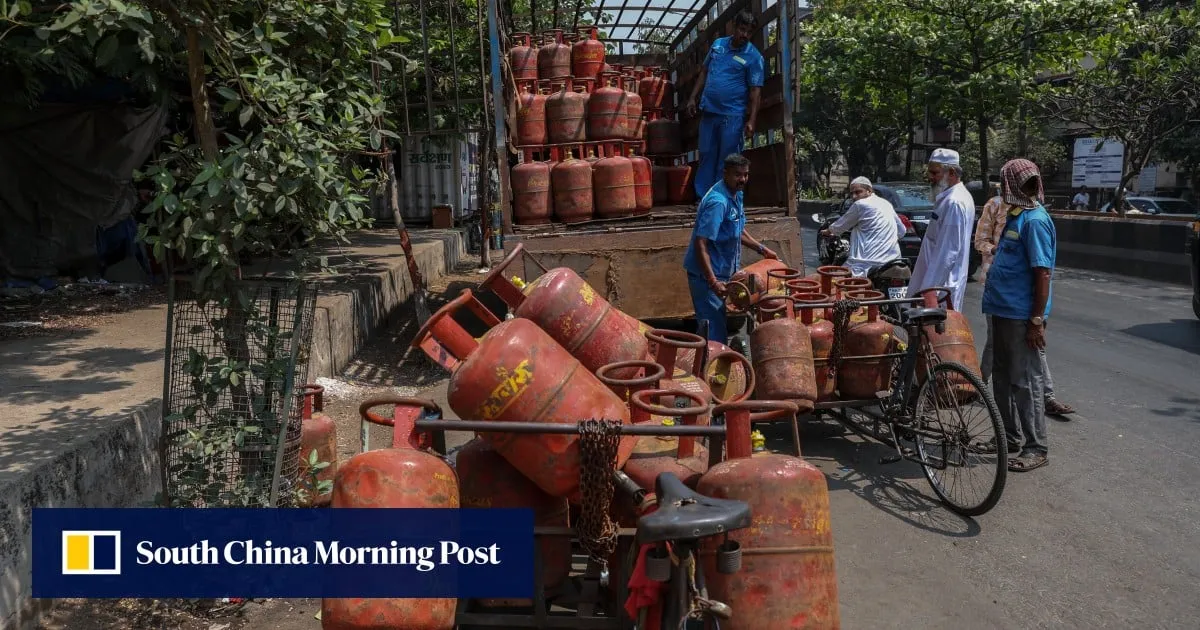
Asian economies reliant on energy imports are bracing themselves not just for a spike in oil prices but for the possibility that the Iran war could trigger a prolonged period of energy market disruption.While markets have already priced in the initial disruption to shipping and energy infrastructure linked to the conflict, economists warn that a war lasting several weeks could leave Asian importers facing persistently higher fuel costs, widening trade deficits and slower economic growth.According to a report by ratings agency Fitch, Pakistan and India are among emerging markets most exposed to sustained disruption to traffic through the Strait of Hormuz near Iran, through which about a fifth of global oil supplies normally flow.“For most major emerging markets, higher oil and gas prices would result in a deterioration in the terms of trade,” Fitch said. “That is most notable in Morocco, Pakistan and Thailand, where energy deficits exceed 4 per cent of GDP.”China, the Philippines and Indonesia were also affected by the conflict, the report added.Asia’s vulnerability has also increased as spot prices for natural gas have more than doubled to three-year highs, reaching over US$25 per MMBtu after Qatar Energy declared force majeure following drone attacks on its Ras Laffran plant.A security guard stands outside a closed school after a government fuel-saving order led classes to shift online amid soaring oil costs in Rawalpindi, Pakistan, on Tuesday. Photo: AFP
SRCSouth China Morning Post
LANGEN
LEANCenter-Right
WORDS230
ENT11
WED · 2026-03-11 · 13:45 GMTBRIEF NSR-2026-0311-23518
NSR-2026-0311-23518News Report·EN·Economic Impact
Asia’s energy-reliant economies face ‘existential threat’ from prolonged Iran war
Asia's energy-reliant economies are facing an "existential threat" from a prolonged Iran war, which could lead to sustained disruption to global oil supplies and significantly higher fuel costs. Economists warn that a conflict lasting several weeks could result in persistently higher prices, widening trade deficits, and slower economic growth for countries such as Pakistan, India, Morocco, Thailand, China, the Philippines, and Indonesia.
Biman MukherjiSouth China Morning PostFiled 2026-03-11 · 13:45 GMTLean · Center-RightRead · 1 min
South China Morning PostFIG 01
Reading time
1min
Word count
230words
Sources cited
1cited
Entities identified
11entities
Quality score
100%
§ 01
Briefing Summary
AI-generatedNEWSAR · AI
Asia's energy-reliant economies are facing an "existential threat" from a prolonged Iran war, which could lead to sustained disruption to global oil supplies and significantly higher fuel costs. Economists warn that a conflict lasting several weeks could result in persistently higher prices, widening trade deficits, and slower economic growth for countries such as Pakistan, India, Morocco, Thailand, China, the Philippines, and Indonesia. These nations are particularly vulnerable due to their high energy deficits, which exceed 4% of GDP. The Strait of Hormuz, a critical shipping route near Iran, is at risk of disruption, affecting global oil supplies. Spot prices for natural gas have more than doubled to three-year highs, reaching over $25 per MMBtu. A prolonged war could exacerbate these challenges and have far-reaching economic consequences for the region.
Confidence 0.90Sources 1Claims 5Entities 11
§ 02
Article analysis
Model · rule-basedFraming
Economic Impact
National Security
Tone
Mixed Tone
AI-assessed
CalmNeutralAlarmist
Factuality
0.70 / 1.00
Factual
LowHigh
Sources cited
1
Limited
FewMany
§ 03
Key claims
5 extracted01
Spot prices for natural gas have more than doubled to three-year highs, reaching over US$25 per MMBtu.
statistic
Confidence
1.00
02
Energy deficits exceed 4 per cent of GDP in Morocco, Pakistan and Thailand.
statisticFitch
Confidence
1.00
03
Pakistan and India are among emerging markets most exposed to sustained disruption to traffic through the Strait of Hormuz.
factualFitch
Confidence
0.90
04
A war lasting several weeks could leave Asian importers facing persistently higher fuel costs, widening trade deficits and slower economic growth.
prediction
Confidence
0.80
05
Asian economies reliant on energy imports face an 'existential threat' from a prolonged Iran war.
prediction
Confidence
0.70
§ 04
Full report
1 min read · 230 words§ 05
Entities
11 identifiedKey playerOppositionContextPositiveNeutralNegative
Organizations2
§ 06
Keywords & salience
10 termsiran war
0.90
energy market disruption
0.80
oil prices
0.70
asian economies
0.70
energy imports
0.60
strait of hormuz
0.60
trade deficits
0.50
emerging markets
0.50
natural gas
0.40
economic growth
0.40
§ 07
Topic connections
Interactive graph Network visualization showing 51 related topics
View Full Graph Person Organization Location Event|Click node to navigate|Edge numbers = shared articles