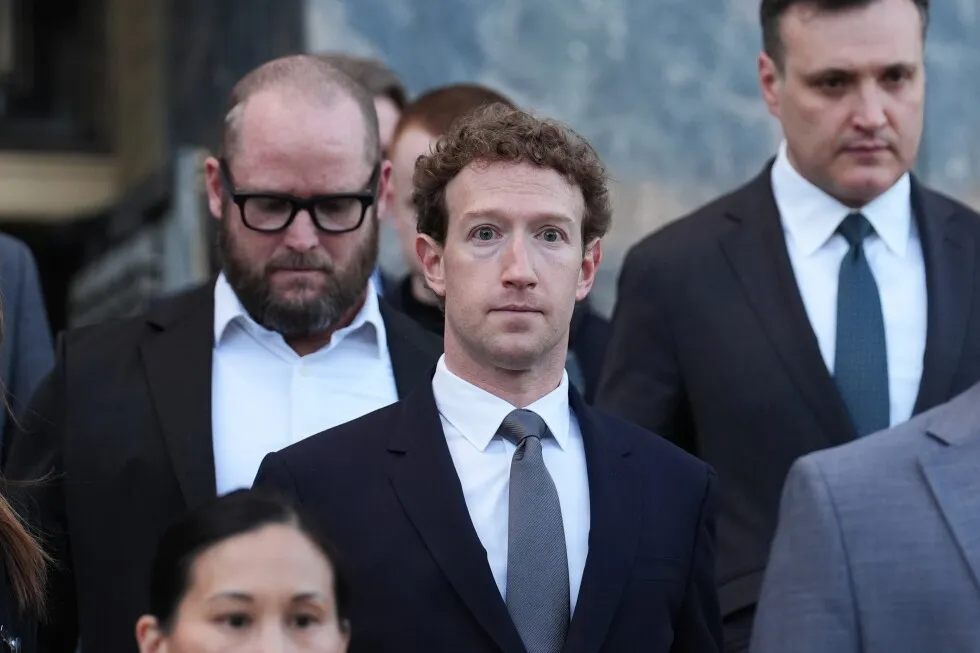
Lawyers in landmark social media addiction trial make final appeals to the jury 1 of 5 | Mark Zuckerberg and opposing lawyers dueled in a Los Angeles courtroom Wednesday as he answered questions about young people’s use of Instagram, his congressional testimony and internal advice he’s received about being “authentic” and not “robotic.” 2 of 5 | Zuckerberg’s testimony is part of an unprecedented social media trial that questions whether Meta’s platforms deliberately addict and harm children. (AP Video by Krysta Fauria) 3 of 5 | Meta CEO Mark Zuckerberg leaves after testifying in a landmark trial over whether social media platforms deliberately addict and harm children, Wednesday, Feb. 18, 2026, in Los Angeles. (AP Photo/Damian Dovarganes) 4 of 5 | Adam Mosseri, CEO of Instagram, arrives in court to testify in a landmark social media case that seeks to hold tech companies responsible for harms to children, Wednesday, Feb. 11, 2026, in Los Angeles. (AP Photo/Damian Dovarganes) 5 of 5 | This courtroom sketch shows Meta CEO Mark Zuckerberg testifying in a landmark trial over whether social media platforms deliberately addict and harm children, Wednesday, Feb. 18, 2026, in Los Angeles. (William T. Robles via AP) 1 of 5 Mark Zuckerberg and opposing lawyers dueled in a Los Angeles courtroom Wednesday as he answered questions about young people’s use of Instagram, his congressional testimony and internal advice he’s received about being “authentic” and not “robotic.” Add AP News on Google Add AP News as your preferred source to see more of our stories on Google. 2 of 5 Zuckerberg’s testimony is part of an unprecedented social media trial that questions whether Meta’s platforms deliberately addict and harm children. (AP Video by Krysta Fauria) Add AP News on Google Add AP News as your preferred source to see more of our stories on Google. 3 of 5 Meta CEO Mark Zuckerberg leaves after testifying in a landmark trial over whether social media platforms deliberately addict and harm children, Wednesday, Feb. 18, 2026, in Los Angeles. (AP Photo/Damian Dovarganes) Add AP News on Google Add AP News as your preferred source to see more of our stories on Google. 4 of 5 Adam Mosseri, CEO of Instagram, arrives in court to testify in a landmark social media case that seeks to hold tech companies responsible for harms to children, Wednesday, Feb. 11, 2026, in Los Angeles. (AP Photo/Damian Dovarganes) Add AP News on Google Add AP News as your preferred source to see more of our stories on Google. 5 of 5 This courtroom sketch shows Meta CEO Mark Zuckerberg testifying in a landmark trial over whether social media platforms deliberately addict and harm children, Wednesday, Feb. 18, 2026, in Los Angeles. (William T. Robles via AP) Add AP News on Google Add AP News as your preferred source to see more of our stories on Google. Updated [hour]:[minute] [AMPM] [timezone], [monthFull] [day], [year] Los Angeles (AP) — After about a month of hearing from addiction experts, therapists, platform engineers and executives, including Mark Zuckerberg, a jury will listen to closing arguments before heading to the deliberation room to decide whether social media companies should be liable for harms caused to children using their platforms.Closing statements in the trial will begin Thursday at the Spring Street Courthouse in Los Angeles. Lawyers representing the plaintiff, a 20-year-old woman, and those representing the two defendants, Meta and Google-owned YouTube, will make their respective cases to the jurors. TikTok and Snap were also named defendants in the lawsuit, but they each settled before the trial began. The case, along with two others, has been selected as a bellwether trial, meaning its outcome could impact how thousands of similar lawsuits against social media companies are likely to play out. The plaintiff, identified as KGM in documents or Kaley, as her lawyers have called her during the trial, says her early use of social media addicted her to the technology and exacerbated depression and suicidal thoughts. Both the defendants and the plaintiff have pointed to a turbulent home life for Kaley. Her attorneys say she was preyed upon as a vulnerable user, but attorneys representing Meta and Google-owned YouTube have argued Kaley turned to their platforms as a coping mechanism or a means of escaping her mental health struggles. Throughout the trial, Meta argued that Kaley faced significant challenges before she ever used social media. The company’s lawyer, Paul Schmidt, said earlier this month that the core question in the case is whether the platforms were a substantial factor in Kayley’s mental health struggles. Instead of focusing on Kaley, the attorneys representing YouTube argue that it is not a social media platform and that its features are not addictive.
SRCAssociated Press (AP)
LANGEN
LEANCenter
WORDS783
ENT6
THU · 2026-03-12 · 14:53 GMTBRIEF NSR-2026-0312-23919
NSR-2026-0312-23919News Report·EN·Legal & Judicial
Lawyers in landmark social media addiction trial make final appeals to the jury
In Los Angeles, lawyers delivered final appeals to the jury in a landmark trial concerning social media addiction and its potential harm to children. The trial, taking place in February 2026, questions whether Meta's platforms deliberately addict and harm young users.
By
KAITLYN HUAMANI and BARBARA ORTUTAYAssociated Press (AP)Filed 2026-03-12 · 14:53 GMTLean · CenterRead · 4 min
Associated Press (AP)FIG 01
Reading time
4min
Word count
783words
Sources cited
2cited
Entities identified
6entities
Quality score
100%
§ 01
Briefing Summary
AI-generatedNEWSAR · AI
In Los Angeles, lawyers delivered final appeals to the jury in a landmark trial concerning social media addiction and its potential harm to children. The trial, taking place in February 2026, questions whether Meta's platforms deliberately addict and harm young users. Meta CEO Mark Zuckerberg testified, facing questioning about Instagram's impact on youth, his previous congressional testimony, and internal communication regarding his public persona. Instagram CEO Adam Mosseri also testified earlier in the trial. The case seeks to hold tech companies accountable for potential harm caused to children through their social media platforms.
Confidence 0.90Sources 2Claims 4Entities 6
§ 02
Article analysis
Model · rule-basedFraming
Legal & Judicial
Public Health
Tone
Measured
AI-assessed
CalmNeutralAlarmist
Factuality
0.80 / 1.00
Factual
LowHigh
Sources cited
2
Limited
FewMany
§ 03
Key claims
4 extracted01
Adam Mosseri, CEO of Instagram, testified in court.
factual
Confidence
1.00
02
The trial questions whether Meta’s platforms deliberately addict and harm children.
factual
Confidence
1.00
03
Mark Zuckerberg testified in a Los Angeles courtroom about young people’s use of Instagram.
factual
Confidence
1.00
04
Lawyers in landmark social media addiction trial make final appeals to the jury.
factual
Confidence
1.00
§ 04
Full report
4 min read · 783 words§ 05
Entities
6 identifiedKey playerOppositionContextPositiveNeutralNegative
Locations1
§ 06
Keywords & salience
8 termssocial media addiction
1.00
trial
0.90
harm to children
0.80
meta
0.70
mark zuckerberg
0.70
instagram
0.60
tech companies
0.50
legal
0.40
§ 07
Topic connections
Interactive graph Network visualization showing 26 related topics
View Full Graph Person Organization Location Event|Click node to navigate|Edge numbers = shared articles