4 hours agoKathryn ArmstrongWho is the 35-year-old rapper set to become Nepal’s PM?The Rastriya Swatantra Party (RSP) has won a landslide in Nepal's election - the first held since last year's youth-led protests toppled the then government. The RSP received 182 votes in the final tally - falling short of achieving a two-thirds supermajority in the parliament's lower house by two seats. Nevertheless, it is the biggest win for a single party in Nepal in decades. The Nepali Congress came in second with 38 seats, while the Nepal-uml" class="entity-link entity-organization" data-entity-id="39870" data-entity-type="organization">Communist Party of Nepal UML (CPN-UML) was third on 25. Voter turnout was around 60% of the nearly 19 million eligible voters.The result puts the RSP's Balendra Shah - a rapper-turned-politician - on track to become the country's next leader.It is expected to take at least a week for the new government to be formed. The result is an amazing turn in fortune for the RSP, which was only founded in 2022 and came fourth in the election held that same year. Shah, like the party he only recently joined, is largely untested - his only political experience so far has been as the mayor of the capital, Kathmandu. The landslide is all the more significant because the country's mixed political system - which uses a combination of first past the post and proportional representation - is mathematically designed to prevent such domination by a single party.The outcome of the election reflects a desire for change that was seen during the election campaign, with parties courting Nepal's key youth bloc with promises of addressing issues including unemployment, economic stagnation and inequality. These were the same problems that saw youth-led protests that broke out last year, initially against a social media ban, escalate. Demonstrators criticised Nepal's political system and the symbolism of class inequality, "nepo babies" - children of the country's politicians. The demonstrations eventually saw the then leader, KP Sharma Oli, ousted - only for him to stand again as a prime ministerial candidate, expressing confidence he would be re-elected. Not only did his party, the CPN-UML, come third in the election, Oli was beaten decisively by Shah in the Jhapa 5 constituency - a former stronghold for the 74-year-old. Gagan Thapa, the new leader of the Nepali Congress - the country's oldest democratic party - also lost his seat to an RSP candidate.
SRCBBC News - World
LANGEN
LEANCenter
WORDS391
ENT9
THU · 2026-03-12 · 15:25 GMTBRIEF NSR-2026-0312-23946
NSR-2026-0312-23946News Report·EN·Political Strategy
Rapper-politician Balendra Shah's party wins Nepal election
Nepal's Rastriya Swatantra Party (RSP), led by rapper-turned-politician Balendra Shah, achieved a significant victory in the recent election, the first since youth-led protests in 2023. Although the RSP fell short of a two-thirds majority, their 182 seats represent the largest win for a single party in Nepal in decades.
BBC News - WorldFiled 2026-03-12 · 15:25 GMTLean · CenterRead · 2 min
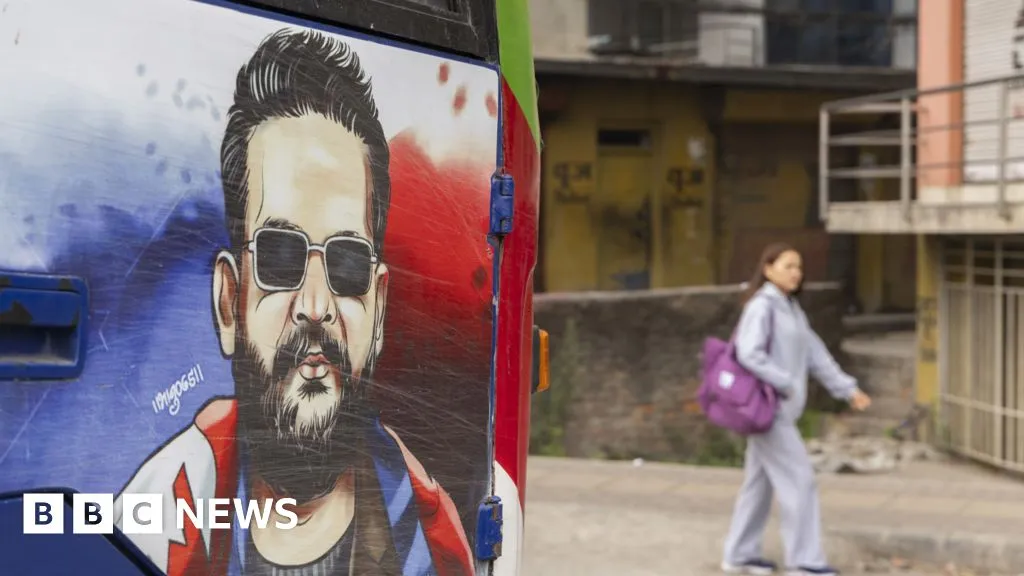
BBC News - WorldFIG 01
Reading time
2min
Word count
391words
Sources cited
0cited
Entities identified
9entities
Quality score
100%
§ 01
Briefing Summary
AI-generatedNEWSAR · AI
Nepal's Rastriya Swatantra Party (RSP), led by rapper-turned-politician Balendra Shah, achieved a significant victory in the recent election, the first since youth-led protests in 2023. Although the RSP fell short of a two-thirds majority, their 182 seats represent the largest win for a single party in Nepal in decades. The Nepali Congress and the Communist Party of Nepal UML (CPN-UML) followed with 38 and 25 seats respectively. The election outcome reflects a desire for change, with parties promising to address issues like unemployment and inequality that fueled previous protests. The RSP's success, despite being founded in 2022, signals a shift in Nepal's political landscape, as established parties lost ground to the newcomer. The formation of a new government is expected to take at least a week.
Confidence 0.90Claims 5Entities 9
§ 02
Article analysis
Model · rule-basedFraming
Political Strategy
Human Interest
Tone
Measured
AI-assessed
CalmNeutralAlarmist
Factuality
0.80 / 1.00
Factual
LowHigh
Sources cited
0
No named sources
FewMany
§ 03
Key claims
5 extracted01
The RSP was only founded in 2022.
factual
Confidence
1.00
02
Voter turnout was around 60% of the nearly 19 million eligible voters.
statistic
Confidence
1.00
03
The RSP received 182 votes in the final tally.
statistic
Confidence
1.00
04
Rastriya Swatantra Party (RSP) won a landslide in Nepal's election.
factual
Confidence
1.00
05
Balendra Shah is on track to become the country's next leader.
prediction
Confidence
0.80
§ 04
Full report
2 min read · 391 words§ 05
Entities
9 identifiedKey playerOppositionContextPositiveNeutralNegative
People3
Organizations3
§ 06
Keywords & salience
9 termsnepal election
1.00
rastriya swatantra party
0.90
balendra shah
0.80
youth-led protests
0.70
political change
0.60
political system
0.50
economic stagnation
0.50
nepali congress
0.40
cpn-uml
0.40
§ 07
Topic connections
Interactive graph Network visualization showing 51 related topics
View Full Graph Person Organization Location Event|Click node to navigate|Edge numbers = shared articles