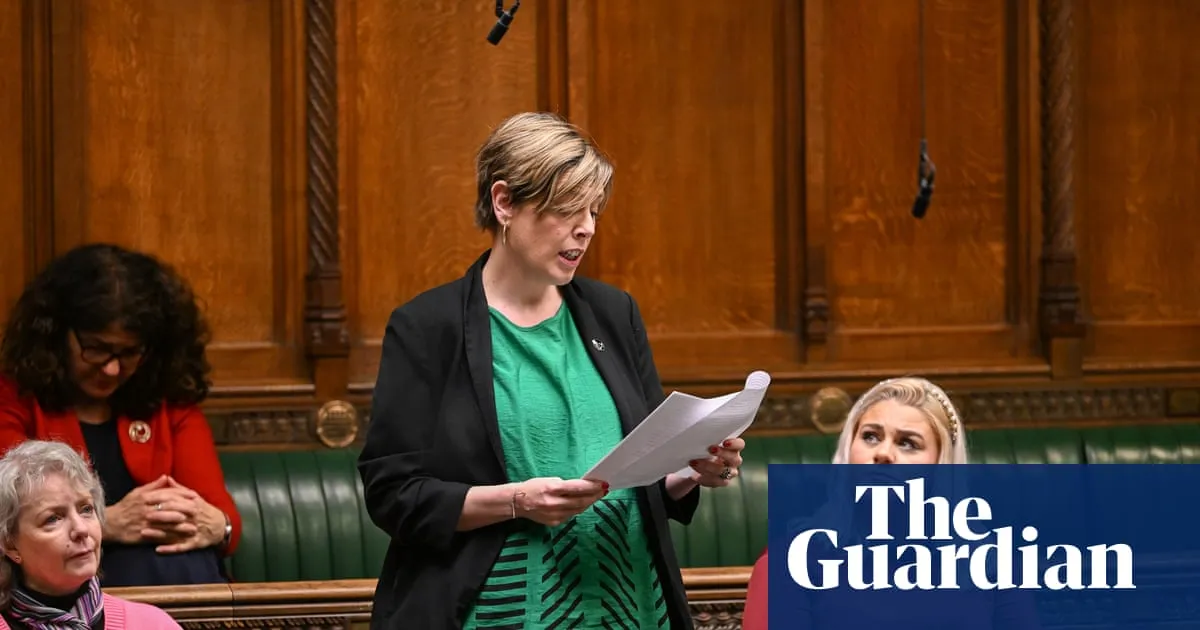
The names of 19 women believed to have been killed by their sons in the last year were read out in parliament on Thursday, as research showed that almost one in five women killed by men since the last International Women’s Day were suspected victims of matricide.For the 11th year running, Jess Phillips read out the names of the 108 women killed in the UK by men – or where a man has been charged – in the past 12 months. In keeping with previous years, she had to request special dispensation to speak beyond the time given to each MP in the International Women’s Day parliamentary debate, because reading the names took more than five minutes.Addressing MPs, Phillips said women and girls were suffering in “every part” of the country. “They are being attacked, abused, harassed and stalked at home, in public places, and online. The scale of violence against women and girls shames our society,” she said.Phillips announced that the Home Office would fund and deliver an oversight mechanism for recommendations made in domestic homicide reviews (DHR). The domestic abuse commissioner, Nicole Jacobs, told the Guardian last year that a study of DHRs – carried out whenever anyone over 16 is murdered in a domestic setting – revealed a “deeply concerning” lack of oversight at the top of government.“This is about turning lessons into action, not just letting those documents sit on a shelf in some local authority,” she said. “I do believe that with drive and leadership, change will come. Tragically, it will be too late for the victims whose lives have been ended by this scourge.”Closing her speech, Phillips said: “May these women get the justice that they deserved, and may we honour them by preventing others from suffering the same fate.”Among the names, which are recorded by the Femicide Census project Counting Dead Women, are 19 mothers killed where their son was the suspect – which would be the highest matricide rate recorded in 16 years of Femicide Census data.Clarrie O’Callaghan, co-founder of the Femicide Census, said the organisation had watched in horror as it witnessed the growing problem of matricide in the UK, pointing to the collapse in mental health care, problematic substance abuse and housing insecurity as contributing factors.“Often the men who have killed their mothers have histories of abuse of their earlier partners, so they had moved in with their mother after those relationships broke down,” she said. “However, despite our reporting on matricides for 10 years, no state agency has yet to acknowledge matricide, let alone take responsibility for tackling it.“Women are rarely recognised as being at risk of fatal violence from their sons and there are few dedicated services for older women in the whole of the UK.”Last year, the Guardian revealed that nearly one in 10 of the women who died at the hands of men in the UK over the previous 15 years were mothers killed by their sons. The 2,000 Women report by Femicide Census showed that more than 170 mothers were killed by their sons between 2009 and 2021, with mental ill health a factor in 58% of matricide cases.The government published its violence against women and girls (VAWG) strategy in December, which laid out plans to tackle harmful behaviours among boys, teach pupils about healthy relationships and the impact of pornography, and equip teachers with the skills to intervene. It was hailed as a “milestone” by women’s organisations, but they warned that it fell “seriously short” of the funding required to realise the government’s ambition of halving VAWG in a decade.O’Callaghan said that although the strategy – the first to mention femicide – was a “step in the right direction”, many areas of intervention provided by specialist organisations had gone unrecognised. “We need new money, not previously committed money redistributed,” she added.The government has said the strategy is backed by £1bn of funding, including £50m funding for therapeutic support for child victims of sexual abuse, £19m funding for councils to provide safe housing for domestic abuse survivors and £550m investment to support victims and witnesses throughout the criminal justice system.“Specialist women-led charities … are at risk of closure,” said O’Callaghan. “This has been going on for years in the sector, and this is a government that knows that, and yet there is little change on the ground.”
SRCThe Guardian - World News
LANGEN
LEANCenter-Left
WORDS722
ENT7
THU · 2026-03-12 · 18:13 GMTBRIEF NSR-2026-0312-23963
NSR-2026-0312-23963News Report·EN·Human Rights
Sons were suspects in nearly one in five cases of women killed by men in UK in past year
During a UK parliamentary debate on International Women's Day, Jess Phillips MP read out the names of 108 women killed by men in the past year. Research revealed that nearly one in five of these women were suspected victims of matricide, the highest rate in 16 years.
Alexandra Topping Political correspondentThe Guardian - World NewsFiled 2026-03-12 · 18:13 GMTLean · Center-LeftRead · 3 min
The Guardian - World NewsFIG 01
Reading time
3min
Word count
722words
Sources cited
3cited
Entities identified
7entities
Quality score
100%
§ 01
Briefing Summary
AI-generatedNEWSAR · AI
During a UK parliamentary debate on International Women's Day, Jess Phillips MP read out the names of 108 women killed by men in the past year. Research revealed that nearly one in five of these women were suspected victims of matricide, the highest rate in 16 years. Phillips highlighted the widespread violence against women and girls across the country and announced that the Home Office would fund an oversight mechanism for domestic homicide review recommendations. Clarrie O’Callaghan, co-founder of the Femicide Census, noted a growing problem of matricide, potentially linked to mental health issues, substance abuse, and housing insecurity. The Femicide Census has been recording the names of women killed by men in the UK for the past 16 years.
Confidence 0.90Sources 3Claims 5Entities 7
§ 02
Article analysis
Model · rule-basedFraming
Human Rights
Social Justice
Tone
Mixed Tone
AI-assessed
CalmNeutralAlarmist
Factuality
0.80 / 1.00
Factual
LowHigh
Sources cited
3
Well sourced
FewMany
§ 03
Key claims
5 extracted01
The matricide rate recorded would be the highest in 16 years of Femicide Census data.
factualArticle
Confidence
1.00
02
The Home Office would fund and deliver an oversight mechanism for recommendations made in domestic homicide reviews (DHR).
factualPhillips
Confidence
1.00
03
Jess Phillips read out the names of the 108 women killed in the UK by men in the past 12 months.
factualArticle
Confidence
1.00
04
Almost one in five women killed by men since the last International Women’s Day were suspected victims of matricide.
statisticArticle
Confidence
1.00
05
19 women believed to have been killed by their sons in the last year were read out in parliament.
factualArticle
Confidence
1.00
§ 04
Full report
3 min read · 722 words§ 05
Entities
7 identifiedKey playerOppositionContextPositiveNeutralNegative
People3
Locations1
§ 06
Keywords & salience
9 termsfemicide
1.00
violence against women
0.90
matricide
0.80
domestic homicide
0.70
domestic abuse
0.60
uk
0.50
mental health
0.50
jess phillips
0.40
femicide census
0.40
§ 07
Topic connections
Interactive graph No topic relationship data available yet. This graph will appear once topic relationships have been computed.