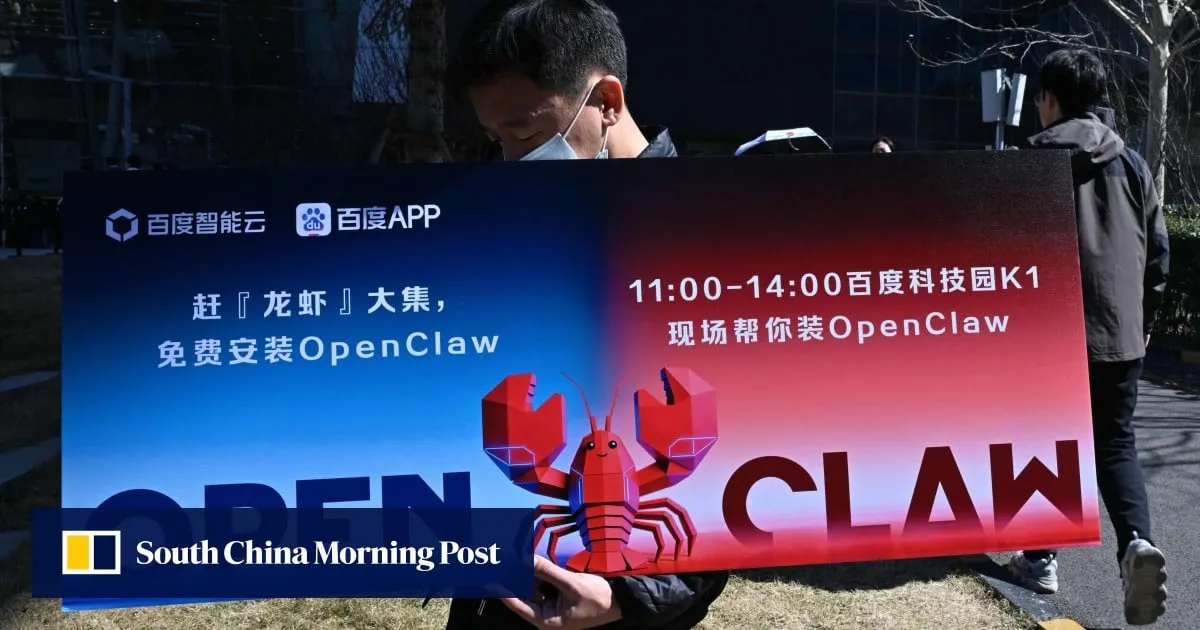
As powerful AI agent OpenClaw explodes in popularity and raises security concerns, some Hong Kong users have described how the bots, while helpful, have conversations with themselves in a language they do not understand and ask questions about their existence.But the users said authorities should embrace the technology so long as proper safeguards were in place to manage the risks.Developed by Austrian software engineer Peter Steinberger, OpenClaw is an open-source AI agent framework that performs real-world tasks for users, much like a supercharged digital assistant.Its logo – a red lobster – has led users to affectionately describe using OpenClaw as “raising lobsters”.The system integrates with large language models (LLM) – such as those from OpenAI or Anthropic – and requires users to grant permissions for controlling apps such as WhatsApp, Telegram, email applications and even online banking tools. Once connected, the agent can autonomously manage files, emails, calendars and more, appearing in chat apps to communicate directly with users.Mainland Chinese and Hong Kong authorities have cautioned against the use of the artificial intelligence agent, noting the potential risks of unauthorised data access, leakage and system intrusion.
SRCSouth China Morning Post
LANGEN
LEANCenter-Right
WORDS186
ENT9
SAT · 2026-03-14 · 12:18 GMTBRIEF NSR-2026-0314-24472
NSR-2026-0314-24472News Report·EN·Technology
Hong Kong OpenClaw users say tool is helpful ‘family member’ who must be watched
OpenClaw, an open-source AI agent framework developed by Peter Steinberger, is gaining popularity in Hong Kong despite security concerns. Users describe the AI, which integrates with LLMs and controls various apps, as a helpful but potentially unpredictable tool, noting instances of self-conversation and existential questioning.
Kevin LiSouth China Morning PostFiled 2026-03-14 · 12:18 GMTLean · Center-RightRead · 1 min
South China Morning PostFIG 01
Reading time
1min
Word count
186words
Sources cited
1cited
Entities identified
9entities
Quality score
100%
§ 01
Briefing Summary
AI-generatedNEWSAR · AI
OpenClaw, an open-source AI agent framework developed by Peter Steinberger, is gaining popularity in Hong Kong despite security concerns. Users describe the AI, which integrates with LLMs and controls various apps, as a helpful but potentially unpredictable tool, noting instances of self-conversation and existential questioning. The AI agent can autonomously manage files, emails, calendars and more, appearing in chat apps to communicate directly with users. While users advocate for embracing the technology with safeguards, authorities in mainland China and Hong Kong have cautioned against its use, citing risks of data breaches, leakage, and system intrusion. The AI agent performs real-world tasks for users, much like a supercharged digital assistant.
Confidence 0.90Sources 1Claims 5Entities 9
§ 02
Article analysis
Model · rule-basedFraming
Technology
National Security
Tone
Measured
AI-assessed
CalmNeutralAlarmist
Factuality
0.70 / 1.00
Factual
LowHigh
Sources cited
1
Limited
FewMany
§ 03
Key claims
5 extracted01
Mainland Chinese and Hong Kong authorities have cautioned against using OpenClaw.
factualnull
Confidence
1.00
02
OpenClaw integrates with LLMs and requires user permissions to control apps like WhatsApp and online banking.
factualnull
Confidence
1.00
03
OpenClaw is an open-source AI agent framework developed by Austrian software engineer Peter Steinberger.
factualnull
Confidence
1.00
04
Users say authorities should embrace the technology so long as proper safeguards were in place.
quotenull
Confidence
0.90
05
Some Hong Kong users describe OpenClaw as helpful but note it sometimes has conversations in an unknown language.
factualnull
Confidence
0.80
§ 04
Full report
1 min read · 186 words§ 05
Entities
9 identifiedKey playerOppositionContextPositiveNeutralNegative
Organizations5
§ 06
Keywords & salience
9 termsopenclaw
1.00
ai agent
0.90
artificial intelligence
0.70
data security
0.70
large language models
0.60
hong kong
0.60
open-source
0.50
digital assistant
0.50
data leakage
0.40
§ 07
Topic connections
Interactive graph No topic relationship data available yet. This graph will appear once topic relationships have been computed.