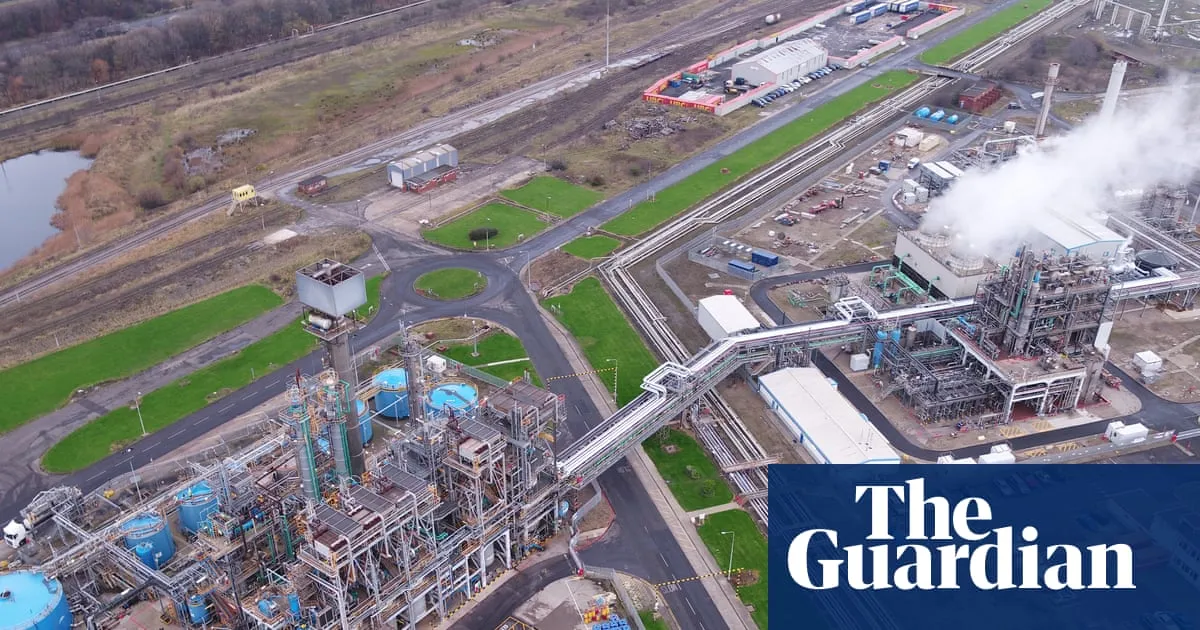
The American owner of one of Britain’s last major chemicals plants has said he will close the site if energy prices remain at their current levels for the next three months.Peter Huntsman, whose family built Huntsman Corporation into a global chemicals empire, said the recent jump in gas prices fuelled by the Iran conflict was “another nail in the coffin” for European heavy industry.“If today’s economics were to stay in place for the next three months, I would shut down my [UK] facility and I’d be importing product from China or the United States,” he said.The factory in Wilton, on Teesside, employs about 80 people and makes aniline, a chemical used in everything from car seats to aircraft components. It is one of the last surviving plants of the former Imperial Chemical Industries (ICI), Britain’s largest manufacturer for much of the 20th century.“Four years ago, my lowest cost aniline in the entire world came from the UK. That’s how recently I was competitive,” he said. “Right now, this week, it is the most expensive.”Texas-based Huntsman Corporation was founded by Peter’s father, Jon, a Mormon from Idaho who died in 2018. He started out in packaging, developing the now ubiquitous clamshell burger carton and selling it to McDonald’s for its Big Macs in 1974, then pivoted into chemicals over the following decades.Peter became chief executive of the family business in 2000, spearheading the acquisition of ICI’s industrial chemicals arm for £1.7bn the year before.His elder brother, Jon Jr, is a Republican politician who served in every US administration from Ronald Reagan to Donald Trump’s first term. He was Trump’s ambassador to Russia and Barack Obama’s ambassador to China.Huntsman Corporation has plants across the US, Europe, south-east Asia and the Middle East – but unlike its American operations, its UK and European sites are acutely exposed to international gas markets, where prices have surged to their highest point since Russia’s invasion of Ukraine.“You’re not seeing this in China, America or the Middle East, surprisingly, where the war is,” said Huntsman. “You’re seeing it in the EU and the UK, and they’re being hit the hardest.”The multinational had already cut nearly 10% of its global workforce last year – about 500 jobs with the largest share in Europe – and closed seven facilities, citing high energy costs.Huntsman’s warnings echo those of fellow chemicals magnate Jim Ratcliffe, whose Ineos group received a £120m government bailout in December to save its ethylene cracker at Grangemouth, the last plant of its kind in the UK.The bailout was a rare intervention in a sector that has been rapidly hollowed out. Production output has fallen by 60% since 2021, according to the Chemicals Industries Association, with at least 25 site closures since then.Ratcliffe, who is the UK’s seventh richest person, has described it as “unsurvivable” for chemical plants in Europe owing to “rising carbon costs and weak trade defence”.Huntsman called the troubles “self-inflicted”, adding that successive governments had not done enough to bring down industrial energy bills. “Failed energy policy has made UK industry less resilient. A crisis like this should not impact the chemical industry like this.“They’ve chosen to go down this path, and they’re facing the consequences of it every day, especially at times like now,” he said. “This [Iran] is just another nail in the coffin.”“We used to have more investment in the UK than we did in North America. It was a vital footprint to our company. And today we’re down to one asset left there,” Huntsman said. “I’ve laid off enough people in the UK that it is one of the greatest disappointments of my entire career.”In the last decade the UK has lost its last domestic producers of ammonia, a core fertiliser, and sulphuric acid, key for making explosives, raising concerns about sovereign capability in food production and defence manufacturing.Huntsman said he was running out of reasons to keep investing in Britain. “I’m doing quite well in China, the United States, I’ve got growing operations in the Middle East,” he said. “Why on earth would I put money in the UK, where there’s neither growth nor a policy to incentivise people like me?”A government spokesperson said: “We know this is a tough time for our chemicals industry, who are paying the fossil fuel penalty. The best way to tackle this is getting on to clean homegrown power which we control, to bring down bills for good. “Ministers regularly meet with the industry and are working with them to understand the impact of the situation in the Middle East and explore potential solutions.”
SRCThe Guardian - World News
LANGEN
LEANCenter-Left
WORDS760
ENT12
SUN · 2026-03-15 · 10:00 GMTBRIEF NSR-2026-0315-24678
NSR-2026-0315-24678News Report·EN·Economic Impact
One of Britain’s last major chemical plants at risk as energy prices surge
Huntsman Corporation, the American owner of a major UK chemical plant in Wilton, Teesside, is threatening to close the facility within three months if high energy prices persist. CEO Peter Huntsman cites surging gas prices, exacerbated by the Iran conflict, as making the UK operation the most expensive globally for producing aniline, a chemical used in various products.
Alex DanielThe Guardian - World NewsFiled 2026-03-15 · 10:00 GMTLean · Center-LeftRead · 4 min
The Guardian - World NewsFIG 01
Reading time
4min
Word count
760words
Sources cited
2cited
Entities identified
12entities
Quality score
100%
§ 01
Briefing Summary
AI-generatedNEWSAR · AI
Huntsman Corporation, the American owner of a major UK chemical plant in Wilton, Teesside, is threatening to close the facility within three months if high energy prices persist. CEO Peter Huntsman cites surging gas prices, exacerbated by the Iran conflict, as making the UK operation the most expensive globally for producing aniline, a chemical used in various products. The plant, employing 80 people, is one of the last remnants of Imperial Chemical Industries (ICI). Huntsman's warning reflects broader concerns about the impact of energy costs on European heavy industry, as the company has already cut jobs and closed facilities due to high energy costs. Unlike Huntsman's operations in the US, China, and the Middle East, its UK and European sites are heavily exposed to volatile international gas markets.
Confidence 0.90Sources 2Claims 5Entities 12
§ 02
Article analysis
Model · rule-basedFraming
Economic Impact
Political Strategy
Tone
Measured
AI-assessed
CalmNeutralAlarmist
Factuality
0.80 / 1.00
Factual
LowHigh
Sources cited
2
Limited
FewMany
§ 03
Key claims
5 extracted01
The factory in Wilton, on Teesside, employs about 80 people and makes aniline, a chemical used in everything from car seats to aircraft components.
factualArticle
Confidence
1.00
02
Huntsman Corporation had already cut nearly 10% of its global workforce last year – about 500 jobs with the largest share in Europe.
factualArticle
Confidence
1.00
03
Production output has fallen by 60% since 2021, according to the Chemicals Industries Association, with at least 25 site closures since then.
statisticChemicals Industries Association
Confidence
1.00
04
If today’s economics were to stay in place for the next three months, I would shut down my [UK] facility and I’d be importing product from China or the United States.
quotePeter Huntsman
Confidence
1.00
05
The American owner of one of Britain’s last major chemicals plants has said he will close the site if energy prices remain at their current levels for the next three months.
factualArticle
Confidence
1.00
§ 04
Full report
4 min read · 760 words§ 05
Entities
12 identifiedKey playerOppositionContextPositiveNeutralNegative
People4
Organizations2
§ 06
Keywords & salience
8 termsenergy prices
1.00
chemical plant
0.90
huntsman corporation
0.80
aniline
0.70
gas prices
0.60
european heavy industry
0.60
plant closure
0.50
manufacturing
0.50
§ 07
Topic connections
Interactive graph No topic relationship data available yet. This graph will appear once topic relationships have been computed.