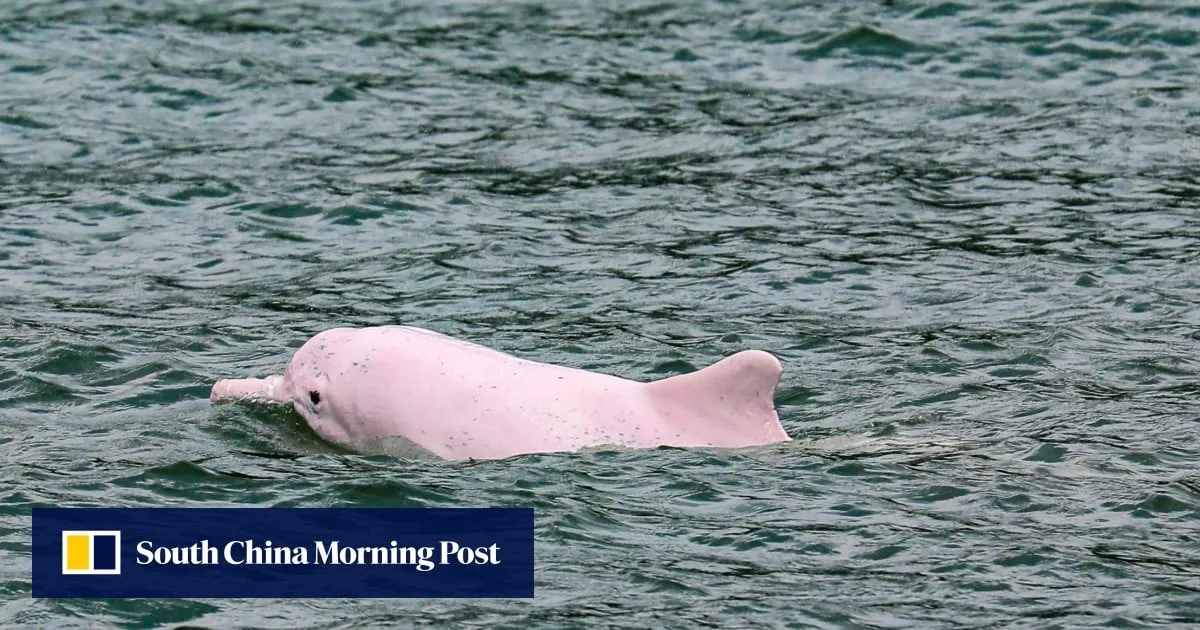
A Hong Kong researcher has called for stricter regulations and urged the public to use electronics more responsibly after a study found toxic pollutants from laptops, televisions and smartphones in the bodies and brains of endangered dolphins and porpoises that washed up on the city’s beaches.Yuhe He, an associate professor at City University of Hong Kong and one of the study’s authors, said he was alarmed to find that liquid crystal monomers (LCMs) – the pollutants identified in the research – were capable of breaching the protective blood-brain barrier in dolphins, which is also found in humans and other animals.LCMs are synthetic, organic chemicals used to manufacture liquid-crystal display (LCD) screens for laptops, television and smartphones.In the study, researchers from City University and mainland China analysed 63 samples from 16 Chinese white dolphins and 26 Indo-Pacific finless porpoises that died after being stranded on the city’s beaches between 2007 and 2021.The team performed tests on blubber, muscle, brain, liver and kidney tissues to look for 62 types of LCMs.About 88 per cent of samples were found with detectable concentrations of LCMs, with the pollutants most concentrated in the blubber of dolphins and porpoises, followed by the muscles and brains.
SRCSouth China Morning Post
LANGEN
LEANCenter-Right
WORDS199
ENT6
SUN · 2026-03-15 · 13:28 GMTBRIEF NSR-2026-0315-24723
NSR-2026-0315-24723News Report·EN·Environmental
Hong Kong researcher sounds alarm after toxic electronic waste found in dolphins
A Hong Kong researcher is advocating for stricter electronic waste regulations after a study revealed toxic pollutants from electronics in deceased dolphins and porpoises. Researchers from City University of Hong Kong and mainland China analyzed tissue samples from marine mammals that washed up on Hong Kong beaches between 2007 and 2021.
Theodora YuSouth China Morning PostFiled 2026-03-15 · 13:28 GMTLean · Center-RightRead · 1 min
South China Morning PostFIG 01
Reading time
1min
Word count
199words
Sources cited
1cited
Entities identified
6entities
Quality score
100%
§ 01
Briefing Summary
AI-generatedNEWSAR · AI
A Hong Kong researcher is advocating for stricter electronic waste regulations after a study revealed toxic pollutants from electronics in deceased dolphins and porpoises. Researchers from City University of Hong Kong and mainland China analyzed tissue samples from marine mammals that washed up on Hong Kong beaches between 2007 and 2021. The study found liquid crystal monomers (LCMs), chemicals used in LCD screens, in 88% of the samples, with the highest concentrations in blubber, followed by muscle and brain tissue. The researcher, Yuhe He, expressed concern that LCMs can breach the blood-brain barrier, posing a potential threat to both marine life and humans. The study highlights the need for responsible electronics disposal to protect vulnerable species.
Confidence 0.90Sources 1Claims 5Entities 6
§ 02
Article analysis
Model · rule-basedFraming
Environmental
Public Health
Tone
Mixed Tone
AI-assessed
CalmNeutralAlarmist
Factuality
0.80 / 1.00
Factual
LowHigh
Sources cited
1
Limited
FewMany
§ 03
Key claims
5 extracted01
About 88% of samples had detectable concentrations of LCMs.
statisticArticle
Confidence
1.00
02
Researchers analyzed 63 samples from dolphins and porpoises stranded between 2007 and 2021.
statisticArticle
Confidence
1.00
03
LCMs are synthetic chemicals used to manufacture LCD screens.
factualArticle
Confidence
1.00
04
Liquid crystal monomers (LCMs) can breach the blood-brain barrier in dolphins.
quoteYuhe He
Confidence
1.00
05
Toxic pollutants from electronics were found in dolphins and porpoises.
factualArticle
Confidence
1.00
§ 04
Full report
1 min read · 199 words§ 05
Entities
6 identifiedKey playerOppositionContextPositiveNeutralNegative
People1
Organizations3
§ 06
Keywords & salience
10 termselectronic waste
0.90
dolphins
0.80
toxic pollutants
0.70
liquid crystal monomers
0.70
lcms
0.60
hong kong
0.60
marine life
0.50
environmental pollution
0.50
blood-brain barrier
0.40
porpoises
0.40
§ 07
Topic connections
Interactive graph Network visualization showing 51 related topics
View Full Graph Person Organization Location Event|Click node to navigate|Edge numbers = shared articles