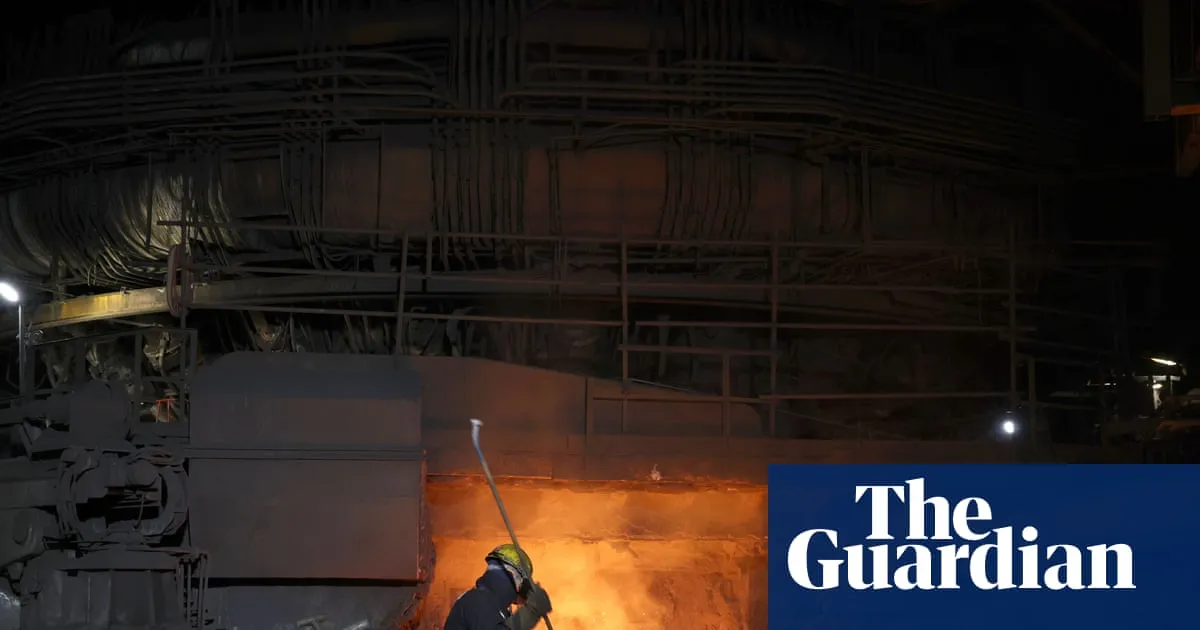
The cost of keeping the UK’s last remaining blast furnaces going at British Steel’s Scunthorpe plant could exceed £1.5bn by 2028 if it continues at its current rate, according to the government’s spending watchdog.Ministers took the plant into public control in April last year, after its Chinese owner – industrial firm Jingye – threatened to shut down the loss-making site.The National Audit Office (NAO), which monitors state spending, said the intervention saved thousands of jobs at Scunthorpe and prevented a “serious impact” on UK industry, including Network Rail, which buys steel for the railways from the plant.Shutting the plant would also have ended Britain’s “primary” steel-making ability because blast furnaces allow steel to be made from scratch, rather than relying on scrap metal.While the NAO’s report highlighted the benefits of the intervention, it warned about the high cost of the rescue package, which had reached £377m by the end of January this year, including £15m spent on advisers.The bill could soar beyond £1.5bn if operating costs continue at their rate of £1.3m a day, it said.In practice, taxpayer liability could be significantly higher because the estimate does not include compensation that might be paid to Jingye, costs associated with any eventual sale process, or the huge investment that would be required to replace its blast furnaces to greener electric arc furnaces.Gareth Davies, head of the NAO, said the Department for Business and Trade (DBT) “should learn from this experience to be better prepared for future interventions”.The £377m spent so far is classified as a loan from DBT.DBT has no repayment schedule in place, the NAO said, and it is not apparent that British Steel will be able to repay the money.The department was not allocated funding for the intervention at the spending review and will have to make savings elsewhere to meet some of the costs, it added.The government has previously announced a £2.5bn support package for the steel industry, through measures such as reducing energy bills, and using more green UK-made steel for infrastructure projects.The NAO said using that fund to support British Steel would lead to “trade offs” with other spending plans. DBT is working on a wider strategy proposal for the struggling UK steel industry.Alasdair McDiarmid, general secretary of the steelworkers’ union Community, said: “Should the government have sat on its hands, and allowed British Steel to collapse, the financial and social impacts would have been catastrophic.“The government made the right decision to invest now because local economies would have been decimated, our nation would have been less secure, and we would have seen a massive and long-term increase to the welfare bill.”
SRCThe Guardian - World News
LANGEN
LEANCenter-Left
WORDS436
ENT10
MON · 2026-03-16 · 00:01 GMTBRIEF NSR-2026-0316-24857
NSR-2026-0316-24857News Report·EN·Economic Impact
Taxpayer bill for saving Scunthorpe steel furnaces could top £1.5bn by 2028, auditor says
A National Audit Office report reveals that the UK government's intervention to save British Steel's Scunthorpe plant could cost taxpayers over £1.5 billion by 2028. The government took control in April 2023 after the Chinese owner threatened closure, a move that preserved jobs and maintained the UK's primary steel-making capability.
Rob DaviesThe Guardian - World NewsFiled 2026-03-16 · 00:01 GMTLean · Center-LeftRead · 2 min
The Guardian - World NewsFIG 01
Reading time
2min
Word count
436words
Sources cited
3cited
Entities identified
10entities
Quality score
100%
§ 01
Briefing Summary
AI-generatedNEWSAR · AI
A National Audit Office report reveals that the UK government's intervention to save British Steel's Scunthorpe plant could cost taxpayers over £1.5 billion by 2028. The government took control in April 2023 after the Chinese owner threatened closure, a move that preserved jobs and maintained the UK's primary steel-making capability. While the intervention prevented significant damage to UK industry, the NAO warns of the high cost, already at £377 million, and potentially much higher due to operating costs, compensation, and future investments. The Department for Business and Trade (DBT) has provided a £377 million loan without a repayment schedule and may need to make savings elsewhere to cover costs. The NAO advises DBT to learn from this experience for future interventions in struggling industries.
Confidence 0.90Sources 3Claims 5Entities 10
§ 02
Article analysis
Model · rule-basedFraming
Economic Impact
Political Strategy
Tone
Measured
AI-assessed
CalmNeutralAlarmist
Factuality
0.80 / 1.00
Factual
LowHigh
Sources cited
3
Well sourced
FewMany
§ 03
Key claims
5 extracted01
The rescue package had reached £377m by the end of January this year.
statisticNational Audit Office (NAO)
Confidence
1.00
02
Ministers took the plant into public control in April last year after Jingye threatened to shut it down.
factualarticle
Confidence
1.00
03
Shutting British Steel would have ended Britain’s “primary” steel-making ability.
factualarticle
Confidence
0.90
04
The cost of keeping Scunthorpe steel furnaces going could exceed £1.5bn by 2028.
predictiongovernment’s spending watchdog (NAO)
Confidence
0.90
05
The intervention saved thousands of jobs at Scunthorpe and prevented a “serious impact” on UK industry.
factualNational Audit Office (NAO)
Confidence
0.80
§ 04
Full report
2 min read · 436 words§ 05
Entities
10 identifiedKey playerOppositionContextPositiveNeutralNegative
Organizations6
§ 06
Keywords & salience
10 termssteel industry
0.90
british steel
0.80
taxpayer bill
0.80
blast furnaces
0.70
scunthorpe
0.70
national audit office
0.60
government intervention
0.60
uk industry
0.50
public control
0.50
loss-making
0.40
§ 07
Topic connections
Interactive graph Network visualization showing 5 related topics
View Full Graph Person Organization Location Event|Click node to navigate|Edge numbers = shared articles