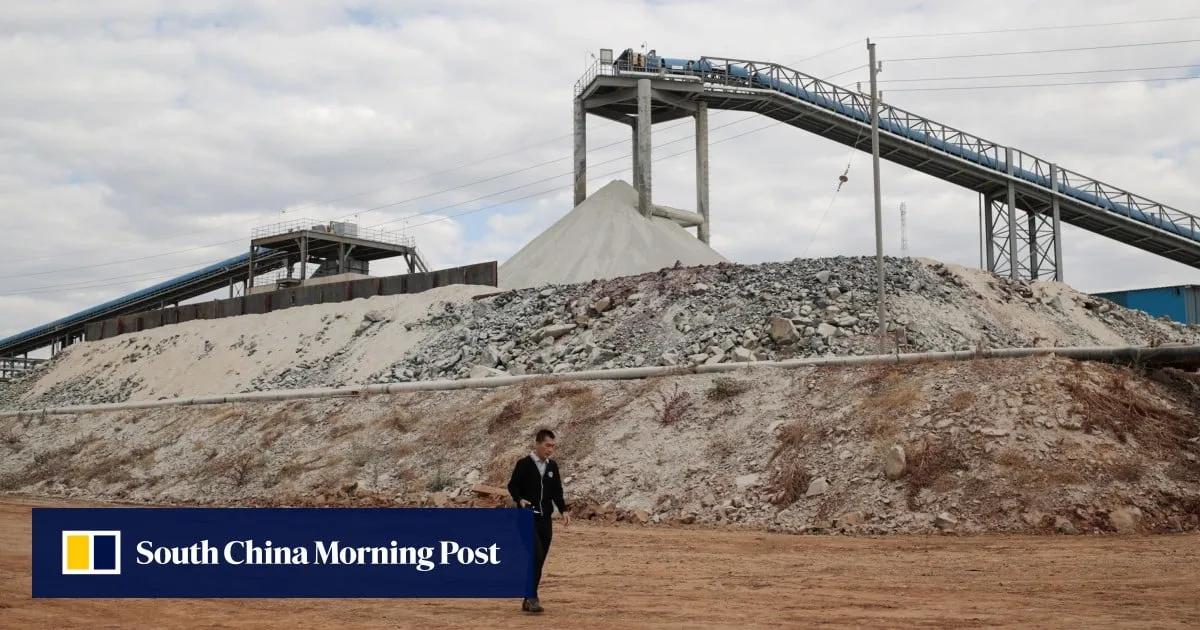
Resource-rich African nations are increasingly asserting control over critical minerals to maximise domestic returns, sending global prices soaring and exerting pressure on Chinese supply chains.Zimbabwe’s mines minister Polite Kambamura revealed in a post-cabinet briefing on March 3 that following notice of the intended ban, the industry had increased production and export volumes.“There was also an increased appetite for lithium export permits, and the rationale behind it was to export as much product as possible before the notice period,” Kambamura said, explaining why the deadline was brought forward a year.08:58What are rare earths, and why is China’s dominance facing global pushbackWhat are rare earths, and why is China’s dominance facing global pushbackThis decision hits Chinese battery producers hard, having invested billions into local mines and relying on Zimbabwe for nearly 20 per cent of their total lithium concentrate supply. Following the ban, lithium carbonate prices on the Guangzhou Futures Exchange rose sharply to 178,020 yuan (US$25,800) per tonne by late February, up from 119,000 yuan in January. However, prices have since moderated as immediate supply concerns eased, trading at about 159,000 yuan per tonne as of March 13.
SRCSouth China Morning Post
LANGEN
LEANCenter-Right
WORDS187
ENT6
MON · 2026-03-16 · 06:36 GMTBRIEF NSR-2026-0316-24873
NSR-2026-0316-24873News Report·EN·Economic Impact
China’s supply chain meets the wall of African resource nationalism
Resource-rich African nations are increasing control over their critical mineral resources, impacting global supply chains. Zimbabwe, a key lithium supplier, implemented a ban on raw lithium exports to maximize domestic returns, a year earlier than initially planned.
Jevans NyabiageSouth China Morning PostFiled 2026-03-16 · 06:36 GMTLean · Center-RightRead · 1 min
South China Morning PostFIG 01
Reading time
1min
Word count
187words
Sources cited
1cited
Entities identified
6entities
Quality score
100%
§ 01
Briefing Summary
AI-generatedNEWSAR · AI
Resource-rich African nations are increasing control over their critical mineral resources, impacting global supply chains. Zimbabwe, a key lithium supplier, implemented a ban on raw lithium exports to maximize domestic returns, a year earlier than initially planned. This decision significantly affects Chinese battery producers who have invested heavily in Zimbabwean mines and rely on them for a substantial portion of their lithium concentrate. The export ban initially caused a sharp increase in lithium carbonate prices on the Guangzhou Futures Exchange in late February. While prices have since moderated, the situation highlights the growing trend of resource nationalism in Africa and its potential to disrupt global mineral supply chains.
Confidence 0.90Sources 1Claims 5Entities 6
§ 02
Article analysis
Model · rule-basedFraming
Economic Impact
Political Strategy
Tone
Measured
AI-assessed
CalmNeutralAlarmist
Factuality
0.80 / 1.00
Factual
LowHigh
Sources cited
1
Limited
FewMany
§ 03
Key claims
5 extracted01
Lithium carbonate prices traded at about 159,000 yuan per tonne as of March 13.
statisticArticle's own claim
Confidence
1.00
02
Lithium carbonate prices on the Guangzhou Futures Exchange rose sharply to 178,020 yuan per tonne by late February.
statisticArticle's own claim
Confidence
1.00
03
The industry had increased production and export volumes following notice of the intended ban.
quotePolite Kambamura
Confidence
1.00
04
Chinese battery producers rely on Zimbabwe for nearly 20 per cent of their total lithium concentrate supply.
factualArticle's own claim
Confidence
0.90
05
Zimbabwe is asserting control over critical minerals to maximise domestic returns.
factualArticle's own claim
Confidence
0.90
§ 04
Full report
1 min read · 187 words§ 05
Entities
6 identifiedKey playerOppositionContextPositiveNeutralNegative
Organizations1
§ 06
Keywords & salience
10 termsresource nationalism
0.90
lithium
0.90
china
0.80
supply chain
0.80
lithium ban
0.70
critical minerals
0.70
zimbabwe
0.70
lithium carbonate prices
0.60
battery producers
0.60
export permits
0.50
§ 07
Topic connections
Interactive graph Network visualization showing 51 related topics
View Full Graph Person Organization Location Event|Click node to navigate|Edge numbers = shared articles