Just as New Zealand’s fragile economic recovery shows flickers of improvement – with economists predicting its annual growth could surpass that of its larger neighbour Australia – it is facing a new threat: the war in the Middle East.New Zealand is particularly exposed to the energy shocks produced by the conflict – and to economic crises generally – with the small, isolated nation highly dependent on global trade and tourism. It is susceptible to disruptions in supply chains and shipping.“We would far prefer this wasn’t happening to the New Zealand economy, and it’s not good for the New Zealand economy,” finance minister Nicola Willis said this week.The economy and cost of living will be the central issues in elections, set to take place in November, and while confidence had been building – and New Zealand is showing signs its economy is finally drawing a line under its worst stretch in almost two decades – the war creates new uncertainty.“We’ve been through an economic trough that’s been just as deep and prolonged … as that which followed the global financial crisis,” said Benje Patterson, an independent economist.New Zealand’s economy has been battered by recession and stagnation that arrived in the wake of the COVID-19 pandemic. The country struggled to find its feet as inflation piled pressure on businesses and drove households to rein in spending.“It’s been a tough couple of years – like, really tough. We’ve had significant reduction in the economy, job losses, business closures, all that kind of stuff,” says Shamubeel Eaqub, an economist.“But [there are] signs that things are kind of bottoming out and beginning to improve.”On Thursday, New Zealand will release its latest economic figures, assessing growth before the impact of the conflict. Gross domestic product (GDP) data is expected to show New Zealand’s economy grew 1.6% over the course of 2025, according to a Westpac forecast. Growth in New Zealand is then set to accelerate to 2.8% this year, the bank projects – ahead of the 2.5% growth forecast for Australia.The International Monetary Fund (IMF) also estimates that GDP growth in New Zealand is set to overtake that of Australia in 2026, albeit by a smaller margin.Key economic indicators “started to really turn up” in recent months, says Kelly Eckhold, chief economist at Westpac New Zealand.“Increasingly we were getting signs here that this economy had gone from operating below trend to one where it actually seemed to be expanding at a pretty decent clip.”Eckhold cautions that it remains “early days”, with unemployment finishing 2025 at its highest level in a decade. But green shoots – including rising job adverts and growth in the workforce – have started to materialise.Strong demand for its exports, particularly meat and dairy, have also helped to start turn things around. Tourism has surged post-pandemic. And a string of interest rate cuts have significantly reduced fixed mortgage rates, raising hopes of a sustained increase in consumer spending.“That’s the gravy money for many households,” says Patterson. “That’s the beer at the pub, or upgrading your bike, or going for a night away somewhere.”Still, the US-Israel war on Iran risks derailing this progress. Robust confidence in New Zealand’s trajectory has been undermined in recent weeks by the conflict, which has severely disrupted energy markets and heightened fears for the global economy.“I don’t think that we would say that this is a disaster yet for the economy,” says Eckhold, although he adds that Westpac will “probably” reduce its 2026 growth forecast.“I think it’s probably more one where perhaps the economy could pause for a quarter or so while the dust settles.”Green shoots – including rising job adverts and growth in the workforce – have started to show in New Zealand. Photograph: BloombergHigher oil prices are already affecting New Zealand, with petrol at the pump rising roughly 45-50 cents per litre. But the impact of the Middle East conflict on countries across Asia, which is the source of so much demand for its exports, and tourism, is likely to have a knock-on effect, too.“Because we’re small, we get knocked around by shocks more. So the volatility is higher,” says Eaqub. Australia, with five times as many people, “can absorb shocks better, because it’s got a larger domestic economy.”“It’s all very well to kind of celebrate the short-term divergence between growth rates,” says Eaqub. “But what really matters is the structural story where Australia has consistently outperformed New Zealand since the mid-1970s.”After a record exodus of workers leaving the country, periods of stronger growth in New Zealand typically stem the flow of people relocating to Australia, Eaqub says.“When there are more job opportunities at home, people will stay, if they want to stay.”After a challenging few years, confidence in New Zealand’s outlook remains fragile. People will believe there’s a recovery when they can see it, and feel it, rippling through their communities.“We’re all waiting for it,” says Eaqub. “It just hasn’t turned up yet.”
SRCThe Guardian - World News
LANGEN
LEANCenter-Left
WORDS817
ENT10
WED · 2026-03-18 · 00:57 GMTBRIEF NSR-2026-0318-25503
NSR-2026-0318-25503News Report·EN·Economic Impact
Isolated and exposed: can New Zealand’s fragile economic recovery withstand the global oil shock?
New Zealand's fragile economic recovery, showing signs of improvement after a prolonged period of recession and stagnation following the Covid-19 pandemic, now faces uncertainty due to the conflict in the Middle East. As a small, isolated nation heavily reliant on global trade and tourism, New Zealand is particularly vulnerable to energy shocks and supply chain disruptions.
Callum Jones and Eva Corlett in WellingtonThe Guardian - World NewsFiled 2026-03-18 · 00:57 GMTLean · Center-LeftRead · 4 min
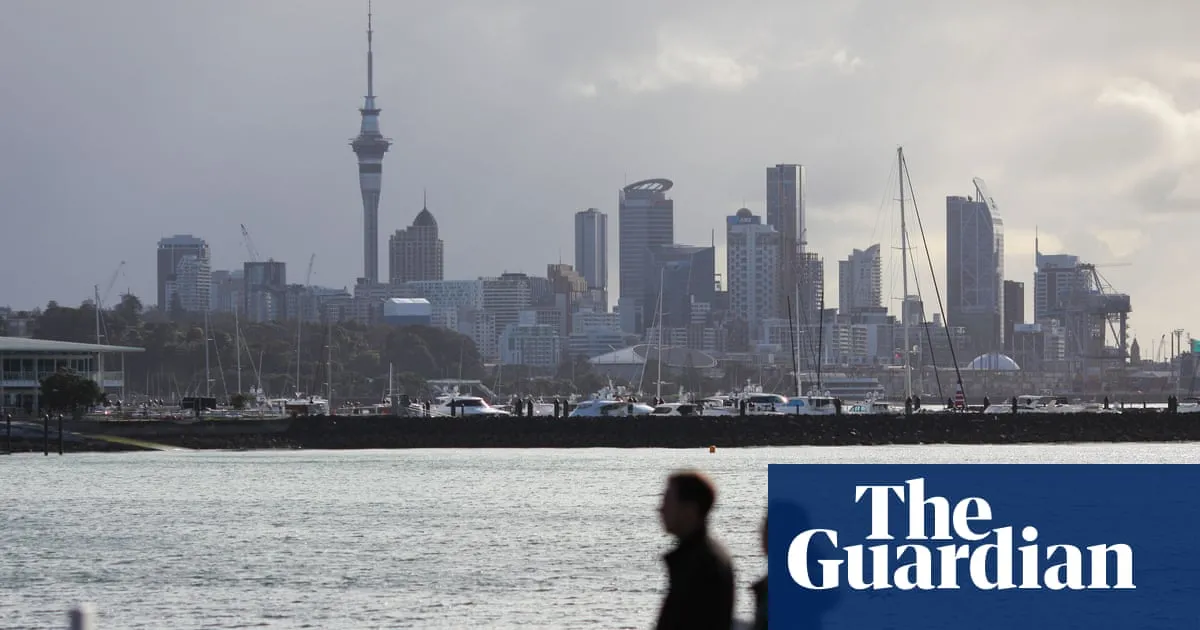
The Guardian - World NewsFIG 01
Reading time
4min
Word count
817words
Sources cited
5cited
Entities identified
10entities
Quality score
100%
§ 01
Briefing Summary
AI-generatedNEWSAR · AI
New Zealand's fragile economic recovery, showing signs of improvement after a prolonged period of recession and stagnation following the Covid-19 pandemic, now faces uncertainty due to the conflict in the Middle East. As a small, isolated nation heavily reliant on global trade and tourism, New Zealand is particularly vulnerable to energy shocks and supply chain disruptions. Economists predict New Zealand's annual growth could surpass Australia's, with GDP expected to grow 1.6% in 2025 and accelerate to 2.8% this year. The war introduces new challenges as the country releases its latest economic figures, with the economy and cost of living expected to be central issues in upcoming elections.
Confidence 0.90Sources 5Claims 5Entities 10
§ 02
Article analysis
Model · rule-basedFraming
Economic Impact
Political Strategy
Tone
Measured
AI-assessed
CalmNeutralAlarmist
Factuality
0.70 / 1.00
Factual
LowHigh
Sources cited
5
Well sourced
FewMany
§ 03
Key claims
5 extracted01
The economy and cost of living will be the central issues in elections, set to take place in November.
factualnull
Confidence
1.00
02
Growth in New Zealand is then set to accelerate to 2.8% this year, the bank projects – ahead of the 2.5% growth forecast for Australia.
statisticWestpac
Confidence
0.90
03
Gross domestic product (GDP) data is expected to show New Zealand’s economy grew 1.6% over the course of 2025.
statisticWestpac forecast
Confidence
0.90
04
New Zealand is showing signs its economy is finally drawing a line under its worst stretch in almost two decades.
factualnull
Confidence
0.80
05
New Zealand's annual growth could surpass that of Australia.
predictioneconomists
Confidence
0.70
§ 04
Full report
4 min read · 817 words§ 05
Entities
10 identifiedKey playerOppositionContextPositiveNeutralNegative
People4
Locations3
§ 06
Keywords & salience
10 termsnew zealand economy
1.00
economic recovery
0.90
global oil shock
0.80
economic growth
0.70
middle east conflict
0.70
global trade
0.60
cost of living
0.60
inflation
0.50
gdp
0.50
recession
0.40
§ 07
Topic connections
Interactive graph Network visualization showing 51 related topics
View Full Graph Person Organization Location Event|Click node to navigate|Edge numbers = shared articles