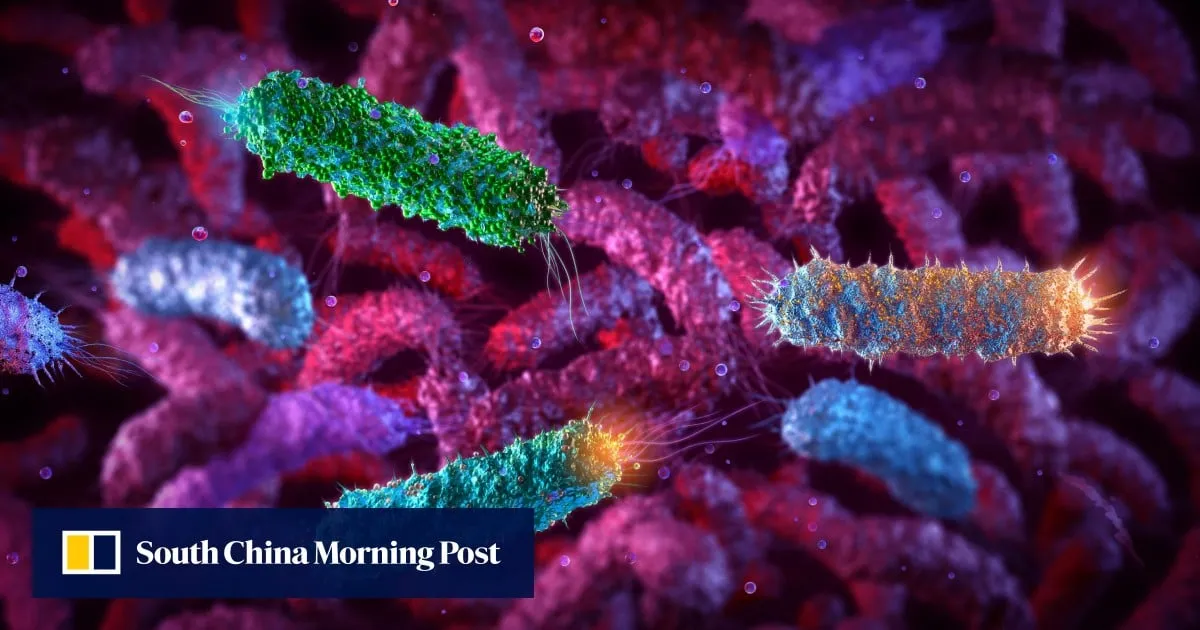
The targeted cancer therapy using bacteria could be much less toxic than traditional treatments, research team says in paper2-MIN READ2-MIN ListenPublished: 2:00pm, 18 Mar 2026Chinese scientists say they have turned E coli into a cancer therapy that can colonise tumour cells, as well as produce and deliver an existing cancer drug directly from within, reducing the toxic side effects of traditional chemotherapy.The research, performed on mice with breast cancer, paved the way for targeted cancer treatments in future, said the scientists from Shandong University in the eastern port city of Qingdao.Escherichia coli (E coli) is a group of bacteria commonly found in the gut. While most strains are harmless, some strains cause watery diarrhoea, vomiting and a fever. China turns to AI to ease overstretched healthcare systemChina turns to AI to ease overstretched healthcare systemIn the study published in the peer-reviewed journal PLOS Biology on Wednesday, the Chinese team worked on a strain called E coli Nissle 1917 (EcN).It was named after German doctor Alfred Nissle, who isolated it from the faeces of a healthy soldier during an outbreak of diarrhoea in World War I. Nissle later developed a probiotic formulation containing the strain, which is used to treat gastrointestinal diseases, including diarrhoea.In addition to its known role in the gut, scientists have been exploring it as a promising candidate to distribute cancer treatment.The probiotic strain showed “the capacity to both accumulate and proliferate within solid tumours, which makes it a highly promising live vector for application in bacterial cancer therapy,” the Chinese team wrote.The researchers said the “engineered EcN enables drug biosynthesis and precise delivery, offering powerful anticancer activity”.
SRCSouth China Morning Post
LANGEN
LEANCenter-Right
WORDS270
ENT7
WED · 2026-03-18 · 06:00 GMTBRIEF NSR-2026-0318-25552
NSR-2026-0318-25552News Report·EN·Technology
Chinese scientists use E coli to fight breast tumours from within in mice study
Chinese scientists at Shandong University have engineered *E. coli* bacteria into a targeted cancer therapy.
Holly ChikSouth China Morning PostFiled 2026-03-18 · 06:00 GMTLean · Center-RightRead · 2 min
South China Morning PostFIG 01
Reading time
2min
Word count
270words
Sources cited
2cited
Entities identified
7entities
Quality score
100%
§ 01
Briefing Summary
AI-generatedNEWSAR · AI
Chinese scientists at Shandong University have engineered *E. coli* bacteria into a targeted cancer therapy. The modified bacteria, a strain called *E. coli* Nissle 1917 (EcN), can colonize breast tumor cells in mice and deliver an existing cancer drug directly from within the tumor. This approach aims to reduce the toxic side effects associated with traditional chemotherapy. Published in PLOS Biology in March 2026, the study suggests that EcN's ability to accumulate and proliferate within solid tumors makes it a promising candidate for bacterial cancer therapy. Researchers believe this engineered EcN enables precise drug delivery and offers powerful anticancer activity, paving the way for future targeted cancer treatments.
Confidence 0.90Sources 2Claims 5Entities 7
§ 02
Article analysis
Model · rule-basedFraming
Technology
Public Health
Tone
Measured
AI-assessed
CalmNeutralAlarmist
Factuality
0.80 / 1.00
Factual
LowHigh
Sources cited
2
Limited
FewMany
§ 03
Key claims
5 extracted01
E coli Nissle 1917 (EcN) was isolated from the faeces of a healthy soldier during an outbreak of diarrhoea in World War I.
factualnull
Confidence
1.00
02
The research was performed on mice with breast cancer.
factualnull
Confidence
1.00
03
The probiotic strain showed “the capacity to both accumulate and proliferate within solid tumours.
quoteChinese team
Confidence
0.90
04
Chinese scientists have turned E coli into a cancer therapy that can colonise tumour cells.
factualChinese scientists
Confidence
0.90
05
Engineered EcN enables drug biosynthesis and precise delivery, offering powerful anticancer activity.
factualResearchers
Confidence
0.80
§ 04
Full report
2 min read · 270 words§ 05
Entities
7 identifiedKey playerOppositionContextPositiveNeutralNegative
Events1
§ 06
Keywords & salience
10 termscancer therapy
1.00
e coli
0.90
breast cancer
0.80
targeted therapy
0.70
tumours
0.70
mice study
0.60
drug delivery
0.60
chemotherapy
0.50
bacteria
0.50
probiotic
0.40
§ 07
Topic connections
Interactive graph Network visualization showing 3 related topics
View Full Graph Person Organization Location Event|Click node to navigate|Edge numbers = shared articles