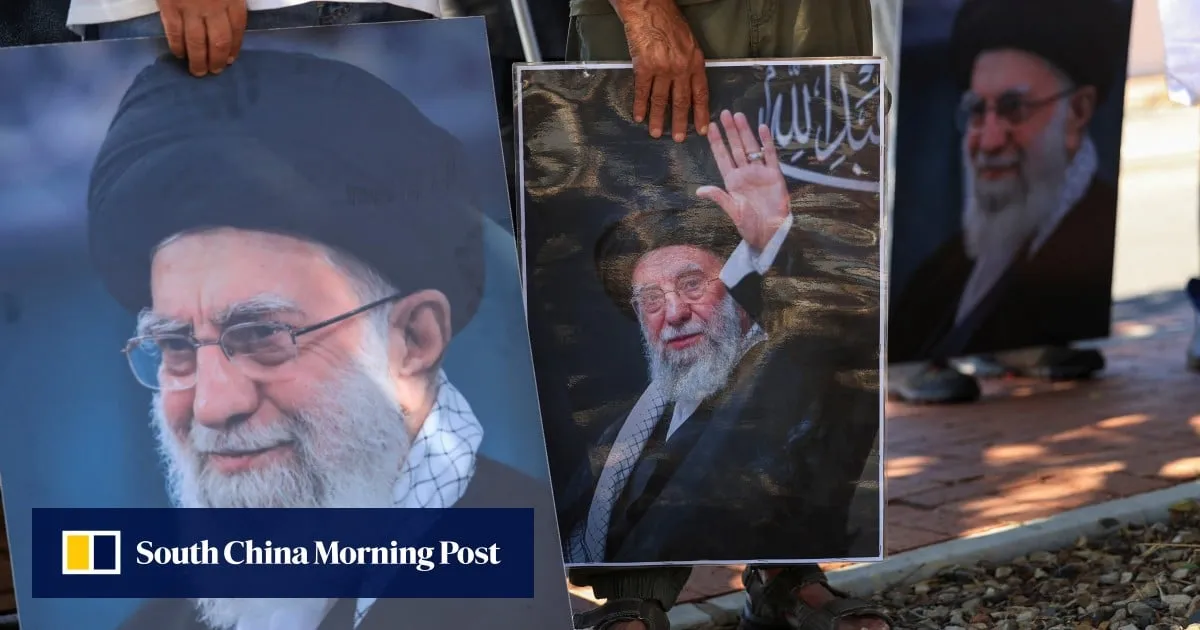
Chinese experts assess military decapitation in Iran, Venezuela for lessons closer to homeBeijing would not overestimate impact of decapitation strike on Taiwan, seeing it just as part of amphibious landing operation, analyst says4-MIN READ4-MIN10 ListenPublished: 9:37pm, 18 Mar 2026Iran’s power structure, succession mechanism and geographic conditions are all factors in its military resilience, despite the decapitation of its leadership by the US and Israel, according to Chinese experts.They also said the United States was unlikely to achieve regime change in Iran without deploying ground forces, a lesson one expert argued Beijing would take into account for any operation on Taiwan.Beginning on February 28, the US and Israel have killed a string of senior Iranian religious and military officials in decapitation operations – strikes that aim to remove an opponent’s leadership with surgical precision, potentially creating a power vacuum.The campaign has eliminated Iran’s supreme leader, Ayatollah Ali Khamenei; Islamic Revolutionary Guard Corps commander Mohammad Pakpour; army chief of staff Abdolrahim Mousavi; defence minister Aziz Nasirzadeh and, in an Israeli air strike on Tuesday, national security chief Ali Larijani.00:52Iran vows retaliation for death of country’s security chief Ali LarijaniIran vows retaliation for death of country’s security chief Ali LarijaniHowever, unlike the US’ earlier decapitation operation in Venezuela, which then gave in to Washington, Iranian forces have stayed in the fight, launching retaliatory drone and missile attacks against Israeli and US military bases in the Middle East as well as other targets.How long the US-Israel air strikes last remains a subject of intense debate, with US President Donald Trump sending out mixed signals.
SRCSouth China Morning Post
LANGEN
LEANCenter-Right
WORDS260
ENT12
WED · 2026-03-18 · 13:37 GMTBRIEF NSR-2026-0318-25675
NSR-2026-0318-25675News Report·EN·National Security
Chinese experts assess military decapitation in Iran, Venezuela for lessons closer to home
Chinese experts are analyzing recent US and Israeli decapitation strikes in Iran and Venezuela to draw lessons applicable to potential military operations closer to home, specifically regarding Taiwan. Since February 28, 2026, the US and Israel have eliminated several high-ranking Iranian officials, including the supreme leader and military commanders, through targeted strikes.
Alcott Wei,Seong Hyeon ChoiSouth China Morning PostFiled 2026-03-18 · 13:37 GMTLean · Center-RightRead · 2 min
South China Morning PostFIG 01
Reading time
2min
Word count
260words
Sources cited
1cited
Entities identified
12entities
Quality score
100%
§ 01
Briefing Summary
AI-generatedNEWSAR · AI
Chinese experts are analyzing recent US and Israeli decapitation strikes in Iran and Venezuela to draw lessons applicable to potential military operations closer to home, specifically regarding Taiwan. Since February 28, 2026, the US and Israel have eliminated several high-ranking Iranian officials, including the supreme leader and military commanders, through targeted strikes. Despite these losses, Iran has retaliated with drone and missile attacks, demonstrating resilience unlike Venezuela's response to a similar US operation. Experts believe Iran's power structure and geographic conditions contribute to its ability to withstand leadership decapitation. One analyst suggests Beijing would view a decapitation strike on Taiwan as part of a larger amphibious landing operation, and that the US would likely need ground forces to achieve regime change in Iran, a factor Beijing would consider for any Taiwan operation.
Confidence 0.90Sources 1Claims 5Entities 12
§ 02
Article analysis
Model · rule-basedFraming
National Security
Political Strategy
Tone
Mixed Tone
AI-assessed
CalmNeutralAlarmist
Factuality
0.60 / 1.00
Mixed
LowHigh
Sources cited
1
Limited
FewMany
§ 03
Key claims
5 extracted01
Iranian forces have launched retaliatory drone and missile attacks.
factualArticle
Confidence
0.90
02
The campaign has eliminated Iran’s supreme leader, Ayatollah Ali Khamenei.
factualArticle
Confidence
0.90
03
US and Israel have killed senior Iranian officials in decapitation operations.
factualArticle
Confidence
0.90
04
US unlikely to achieve regime change in Iran without deploying ground forces.
quoteone expert
Confidence
0.70
05
Beijing would not overestimate impact of decapitation strike on Taiwan.
quoteanalyst
Confidence
0.70
§ 04
Full report
2 min read · 260 words§ 05
Entities
12 identifiedKey playerOppositionContextPositiveNeutralNegative
People6
§ 06
Keywords & salience
10 termsmilitary decapitation
1.00
iran
0.90
us
0.80
israel
0.70
venezuela
0.70
retaliatory attacks
0.60
taiwan
0.60
power vacuum
0.50
regime change
0.50
military resilience
0.40
§ 07
Topic connections
Interactive graph Network visualization showing 51 related topics
View Full Graph Person Organization Location Event|Click node to navigate|Edge numbers = shared articles