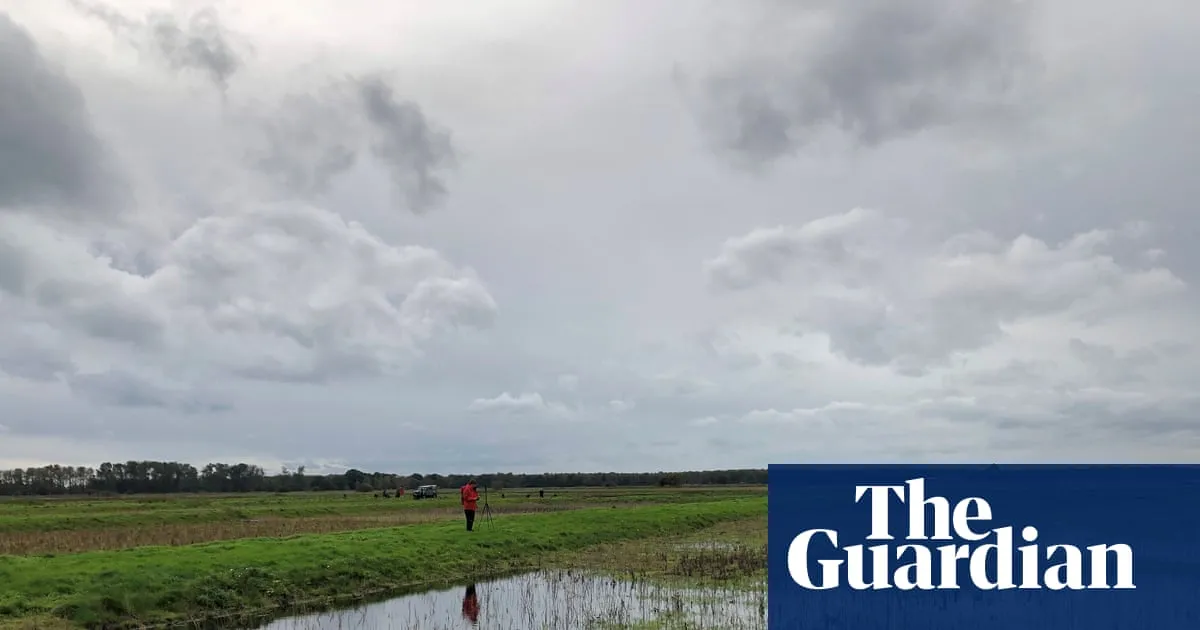
About 7% of England’s land – an area roughly two-and-a-half times the size of Cornwall – will need to be given over to nature, forests and renewable energy, to meet the UK’s environmental targets, new data shows.But there will still be enough land to grow the food needed, and to house a growing population, according to the government’s first land use framework, published on Wednesday.Ministers hope to take some of the heat out of debates over housing development v nature protection, by mapping in detail for the first time how England’s land is used and how it can be adapted to meet changing needs. Current land use is “highly inefficient”, they have said.Under new rules, a “default yes” will be given to housing developments within walking distance of existing train stations. Housebuilders will also be told to include ponds, wetlands and improved urban drainage schemes in their developments, to combat the rising risk of flooding.Farmers will also be told whether their land would be better turned over to forestry, wetland or peatland restoration, or other uses rather than farming. Where appropriate they will be encouraged to do so by new incentives, but not coerced. The UK’s outdated classifications of agricultural land will be updated.Only about 1% of England’s land is likely to be needed for solar and windfarms and other renewable energy, according to the report, but this estimate may already be in need of an update, as the Department for Environment, Food and Rural Affairs has admitted that it did not include any increased needs for water and energy from the building of new AI datacentres.Other measures contained in the 56-page report, work on which was begun under the previous Conservative government and which has taken several years to complete, include: Placing a high priority on restoring peatland, all but 13% of which is degraded across England, but this will not include an outright ban on development such as wind or solar farms. Encouraging the “multi-use” of land, for instance with livestock grazing alongside wind and solar farms, and wildlife protection and nature restoration on arable land. Encouraging local authorities to put nature reserves in urban areas as well as in the countryside. Grouse moors to come under closer scrutiny and tighter regulation, which will go further than EU rules. No new “right to roam” is included in the framework, but there will be a consultation on “making landowner liability more proportionate”, which could open up areas for public access. A national soil map will be published. A new land use unit will be established. Government planning for changes to the UK’s landscape under global heating of 2C above preindustrial levels, and of much higher heating of 4C. Farmers and campaigners broadly welcomed the framework. “This is a step in the right direction,” said Tom Bradshaw, the president of the National Farmers’ Union. “[But] delivering on all the objectives within existing land is an ambitious aim and will require clear guidance, the right policy framework and incentives to avoid unintended outcomes.”Martin Lines, of the Nature Friendly Farming Network, said: “Land managers across England will require a clear funding pipeline from both public and private sectors to deliver the things we need in this report.”Tom Lancaster, the head of land, food and farming at the ECIU thinktank, said: “The UK has in recent years experienced its worst three harvests on record owing to the climate crisis. Taking a more coherent approach to land use is a prerequisite to building our resilience to climate shocks.”
SRCThe Guardian - World News
LANGEN
LEANCenter-Left
WORDS584
ENT6
WED · 2026-03-18 · 14:41 GMTBRIEF NSR-2026-0318-25710
NSR-2026-0318-25710News Report·EN·Environmental
England should give over 7% of land to nature and renewables to meet environmental targets, data shows
To meet environmental targets, England needs to allocate over 7% of its land to nature, forests, and renewable energy sources, according to the government's first land use framework published Wednesday. The framework aims to balance housing development with nature protection by mapping current land use and identifying areas for adaptation.
Fiona Harvey Environment editorThe Guardian - World NewsFiled 2026-03-18 · 14:41 GMTLean · Center-LeftRead · 3 min
The Guardian - World NewsFIG 01
Reading time
3min
Word count
584words
Sources cited
2cited
Entities identified
6entities
Quality score
100%
§ 01
Briefing Summary
AI-generatedNEWSAR · AI
To meet environmental targets, England needs to allocate over 7% of its land to nature, forests, and renewable energy sources, according to the government's first land use framework published Wednesday. The framework aims to balance housing development with nature protection by mapping current land use and identifying areas for adaptation. New rules will prioritize housing near train stations and require developers to incorporate green infrastructure. Farmers may be incentivized to transition land to forestry or wetland restoration, and agricultural land classifications will be updated. While only about 1% of land is projected for renewable energy, this estimate may need revision to account for AI datacenters. The report also prioritizes peatland restoration, encourages multi-use land strategies, and proposes closer regulation of grouse moors.
Confidence 0.90Sources 2Claims 5Entities 6
§ 02
Article analysis
Model · rule-basedFraming
Environmental
Economic Impact
Tone
Measured
AI-assessed
CalmNeutralAlarmist
Factuality
0.80 / 1.00
Factual
LowHigh
Sources cited
2
Limited
FewMany
§ 03
Key claims
5 extracted01
Placing a high priority on restoring peatland, all but 13% of which is degraded across England.
factualthe 56-page report
Confidence
1.00
02
Delivering on all the objectives within existing land is an ambitious aim and will require careful management.
quoteTom Bradshaw, the president of the National Farmers’ Union
Confidence
1.00
03
A “default yes” will be given to housing developments within walking distance of existing train stations.
factual
Confidence
1.00
04
Only about 1% of England’s land is likely to be needed for solar and windfarms and other renewable energy.
statisticthe report
Confidence
1.00
05
About 7% of England’s land will need to be given over to nature, forests and renewable energy to meet the UK’s environmental targets.
statisticnew data
Confidence
1.00
§ 04
Full report
3 min read · 584 words§ 05
Entities
6 identifiedKey playerOppositionContextPositiveNeutralNegative
Organizations4
§ 06
Keywords & salience
9 termsland use
0.90
environmental targets
0.80
renewable energy
0.70
nature restoration
0.70
housing development
0.60
peatland restoration
0.50
land use framework
0.50
agricultural land
0.50
urban drainage
0.40
§ 07
Topic connections
Interactive graph No topic relationship data available yet. This graph will appear once topic relationships have been computed.