37 minutes agoPaulin KolaGetty Images / Invision via APThe pair's theory is not new but is thought to be key to secure future electronic communicationsA US physicist and a Canadian computer scientist have won this year's Turing Award for their invention of a form of seemingly unbreakable encryption. Charles H Bennett and Gilles Brassard's work, which dates back to 1984, is known as quantum cryptography and has "redefined secure communication and computing", the award's body said. Scientists believe their work will be central to electronic communications in a world that depends heavily on data-sharing, but which for years has been trying to develop more powerful quantum computers.The Turing Award, named after the mathematician and code-breaker Alan Turing, is known as the "Nobel Prize of computing". It comes with a $1m (£800,000) prize. Bennett, 82, is a fellow at technology company IBM in New York, while Brassard, 70, is a professor at the University of Montreal. The pair met by chance whilst attending an academic conference in Puerto Rico in 1979.Bennett is reported to have approached the computer scientist as they were swimming during a break to suggest the idea of developing a banknote that could never be forged. It heralded decades of co-operation, during which the two men developed a technique based on quantum physics - the behaviour of particles of matter, including electrons and photons. Current encryption technology relies on complex mathematical combinations, but many scientists believe that the arrival of quantum computers will make this insecure.By contrast, Bennett and Brassard's theory - known as BB84 - shows that any attempt to hack or copy their quantum encryption key changes the very behaviour of its elements, making replication impossible. In the announcement on Wednesday, the Association of Computer Machinery - the body that awards the Turing Award, praised their work as a "pathway toward securing digital communications in the decades ahead".
SRCBBC News - World
LANGEN
LEANCenter
WORDS312
ENT10
WED · 2026-03-18 · 15:23 GMTBRIEF NSR-2026-0318-25721
NSR-2026-0318-25721News Report·EN·Technology
Pair win Turing Award for computer encryption breakthrough
Charles H Bennett and Gilles Brassard have won the 2024 Turing Award for their invention of quantum cryptography, a form of encryption believed to be unbreakable. Their work, dating back to 1984, is considered crucial for securing future electronic communications as quantum computers become more powerful.
BBC News - WorldFiled 2026-03-18 · 15:23 GMTLean · CenterRead · 2 min
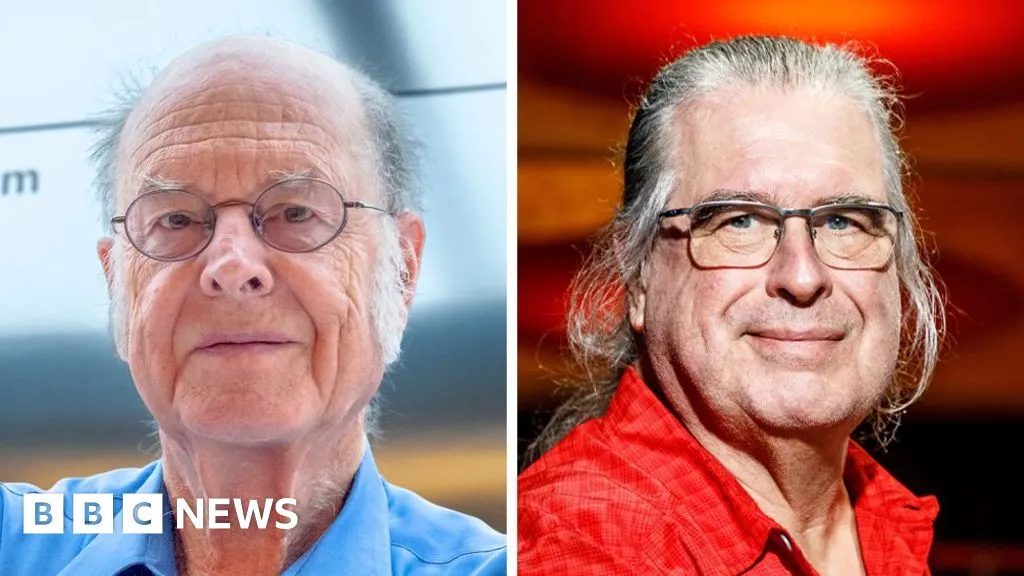
BBC News - WorldFIG 01
Reading time
2min
Word count
312words
Sources cited
2cited
Entities identified
10entities
Quality score
100%
§ 01
Briefing Summary
AI-generatedNEWSAR · AI
Charles H Bennett and Gilles Brassard have won the 2024 Turing Award for their invention of quantum cryptography, a form of encryption believed to be unbreakable. Their work, dating back to 1984, is considered crucial for securing future electronic communications as quantum computers become more powerful. The BB84 theory demonstrates that any attempt to hack the quantum encryption key alters its elements, preventing replication. Bennett, a fellow at IBM in New York, and Brassard, a professor at the University of Montreal, developed the technique after meeting at a conference in Puerto Rico in 1979. The Association of Computer Machinery recognized their work as essential for securing digital communications in the future with the prestigious award, which includes a $1 million prize.
Confidence 0.90Sources 2Claims 5Entities 10
§ 02
Article analysis
Model · rule-basedFraming
Technology
Human Interest
Tone
Measured
AI-assessed
CalmNeutralAlarmist
Factuality
0.80 / 1.00
Factual
LowHigh
Sources cited
2
Limited
FewMany
§ 03
Key claims
5 extracted01
The Turing Award comes with a $1m (£800,000) prize.
factual
Confidence
1.00
02
Their work, dating back to 1984, has redefined secure communication and computing.
quotethe award's body
Confidence
1.00
03
Charles H Bennett and Gilles Brassard won the Turing Award for their invention of quantum cryptography.
factual
Confidence
1.00
04
Bennett and Brassard's theory shows that any attempt to hack their encryption changes its elements.
factual
Confidence
0.90
05
Scientists believe their work will be central to electronic communications.
predictionScientists
Confidence
0.70
§ 04
Full report
2 min read · 312 words§ 05
Entities
10 identifiedKey playerOppositionContextPositiveNeutralNegative
People3
Organizations3
§ 06
Keywords & salience
8 termsquantum cryptography
1.00
encryption
0.90
turing award
0.80
secure communication
0.70
quantum computers
0.60
bb84
0.50
data-sharing
0.50
quantum physics
0.40
§ 07
Topic connections
Interactive graph No topic relationship data available yet. This graph will appear once topic relationships have been computed.