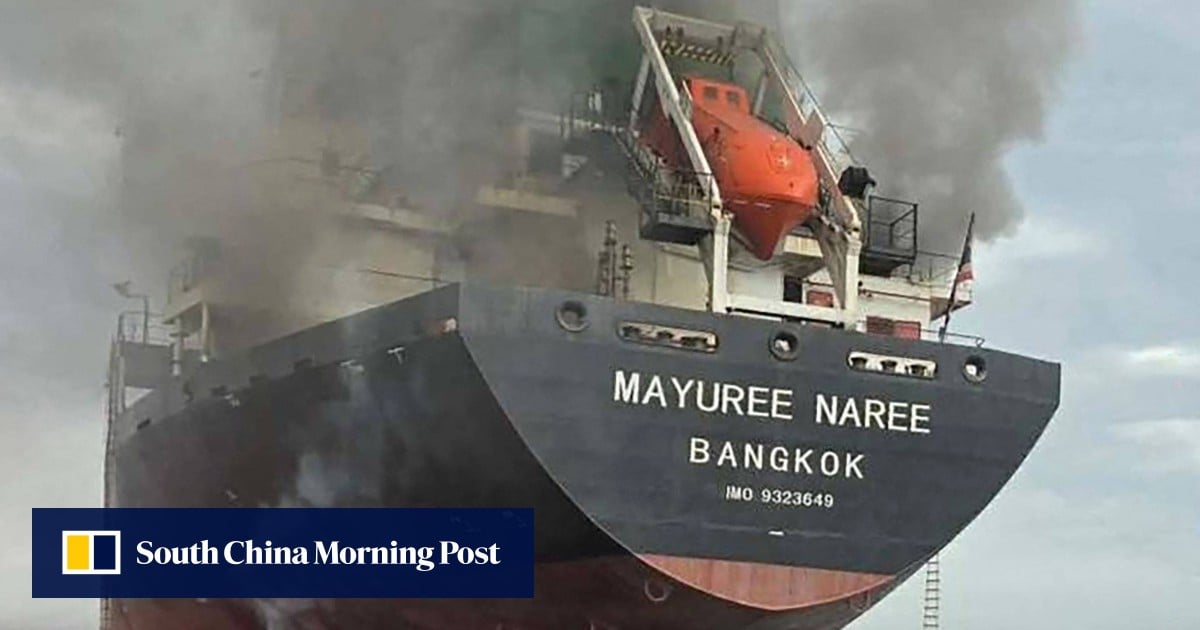
US air strikes may have weakened Iran’s ability to blockade the Strait of Hormuz, but in the short term it is probably too risky to provide a military escort for oil tankers because of the threat from drones and mines, according to Chinese analysts.Multiple media reports have said the United States was considering the use of ground troops to open the waterway, but many military observers have argued this would not be enough without further protracted fighting.The strait is a vital shipping route that carries around 20 per cent of the world’s oil supplies, but traffic has come to a near standstill since the start of the US-Israeli assault on Iran on February 28.Compared with the pre-war average of 100 to 35 ships a day, just 89 ships – including 16 oil tankers – passed through the strait between March 1 and 15, according to data from Lloyd’s List Intelligence.Oil prices have surged above US$100 a barrel as a result of the blockade, and the number of ships passing through the Strait of Hormuz dropped to zero for the first time last Saturday.Iran is located on the northern shore of the strait, and around 20 ships in the region have been attacked since the conflict began.
SRCSouth China Morning Post
LANGEN
LEANCenter-Right
WORDS206
ENT6
FRI · 2026-03-20 · 13:00 GMTBRIEF NSR-2026-0320-26403
NSR-2026-0320-26403News Report·EN·National Security
Can the US reopen the Strait of Hormuz? Many military analysts are sceptical
Following the US-Israeli assault on Iran beginning February 28th, traffic through the Strait of Hormuz, a vital shipping route for 20% of the world's oil, has drastically decreased, causing oil prices to surge. While the US has reportedly considered military intervention, including ground troops, to reopen the strait, analysts are skeptical about its feasibility due to threats from drones and mines.
Alcott WeiSouth China Morning PostFiled 2026-03-20 · 13:00 GMTLean · Center-RightRead · 1 min
South China Morning PostFIG 01
Reading time
1min
Word count
206words
Sources cited
2cited
Entities identified
6entities
Quality score
100%
§ 01
Briefing Summary
AI-generatedNEWSAR · AI
Following the US-Israeli assault on Iran beginning February 28th, traffic through the Strait of Hormuz, a vital shipping route for 20% of the world's oil, has drastically decreased, causing oil prices to surge. While the US has reportedly considered military intervention, including ground troops, to reopen the strait, analysts are skeptical about its feasibility due to threats from drones and mines. Since the conflict began, around 20 ships in the region have been attacked. Data indicates a significant drop in daily ship traffic, including oil tankers, with a complete standstill recorded last Saturday. The Strait of Hormuz is located between Iran and Oman.
Confidence 0.90Sources 2Claims 5Entities 6
§ 02
Article analysis
Model · rule-basedFraming
National Security
Economic Impact
Tone
Mixed Tone
AI-assessed
CalmNeutralAlarmist
Factuality
0.70 / 1.00
Factual
LowHigh
Sources cited
2
Limited
FewMany
§ 03
Key claims
5 extracted01
Just 89 ships – including 16 oil tankers – passed through the strait between March 1 and 15.
statisticLloyd’s List Intelligence
Confidence
0.95
02
The strait is a vital shipping route that carries around 20 per cent of the world’s oil supplies.
factual
Confidence
0.90
03
Oil prices have surged above US$100 a barrel as a result of the blockade.
factual
Confidence
0.80
04
It is probably too risky to provide a military escort for oil tankers because of the threat from drones and mines.
predictionChinese analysts
Confidence
0.70
05
US air strikes may have weakened Iran’s ability to blockade the Strait of Hormuz.
predictionChinese analysts
Confidence
0.60
§ 04
Full report
1 min read · 206 words§ 05
Entities
6 identifiedKey playerOppositionContextPositiveNeutralNegative
Organizations1
§ 06
Keywords & salience
8 termsstrait of hormuz
1.00
oil tankers
0.80
blockade
0.70
military escort
0.60
oil prices
0.60
shipping route
0.50
us air strikes
0.50
ground troops
0.40
§ 07
Topic connections
Interactive graph Network visualization showing 49 related topics
View Full Graph Person Organization Location Event|Click node to navigate|Edge numbers = shared articles