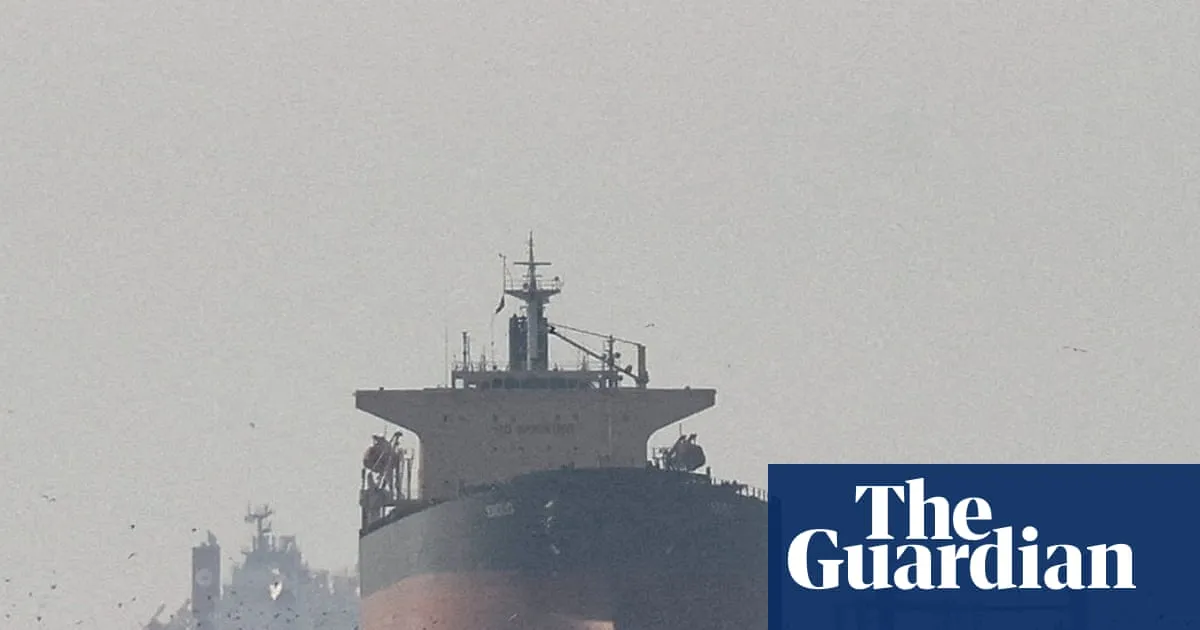
Donald Trump has branded the UK and other NATO allies “cowards” but anger is growing among cabinet ministers that his war in Iran could jeopardise Britain’s fragile finances.Senior members of the government are in despair about the potential effects on the economy, with experts warning of higher energy prices and mortgage and borrowing costs.They have already begun contingency planning in case the conflict is protracted, including considering lowering speed limits to minimise fuel consumption.With the conflict continuing to escalate, the UK confirmed it was authorising the use of British military bases to strike Iranian missile launchers that are targeting commercial ships in the Strait of Hormuz. Previously, UK bases were only being used to strike Iranian sites targeting British allies and interests in Gulf states.The change is unlikely to make a significant difference to the conflict, leaving ministers scrambling to map out worst-case scenarios for the economy.The Treasury has set up an “Iran board” of ministers and officials that is considering a range of potential options, which government sources say include a universal bailout for energy bills. This would be a “last resort” if global prices remained high.There is anger among some ministers towards the US president, who posted on Truth Social on Friday that NATO allies were “cowards” for refusing his calls to help reopen the Strait of Hormuz, claiming it would be “so easy for them to do, with so little risk”. No 10 declined to comment on the insult.The prospect of a global energy shock and further increases to the cost of living comes at a critical time for Keir Starmer and Rachel Reeves in the run-up to May’s local elections, when the government had hoped to emphasise the improving economy.Reeves, the chancellor, is facing pressure on multiple fronts after the cost of government borrowing rose to its highest level since the 2008 financial crisis on Friday, and analysts said the markets were predicting interest rates of 4.5%, which would raise the cost of mortgages.In the face of oil supply shortages caused by the closure of the Strait of Hormuz, the International Energy Agency (IEA) suggested the world should use ovens less and cut back on car usage to increase resilience.Forecasts suggested household energy bills could increase by £330 a year to almost £2,000 from this summer after the war pushed the UK’s gas market past three-year highs, according to Cornwall Insight.With the UK’s economic reset under threat, Lisa Nandy, the culture secretary, raised the idea of loosening the fiscal rules that restrict borrowing earlier this week, while others on the Labour backbenches were also pushing for a change in direction and radical tax reform.Downing Street sources said the economic situation was “extremely challenging” but they hoped Starmer would get the credit for resisting Trump’s war on Iran and focusing on the cost of living, and that people would see it was an international crisis.One said: “It is frustrating, but it does show we were right to go into the year with a cost of living focus. It is so annoying when inflation was coming down and energy bills were falling by £117, we would all rather it hadn’t have happened. But if we hadn’t done that, we would be in a much worse position now.”Multiple Whitehall officials said it would be clearer within about two weeks whether the war had de-escalated enough to avoid having to offer households support with their energy bills – whether that be a package targeted at the vulnerable or a more universal version, similar to the bailout due to the Ukraine war under the Conservatives on a lesser scale.No 10 and the Treasury strongly favour the idea of support targeted only at those who need it most, but political sources acknowledged it could be difficult to restrict financial help because of resentment in other groups and past controversy over the withdrawal of the winter fuel allowance.Paul Nowak, the general secretary of the Trades Union Congress, said: “Working people must not be left to pay the price for Trumpflation. The government has taken the right first steps to support those hardest hit by rising energy bills. But ministers should be ready to go further to protect households and businesses from the fallout.” The Greens have called for the government to cover a £300 increase in energy bills as a result of the war, costing about £8bn.It is understood that all options for energy support are still on the table, depending on whether the war continues and how it affects the markets. The time of year gives the government more time to consider whether a package of support is needed, as households tend to use less gas over the summer.One senior Labour source said there was a concern within Downing Street about the cost of repeated bailouts and that “no one wants to be coming back for more tax rises in two years’ time”.Fatih Birol, the director of the IEA, told media outlets on Friday that it was the “the greatest global energy security threat in history”.The IEA advised countries to promote public transport, give private cars access to city centres on alternate days, encourage efficient driving habits, avoid air travel where possible and switch to electric cooking.The prime minister’s official spokesperson said this was the IEA’s “general advice for countries across the world” and people in the UK “should continue to go about their days in normal fashion”.Contingency plans to minimise fuel consumption are being worked up by the government, with lower speed limits a potential consideration, as the crisis in the Middle East threatens global oil supplies.Sources stressed that there was no shortage of fuel in the UK, but said officials in the Department for Transport were working with the Department for Energy Security and Net Zero on an analysis of what measures could be taken to curb oil demand.One cabinet source said there was “deep gloom” in the Treasury and No 10 that there were green shoots emerging at the start of the year but Trump’s decision to bomb Iran had knocked the recovery off course.Reeves is understood to be frustrated at the likely reduction in her carefully planned economic headroom, which could be brought down by £7bn-£8bn.As recently as February, the chancellor said she was “beginning to see the economy turning a corner” and suggested “this will be the year that people start to feel the change in their pockets”.But with fuel prices and mortgage rates already rising, and worse potentially to come, a government minister conceded: “It’s jam postponed, once again.”
SRCThe Guardian - World News
LANGEN
LEANCenter-Left
WORDS1 083
ENT11
FRI · 2026-03-20 · 19:25 GMTBRIEF NSR-2026-0320-26477
NSR-2026-0320-26477News Report·EN·Economic Impact
UK ministers begin contingency planning amid fears for economic effects of Iran war
UK ministers are developing contingency plans due to concerns about the economic impact of the escalating conflict between the US and Iran. The government fears rising energy prices and borrowing costs, potentially necessitating measures like lowered speed limits and, as a last resort, energy bill bailouts.
Rowena Mason, Heather Stewart, Gwyn Topham and Jessica ElgotThe Guardian - World NewsFiled 2026-03-20 · 19:25 GMTLean · Center-LeftRead · 5 min
The Guardian - World NewsFIG 01
Reading time
5min
Word count
1 083words
Sources cited
6cited
Entities identified
11entities
Quality score
100%
§ 01
Briefing Summary
AI-generatedNEWSAR · AI
UK ministers are developing contingency plans due to concerns about the economic impact of the escalating conflict between the US and Iran. The government fears rising energy prices and borrowing costs, potentially necessitating measures like lowered speed limits and, as a last resort, energy bill bailouts. Tensions are heightened by President Trump's criticism of NATO allies, including the UK, for not intervening in the Strait of Hormuz. The UK has authorized its military bases to strike Iranian missile launchers targeting commercial ships in the Strait of Hormuz. The Treasury has established an "Iran board" to address the crisis, as the potential energy shock threatens to derail the government's economic recovery narrative ahead of local elections. Rising government borrowing costs and predicted interest rate hikes further compound the economic challenges.
Confidence 0.90Sources 6Claims 5Entities 11
§ 02
Article analysis
Model · rule-basedFraming
Economic Impact
Political Strategy
Tone
Mixed Tone
AI-assessed
CalmNeutralAlarmist
Factuality
0.70 / 1.00
Factual
LowHigh
Sources cited
6
Well sourced
FewMany
§ 03
Key claims
5 extracted01
Trump branded the UK and other Nato allies “cowards”.
quoteDonald Trump
Confidence
1.00
02
The Treasury has set up an “Iran board” of ministers and officials.
factual
Confidence
1.00
03
UK authorizing use of British military bases to strike Iranian missile launchers targeting commercial ships in the strait of Hormuz.
factual
Confidence
1.00
04
UK ministers begin contingency planning amid fears for economic effects of Iran war.
factual
Confidence
0.90
05
Analysts said the markets were predicting interest rates of 4.5%.
predictionanalysts
Confidence
0.80
§ 04
Full report
5 min read · 1 083 words§ 05
Entities
11 identifiedKey playerOppositionContextPositiveNeutralNegative
People3
Organizations4
§ 06
Keywords & salience
10 termsiran war
0.90
economic effects
0.80
energy prices
0.70
contingency planning
0.70
uk economy
0.60
strait of hormuz
0.60
borrowing costs
0.50
energy bills
0.50
cost of living
0.50
fuel consumption
0.40
§ 07
Topic connections
Interactive graph No topic relationship data available yet. This graph will appear once topic relationships have been computed.