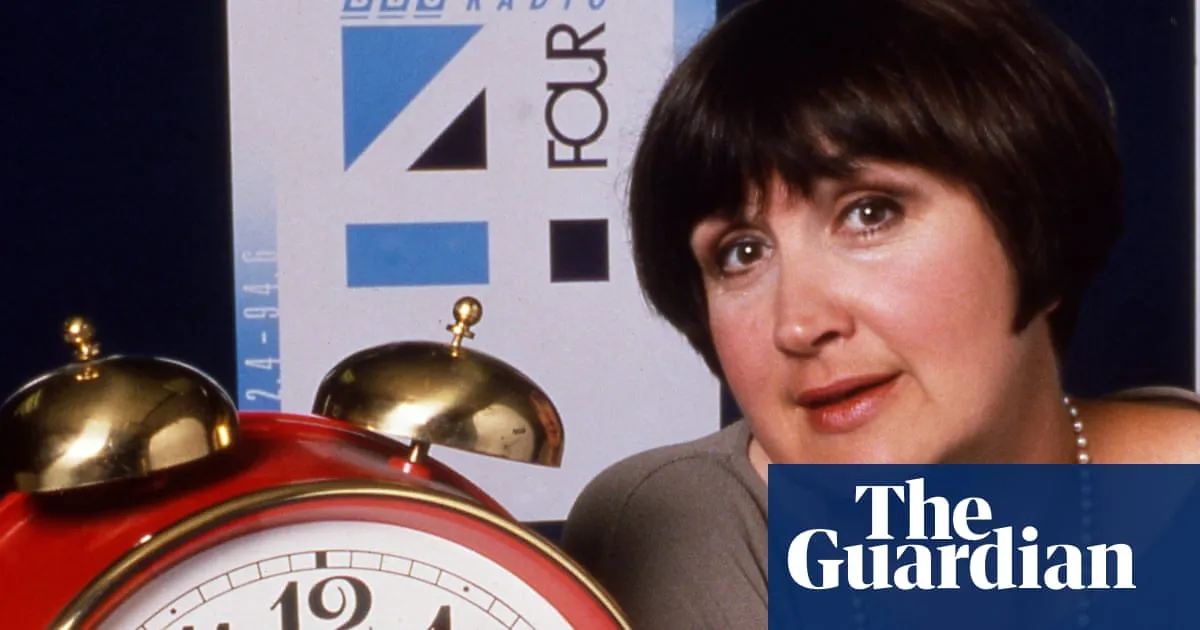
Before she took over Woman’s Hour in 1987, Jenni Murray was a presenter on the Today Programme. She had joined the BBC in Bristol in 1973, and became a TV reporter and presenter for South Today, so arrived with solid news credentials. But Today in the 1980s was inveterately sexist – the guys took the politics, the women mopped up the rest – that the format was just too small for her.Woman’s Hour, on the other hand, was absolutely reshaped in her image: there was no preconception of tone, and nothing was too serious or too light for it. Murray, who has died at the age of 75, could tear a strip off a politician, talk about hydrangeas, then campaign against domestic abuse, all within a few minutes. She was instinctively open and generous about her personal experience, but never solipsistic – an incredibly fine balance.People always used words like “mellifluous” and “rounded” about her voice, which makes it sound like an elocution triumph – RP scores again – but that was a misunderstanding. The main barrier to entry when she joined the BBC was not sounding posh enough. You had to speak that way, whether you were posh or not (and she was not – her dad was a civil engineer, her mum a civil servant).Her warmth filled the kitchen every morning, after the show moved from the afternoon in the early 1990s. It was married to a natural beadiness and wit. You knew you were not going to be bored. Murray would reminisce about her big political interviews, of which even the so-called failures were remarkably listenable.When she spoke to Margaret Thatcher after her departure from office, she asked her if the sexism in public life had ever bothered her, rattling off some of the more hair-raising remarks: Alan Clark calling her ankles pretty, or François Mitterrand saying she had the eyes of Caligula and the lips of Marilyn Monroe. “She looked at me and didn’t speak,” Murray said later, and it dawned on her that the former PM might not have seen those comments, and “when I put those things to her, she was genuinely shocked”.‘She really went there’ … Murray and Hillary Clinton in 2014. Photograph: BBC Radio 4Her unabashed probing of Hillary Clinton – she really went there about Bill’s infidelity – yielded probably the most human sounding interview Hillary had given. Marriage was about friendship, she said, not necessarily about sex. It was not a groundbreaking statement, but it felt truthful to that couple. Murray was rarely starstruck, though years later still remembered her terror at interviewing an 81-year-old Bette Davis.She had an instinctive female solidarity, and a keen eye for the young feminists coming up behind her. One show in 2013 – with Caroline Criado-Perez, then a novice campaigner for women’s placement on banknotes, Laura Bates, founder of the Everyday Sexism project and Allegra McEvedy, a chef pondering the quintessentially feminist question of what foods are best on a hangover – was a pretty typical day for Murray, yet it distilled her acuity and determination to talk about what mattered, with people who made a difference.Murray was diagnosed with breast cancer in 2006. She hated talking about it, finding it boring, and yet she had to talk about it. “I couldn’t just disappear to have a mastectomy,” she said in a Radio Times interview. “You develop a closeness to your audience.” And with Murray, that was a two-way street.
SRCThe Guardian - World News
LANGEN
LEANCenter-Left
WORDS576
ENT11
SAT · 2026-03-21 · 12:04 GMTBRIEF NSR-2026-0321-27611
NSR-2026-0321-27611Analysis·EN·Human Interest
‘Her warmth filled the kitchen every morning’: the magic – and tenacity – of Jenni Murray
Jenni Murray, who died at 75, was a prominent BBC broadcaster best known for reshaping the program *Woman's Hour*. She joined the BBC in Bristol in 1973 and later presented on the *Today* program before taking over *Woman's Hour* in 1987.
Zoe WilliamsThe Guardian - World NewsFiled 2026-03-21 · 12:04 GMTLean · Center-LeftRead · 3 min
The Guardian - World NewsFIG 01
Reading time
3min
Word count
576words
Sources cited
4cited
Entities identified
11entities
Quality score
100%
§ 01
Briefing Summary
AI-generatedNEWSAR · AI
Jenni Murray, who died at 75, was a prominent BBC broadcaster best known for reshaping the program *Woman's Hour*. She joined the BBC in Bristol in 1973 and later presented on the *Today* program before taking over *Woman's Hour* in 1987. Murray transformed the show by addressing both serious and light topics, drawing from her personal experiences while maintaining a balanced perspective. Her interviewing style was known for its directness, as exemplified by her interviews with Margaret Thatcher and Hillary Clinton. Murray's voice and wit became a familiar presence on the radio, particularly after *Woman's Hour* moved to the morning schedule in the early 1990s.
Confidence 0.90Sources 4Claims 5Entities 11
§ 02
Article analysis
Model · rule-basedFraming
Human Interest
Political Strategy
Tone
Measured
AI-assessed
CalmNeutralAlarmist
Factuality
0.60 / 1.00
Mixed
LowHigh
Sources cited
4
Well sourced
FewMany
§ 03
Key claims
5 extracted01
One show in 2013 featured Caroline Criado-Perez, Laura Bates, and Allegra McEvedy.
factual
Confidence
1.00
02
Hillary Clinton said marriage was about friendship, not necessarily about sex.
quoteHillary Clinton
Confidence
1.00
03
Murray joined the BBC in Bristol in 1973.
factual
Confidence
1.00
04
Jenni Murray took over Woman’s Hour in 1987.
factual
Confidence
1.00
05
Margaret Thatcher was shocked by sexist comments Murray presented to her.
quoteMurray
Confidence
0.90
§ 04
Full report
3 min read · 576 words§ 05
Entities
11 identifiedKey playerOppositionContextPositiveNeutralNegative
People5
Organizations5
Locations1
§ 06
Keywords & salience
9 termsjenni murray
1.00
woman's hour
0.90
bbc
0.70
sexism
0.70
interviews
0.60
hillary clinton
0.50
margaret thatcher
0.50
radio broadcasting
0.40
today programme
0.40
§ 07
Topic connections
Interactive graph Network visualization showing 3 related topics
View Full Graph Person Organization Location Event|Click node to navigate|Edge numbers = shared articles