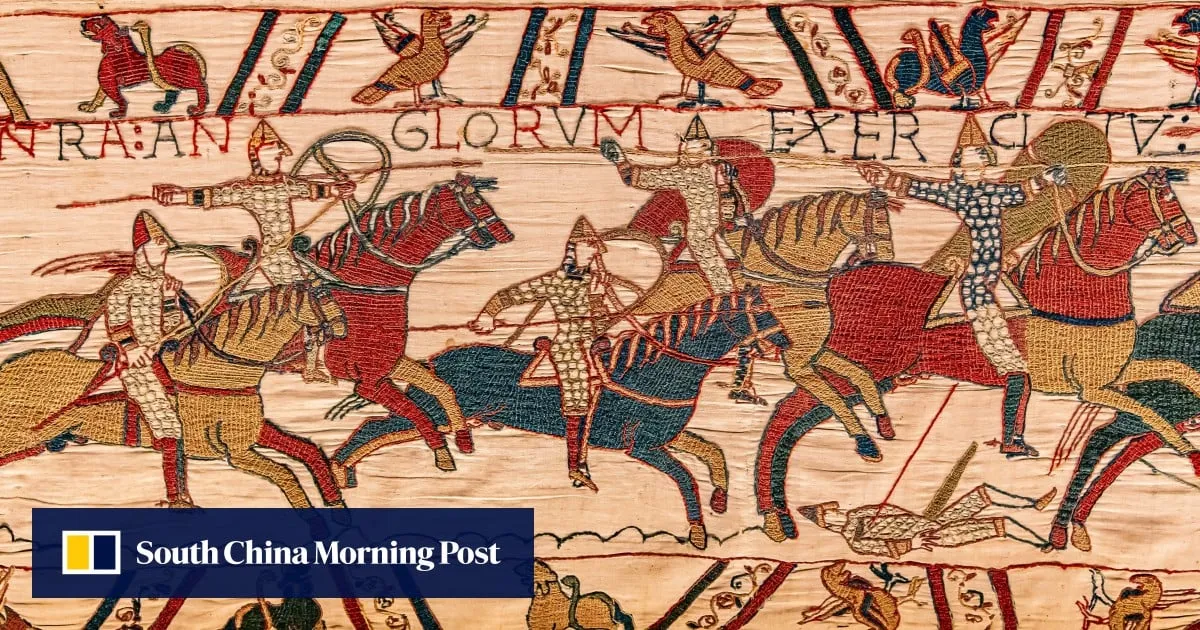
King Harold’s legendary 200-mile march across England to the Battle of Hastings in 1066 is a “myth” that likely never happened, according to research published on Saturday.In arguably the most famous battle in English history, the Anglo-Saxon leader was defeated by William the Conqueror, who became the first Franco-Norman king of England, at Hastings on October 14, 1066.The decisive clash, which marked the start of the Norman conquest of England, is depicted in the Bayeux Tapestry, set to be brought to London from France this year.Ahead of the tapestry’s exhibition, starting in September 2026, new research from the University of East Anglia (UEA) revealed that the tale of Harold’s famed march to the fight was a “misunderstanding”.The account of the march, as taught in British classrooms and museums, rests on what a UAE historian argues is a misinterpretation of the Anglo-Saxon Chronicle, a written record of medieval English history.The Chronicle recounts that Harold’s ships “came home”.A Victorian painting of the Battle of Hastings. File photo: Historic England
SRCSouth China Morning Post
LANGEN
LEANCenter-Right
WORDS167
ENT10
SAT · 2026-03-21 · 15:33 GMTBRIEF NSR-2026-0321-27706
NSR-2026-0321-27706News Report·EN·Political Strategy
King Harold’s 200-mile UK march to Battle of Hastings in 1066 is a ‘myth’, says research
New research from the University of East Anglia challenges the long-held belief that King Harold marched 200 miles across England to the Battle of Hastings in 1066. The research, released ahead of the Bayeux Tapestry's exhibition in London in 2026, suggests the march is a "misunderstanding" based on a misinterpretation of the Anglo-Saxon Chronicle.
Agence France-PresseSouth China Morning PostFiled 2026-03-21 · 15:33 GMTLean · Center-RightRead · 1 min
South China Morning PostFIG 01
Reading time
1min
Word count
167words
Sources cited
1cited
Entities identified
10entities
Quality score
100%
§ 01
Briefing Summary
AI-generatedNEWSAR · AI
New research from the University of East Anglia challenges the long-held belief that King Harold marched 200 miles across England to the Battle of Hastings in 1066. The research, released ahead of the Bayeux Tapestry's exhibition in London in 2026, suggests the march is a "misunderstanding" based on a misinterpretation of the Anglo-Saxon Chronicle. The Chronicle recounts that Harold's ships "came home," which has been interpreted as him marching from the north of England to Hastings. The Battle of Hastings, fought on October 14, 1066, resulted in Harold's defeat by William the Conqueror and marked the beginning of the Norman conquest of England. This decisive battle is famously depicted in the Bayeux Tapestry.
Confidence 0.90Sources 1Claims 5Entities 10
§ 02
Article analysis
Model · rule-basedFraming
Political Strategy
Human Interest
Tone
Measured
AI-assessed
CalmNeutralAlarmist
Factuality
0.80 / 1.00
Factual
LowHigh
Sources cited
1
Limited
FewMany
§ 03
Key claims
5 extracted01
The Bayeux Tapestry exhibition is starting in September 2026.
factual
Confidence
1.00
02
The Bayeux Tapestry is set to be brought to London from France this year.
factual
Confidence
1.00
03
The Battle of Hastings took place on October 14, 1066.
factual
Confidence
1.00
04
King Harold's 200-mile march to the Battle of Hastings is a 'myth'.
factualresearch published on Saturday
Confidence
0.90
05
The account of the march rests on a misinterpretation of the Anglo-Saxon Chronicle.
quotea UAE historian
Confidence
0.80
§ 04
Full report
1 min read · 167 words§ 05
Entities
10 identifiedKey playerOppositionContextPositiveNeutralNegative
Organizations3
§ 06
Keywords & salience
9 termsbattle of hastings
1.00
king harold
0.90
norman conquest
0.80
research
0.70
anglo-saxon chronicle
0.60
medieval english history
0.50
william the conqueror
0.50
bayeux tapestry
0.50
myth
0.40
§ 07
Topic connections
Interactive graph No topic relationship data available yet. This graph will appear once topic relationships have been computed.