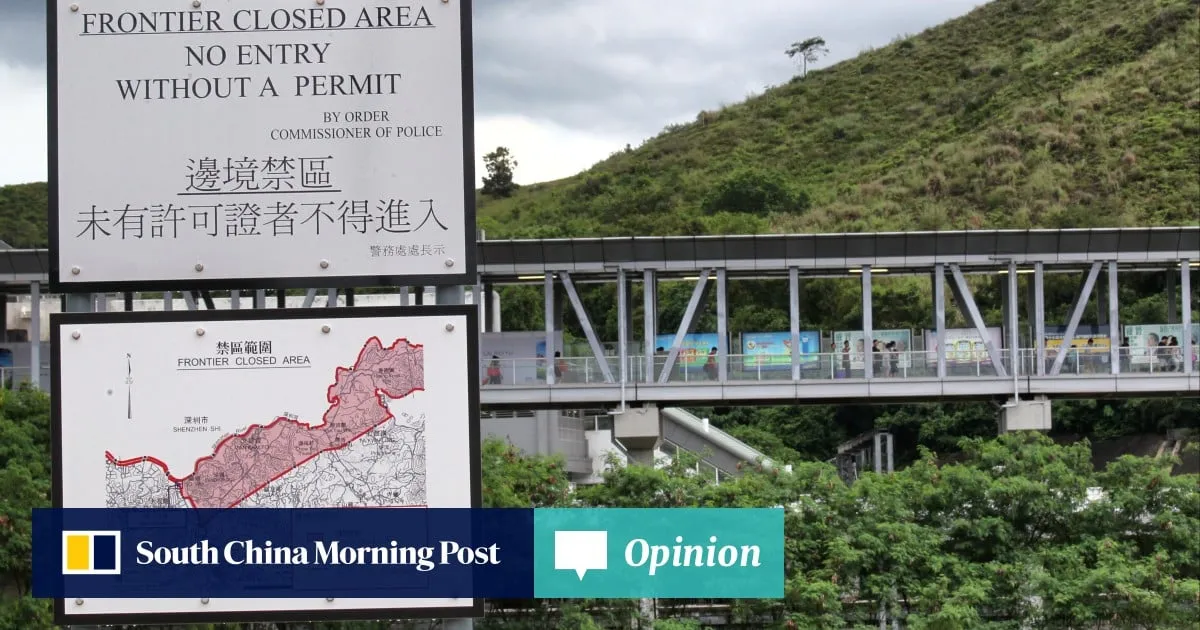
For decades, parts of Hong Kong’s border like the Frontier Closed Area have been shrouded in mystery, their natural landscapes preserved as much by policy as by their remote geography. Recent plans to relax restrictions – including discussions around the Mai Po closed area – and the establishment of the Robin’s Nest Country Park signal a new era of accessibility.Having co-managed the Mai Po nature reserve for decades, the World Wide Fund for Nature Hong Kong (WWF) views this shift with both hope and caution. We applaud the intent to connect people with nature; the creation of Robin’s Nest, for instance, creates a vital ecological corridor linking with Shenzhen’s Wutong Mountain, a significant win for biodiversity.But as we turn our attention to the Inner Deep Bay area, we must sound a note of prudence: not all nature is created equal and not all landscapes are suited for unfettered footfall.Mai Po and the Inner Deep Bay are not merely another scenic getaway. They are a wetland of international importance designated under the Ramsar Convention. This is not a bureaucratic label; the Ramsar designation is a global recognition of an ecosystem with a distinct conservation function. While country parks were often established for recreation, Mai Po is a reserve.Its primary objective is, and must remain, biodiversity conservation, particularly for migratory waterbirds. Its secondary, but equally vital, objective is environmental education: to foster public understanding and support for wetland conservation through responsible, low-impact access. In this sense, Mai Po and a country park serve different purposes; like apples and oranges, difficult to compare directly. This leads us to the core question: what are the risks and benefits of promoting tourism here?Hikers walk and take pictures inside the Lin Ma Hang Mine at Robin’s Nest Country Park on April 23, 2025. Photo: Elson LiFirst, let us address a misconception. The proposed relaxation of the Closed Area status does not automatically throw open the gates of the Mai Po nature reserve. The reserve is protected as a restricted area under the Wild Animals Protection Ordinance. Access is, and will continue to be, controlled by a permit system managed by the Agriculture, Fisheries and Conservation Department. This legal protection is our first and most important line of defence.
SRCSouth China Morning Post
LANGEN
LEANCenter-Right
WORDS372
ENT11
SUN · 2026-03-22 · 01:30 GMTBRIEF NSR-2026-0322-28159
NSR-2026-0322-28159Opinion·EN·Environmental
Hong Kong’s border tourism push must not put Mai Po at risk
Hong Kong is relaxing border restrictions, including areas near the Mai Po nature reserve, a move that coincides with the establishment of Robin's Nest Country Park. The World Wide Fund for Nature Hong Kong (WWF), which co-manages Mai Po, supports connecting people with nature but urges caution regarding tourism's impact on the Inner Deep Bay area.
Xianji WenSouth China Morning PostFiled 2026-03-22 · 01:30 GMTLean · Center-RightRead · 2 min
South China Morning PostFIG 01
Reading time
2min
Word count
372words
Sources cited
1cited
Entities identified
11entities
Quality score
100%
§ 01
Briefing Summary
AI-generatedNEWSAR · AI
Hong Kong is relaxing border restrictions, including areas near the Mai Po nature reserve, a move that coincides with the establishment of Robin's Nest Country Park. The World Wide Fund for Nature Hong Kong (WWF), which co-manages Mai Po, supports connecting people with nature but urges caution regarding tourism's impact on the Inner Deep Bay area. Mai Po is a Ramsar Convention-designated wetland of international importance, primarily focused on biodiversity conservation, especially for migratory waterbirds, and environmental education. While the relaxed border status doesn't automatically open Mai Po, access remains controlled by a permit system under the Wild Animals Protection Ordinance. The WWF emphasizes the need to balance tourism with the reserve's primary conservation objectives.
Confidence 0.90Sources 1Claims 5Entities 11
§ 02
Article analysis
Model · rule-basedFraming
Environmental
Economic Impact
Tone
Measured
AI-assessed
CalmNeutralAlarmist
Factuality
0.60 / 1.00
Mixed
LowHigh
Sources cited
1
Limited
FewMany
§ 03
Key claims
5 extracted01
Access to the Mai Po nature reserve is controlled by a permit system managed by the Agriculture, Fisheries and Conservation Department.
factualWorld Wide Fund for Nature Hong Kong (WWF)
Confidence
1.00
02
The reserve is protected as a restricted area under the Wild Animals Protection Ordinance.
factualWorld Wide Fund for Nature Hong Kong (WWF)
Confidence
1.00
03
Mai Po and the Inner Deep Bay are a wetland of international importance designated under the Ramsar Convention.
factualWorld Wide Fund for Nature Hong Kong (WWF)
Confidence
1.00
04
The creation of Robin’s Nest Country Park creates a vital ecological corridor linking with Shenzhen’s Wutong Mountain.
factualWorld Wide Fund for Nature Hong Kong (WWF)
Confidence
1.00
05
Recent plans aim to relax restrictions in Hong Kong's Frontier Closed Area, including discussions around the Mai Po closed area.
factualWorld Wide Fund for Nature Hong Kong (WWF)
Confidence
1.00
§ 04
Full report
2 min read · 372 words§ 05
Entities
11 identifiedKey playerOppositionContextPositiveNeutralNegative
Organizations2
Locations8
§ 06
Keywords & salience
10 termsmai po
1.00
border tourism
0.80
nature reserve
0.70
biodiversity conservation
0.70
wetland conservation
0.60
ramsar convention
0.60
robin’s nest country park
0.50
inner deep bay
0.50
ecological corridor
0.40
environmental education
0.40
§ 07
Topic connections
Interactive graph No topic relationship data available yet. This graph will appear once topic relationships have been computed.