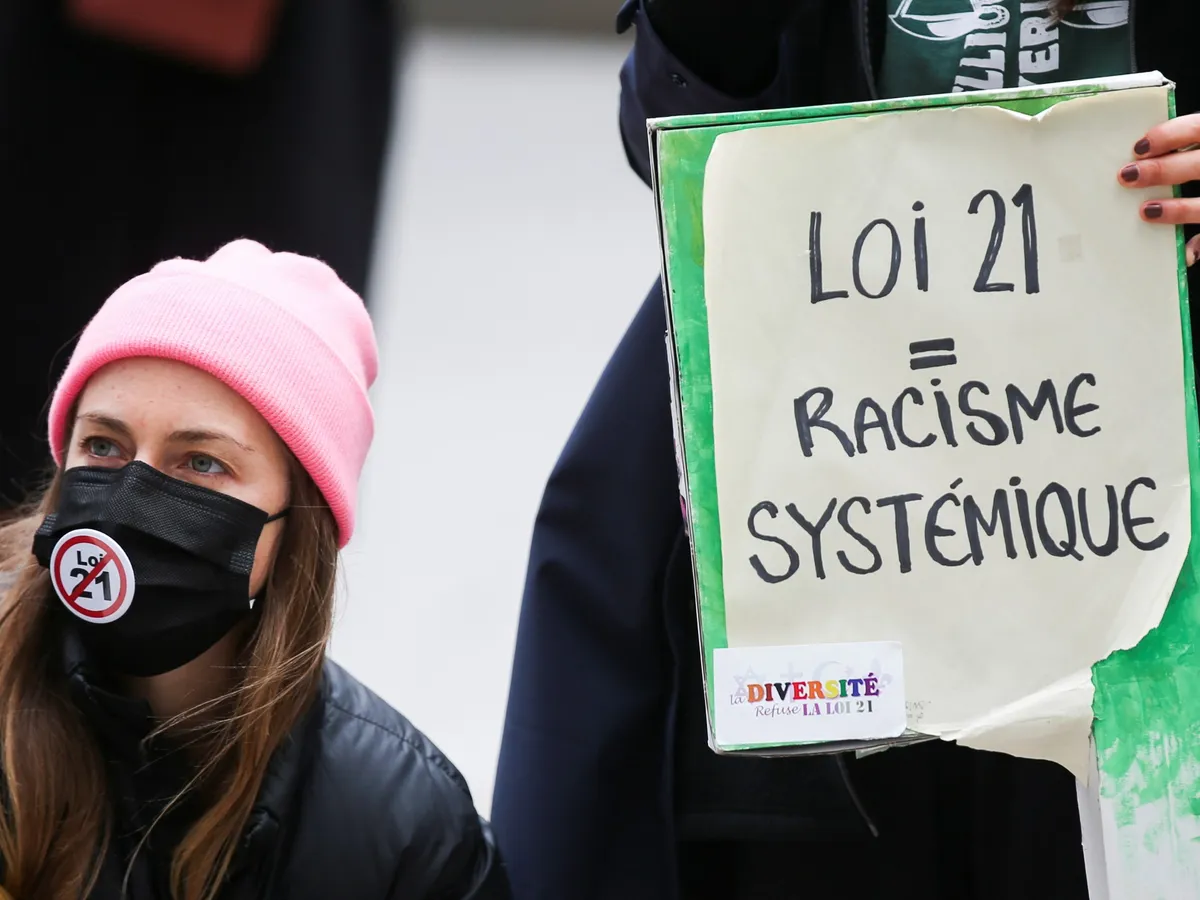
Under the guise of preserving secularism, this law allows the exclusion of people based on their religious identity.Published On 22 Mar 2026On Monday, the Canada" class="entity-link entity-organization" data-entity-id="52245" data-entity-type="organization">Supreme Court of Canada will begin a four-day hearing for one of the most consequential constitutional cases in the country’s recent history. At issue is Quebec’s so-called “secularism law”, known as Bill 21 – a law enacted in 2019 that prohibits certain public sector workers from wearing visible religious symbols at work.It bars many public sector employees, including teachers, prosecutors, police officers, and judges, from wearing religious symbols such as hijabs, turbans, kippahs, and other visible expressions of faith while at work.There is much at stake in this case that raises fundamental questions about religious freedom, equality, and the limits of state power in a constitutional democracy. In addition, another significant issue is that to get the bill passed, Quebec’s government had used the “notwithstanding clause”, a unique provision in Canadian law that allows it to override fundamental rights and freedoms. No other constitutional democracy in the world has a similar blanket override of fundamental rights and freedoms.The Quebec-government" class="entity-link entity-organization" data-entity-id="52246" data-entity-type="organization">Quebec government claims that the law is necessary to preserve the religious neutrality of the state. Yet Bill 21 does the opposite: by forcing some individuals to choose between their profession and their religious identity, the Quebec-government" class="entity-link entity-organization" data-entity-id="52246" data-entity-type="organization">Quebec government is not remaining neutral – it is effectively excluding people of faith from public sector employment.The use of this extraordinary, and until recently rarely used, constitutional mechanism has turned the spotlight on Bill 21 beyond the borders of Quebec and the debate over secularism and religious freedoms. It has become a test of how far a democratic government can go in limiting fundamental rights and freedoms.
SRCAl Jazeera
LANGEN
LEANCenter
WORDS286
ENT5
SUN · 2026-03-22 · 14:25 GMTBRIEF NSR-2026-0322-29086
NSR-2026-0322-29086Analysis·EN·Legal & Judicial
Canada’s Supreme Court must strike down Quebec’s Bill 21
In March 2026, the Supreme Court of Canada will hear a case regarding Quebec's Bill 21, enacted in 2019. The law prohibits certain public sector employees, including teachers and police officers, from wearing visible religious symbols at work.
Stephen Brown,Howard SapersAl JazeeraFiled 2026-03-22 · 14:25 GMTLean · CenterRead · 2 min
Al JazeeraFIG 01
Reading time
2min
Word count
286words
Sources cited
0cited
Entities identified
5entities
Quality score
100%
§ 01
Briefing Summary
AI-generatedNEWSAR · AI
In March 2026, the Supreme Court of Canada will hear a case regarding Quebec's Bill 21, enacted in 2019. The law prohibits certain public sector employees, including teachers and police officers, from wearing visible religious symbols at work. Quebec argues the law preserves state religious neutrality. Critics contend it infringes on religious freedom and equality by forcing individuals to choose between their faith and profession. The Quebec government invoked the "notwithstanding clause" to pass the bill, allowing it to override fundamental rights. The case raises questions about the limits of government power in restricting fundamental rights and freedoms in a democracy.
Confidence 0.90Claims 5Entities 5
§ 02
Article analysis
Model · rule-basedFraming
Legal & Judicial
Human Rights
Tone
Measured
AI-assessed
CalmNeutralAlarmist
Factuality
0.60 / 1.00
Mixed
LowHigh
Sources cited
0
No named sources
FewMany
§ 03
Key claims
5 extracted01
The Supreme Court of Canada will begin a four-day hearing for Bill 21 on Monday.
factual
Confidence
1.00
02
The Quebec government claims the law is necessary to preserve the religious neutrality of the state.
quoteQuebec government
Confidence
1.00
03
Quebec used the “notwithstanding clause” to pass Bill 21.
factual
Confidence
1.00
04
Bill 21 was enacted in 2019.
factual
Confidence
1.00
05
Quebec's Bill 21 prohibits certain public sector workers from wearing visible religious symbols at work.
factual
Confidence
1.00
§ 04
Full report
2 min read · 286 words§ 05
Entities
5 identifiedKey playerOppositionContextPositiveNeutralNegative
§ 06
Keywords & salience
10 termsbill 21
1.00
religious freedom
0.90
secularism
0.80
constitutional law
0.70
supreme court of canada
0.70
notwithstanding clause
0.70
fundamental rights
0.60
quebec
0.60
religious symbols
0.50
public sector employees
0.40
§ 07
Topic connections
Interactive graph No topic relationship data available yet. This graph will appear once topic relationships have been computed.