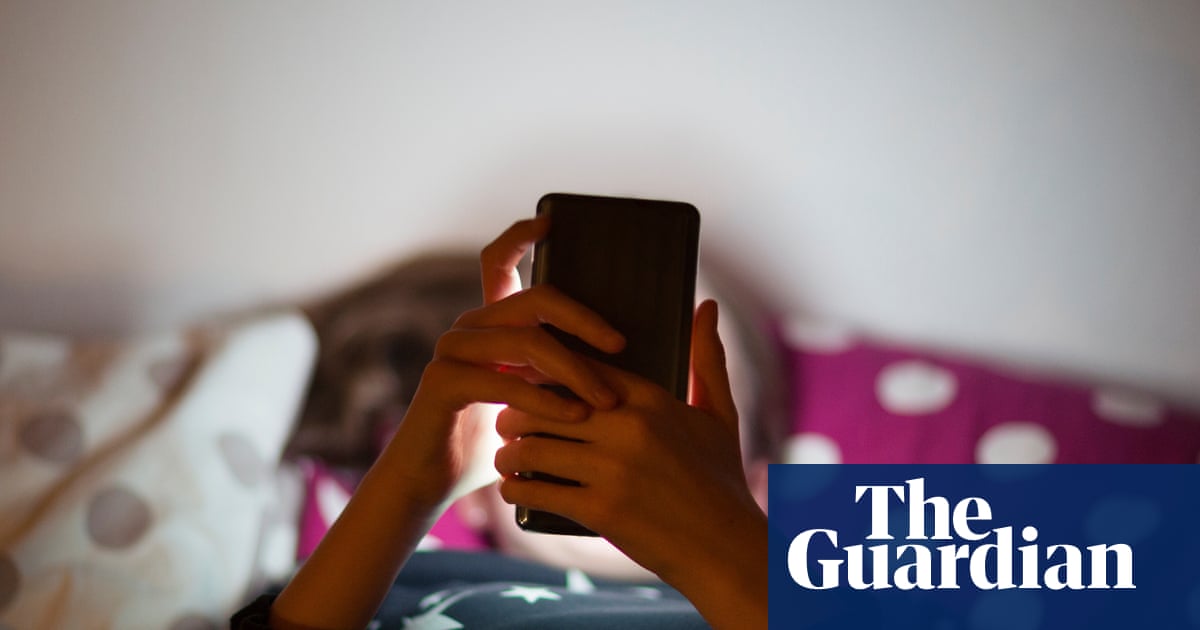
Children who are on social media for more than three hours a day are more likely to develop depression and anxiety as teenagers, according to research.Experts said the impact was likely to be linked to a lack of sleep caused by using social media late at night, and that the link to depression was more pronounced in girls.Researchers at London" class="entity-link entity-organization" data-entity-id="16913" data-entity-type="organization">Imperial College London analysed data from a study of cognition, adolescents and mobile phones, set up in 2014, based on responses from 2,350 children at 31 schools across London.The schoolchildren twice took cognitive tests and completed a questionnaire on digital behaviours, mental health and lifestyles: first when they were between 11 and 12, and again when they were between 13 and 15.The analysis found children who spent more than three hours a day on social media were more likely to have symptoms of anxiety and depression as teenagers, compared with those who spent 30 minutes online each day.The researchers suggested this could be down to those who used social media more going to sleep later and having less sleep overall, particularly on school nights.The research analysed data about children’s digital behaviours and mental health over time. Photograph: True Images/AlamyProf Mireille Toledano, principal investigator for the research and chair of Imperial’s Mohn Centre for Children’s Health and Wellbeing,U said: “Our analysis shows a clear trend in terms of the amount of time spent on social media and mental health outcomes.“Children who use social media apps for longer, and later into the evening, may be offsetting the sleep they need to function healthily. We think this is the key reason we’re seeing a lasting impact on their mental health down the line.”Earlier this month, the government launched a consultation to gather views on measures to protect children online, which could include a partial social media ban for under-16s.Last year, Australia became the first country to ban under-16s from using social media. The accounts of 4.7 million young people were deactivated, removed or restricted within the first few days of the ban coming in to force in December.Toledano said there was currently a lack of evidence to back up proposals for a similar ban in the UK, as well as for the current non-statutory guidance of no phones in schools to become a legal ban, despite growing support for both.“The picture is complex and multi-factorial, and we need to better tease out what is driving the associations we see,” she said. “Despite calls for an outright ban for under-16s, the evidence that this will solve all the issues children are facing just isn’t there.“Instead of the UK jumping on an arbitrary ban, it might be prudent to see what happens in Australia over the course of this year and the impacts of the ban on young people’s health and wellbeing.”The findings were published in the journal BMC Medicine, where the researchers called for education in secondary schools to raise awareness of digital literacy and sleep. They added that more studies were needed, as the social media landscape has changed dramatically since the data was collected between 2014 and 2018.Dr Chen Shen from Imperial’s school of public health said: “We know social media platforms have changed enormously over the last decade and are likely to change as much, if not more, in the next five to 10 years.“As the platforms, usage and content evolve, we need continued research to understand how social media use affects children’s mental health in today’s digital environment.”
SRCThe Guardian - World News
LANGEN
LEANCenter-Left
WORDS577
ENT5
MON · 2026-03-23 · 00:01 GMTBRIEF NSR-2026-0323-29647
NSR-2026-0323-29647News Report·EN·Public Health
Study links children’s social media use with anxiety and depression in teenage years
A recent study by Imperial College London found a correlation between children's social media use and mental health issues in their teenage years. Researchers analyzed data from over 2,350 children in London schools, collected between ages 11-12 and 13-15.
Jessica Murray Social affairs correspondentThe Guardian - World NewsFiled 2026-03-23 · 00:01 GMTLean · Center-LeftRead · 3 min
The Guardian - World NewsFIG 01
Reading time
3min
Word count
577words
Sources cited
1cited
Entities identified
5entities
Quality score
100%
§ 01
Briefing Summary
AI-generatedNEWSAR · AI
A recent study by Imperial College London found a correlation between children's social media use and mental health issues in their teenage years. Researchers analyzed data from over 2,350 children in London schools, collected between ages 11-12 and 13-15. The study revealed that children spending over three hours daily on social media were more likely to exhibit symptoms of anxiety and depression as teenagers. Researchers suggest this link may be due to reduced sleep caused by late-night social media use. While the government is considering measures to protect children online, including potential social media bans, experts emphasize the need for further research to understand the complex factors driving these associations.
Confidence 0.90Sources 1Claims 5Entities 5
§ 02
Article analysis
Model · rule-basedFraming
Public Health
Technology
Tone
Measured
AI-assessed
CalmNeutralAlarmist
Factuality
0.70 / 1.00
Factual
LowHigh
Sources cited
1
Limited
FewMany
§ 03
Key claims
5 extracted01
The findings were published in the journal BMC Medicine.
factualnull
Confidence
1.00
02
Australia banned under-16s from using social media.
factualnull
Confidence
1.00
03
There is currently a lack of evidence to back up proposals for a similar ban in the UK.
quoteToledano
Confidence
0.90
04
Children on social media for more than three hours a day are more likely to develop depression and anxiety as teenagers.
factualresearch
Confidence
0.80
05
The link to depression was more pronounced in girls.
factualExperts
Confidence
0.70
§ 04
Full report
3 min read · 577 words§ 05
Entities
5 identifiedKey playerOppositionContextPositiveNeutralNegative
Organizations1
§ 06
Keywords & salience
10 termssocial media
1.00
children
0.90
anxiety
0.80
depression
0.80
teenagers
0.70
mental health
0.70
sleep
0.60
digital behaviors
0.50
social media ban
0.50
imperial college london
0.40
§ 07
Topic connections
Interactive graph No topic relationship data available yet. This graph will appear once topic relationships have been computed.