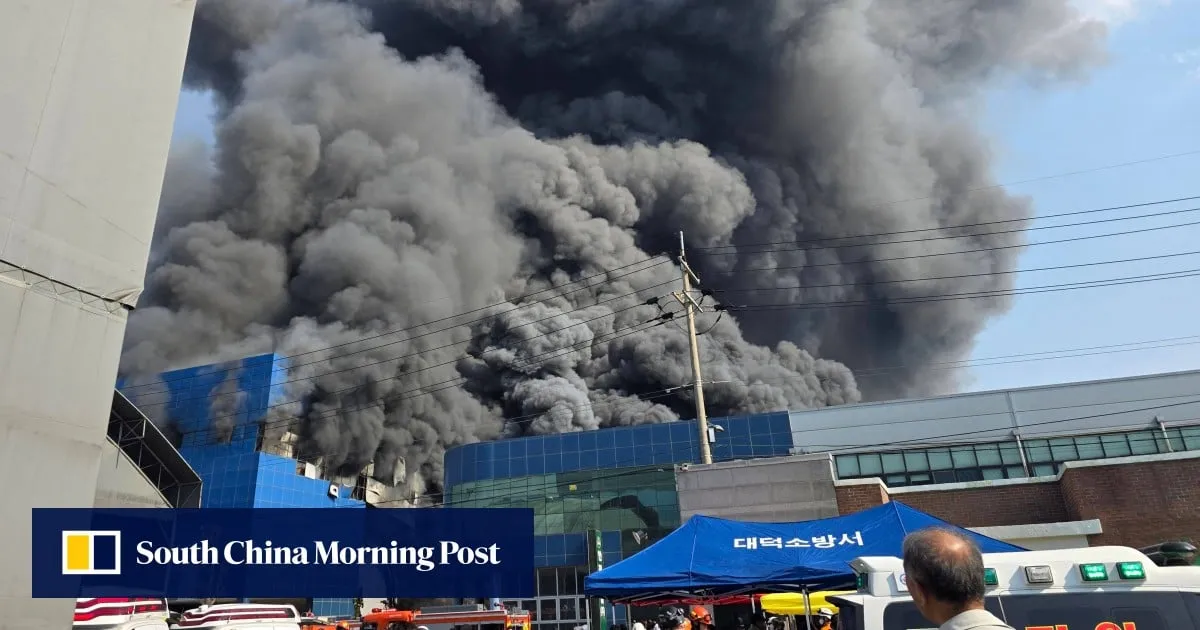
South Korea builds fast. It always has. The pali-pali (hurry, hurry) spirit turned a war-ravaged nation into an industrial titan in a single generation. It also has a habit of killing factory workers, safety experts say.Those deadly consequences were on full display in Friday’s fire at Anjun Industrial, a car parts supplier in Daejeon.The warning signs were impossible to miss. Oil vapour so thick it coated the lenses of workers’ glasses with a greasy film. Grease caking the ceilings, the pipes, the machinery. Repeated pleas for ventilation improvements, met with silence.Friday’s fire killed 14 people. Nine of them died in a single room that should not have existed.That room – an illegally constructed rest area built by splitting a single-storey space into two levels – appeared on no official blueprints. Its one small side window offered no escape from the toxic gases that filled it.Firefighters and forensics teams work at the fire-damaged factory in Daejeon on Saturday. Photo: XinhuaIt was a death trap hiding in plain sight: the product of makeshift expansions carried out in 2010, 2011 and 2014 that authorities never properly identified or addressed, investigators and safety experts told This Week in Asia.
SRCSouth China Morning Post
LANGEN
LEANCenter-Right
WORDS195
ENT5
MON · 2026-03-23 · 05:19 GMTBRIEF NSR-2026-0323-29767
NSR-2026-0323-29767News Report·EN·Human Rights
South Korea’s ‘pali-pali’ spirit keeps killing its workers
A factory fire at Anjun Industrial, a car parts supplier in Daejeon, South Korea, killed 14 workers on Friday, highlighting the deadly consequences of the country's "pali-pali" (hurry, hurry) culture. The fire occurred in a factory with known safety issues, including excessive oil vapor and grease buildup, which had been repeatedly reported.
Park Chan-kyongSouth China Morning PostFiled 2026-03-23 · 05:19 GMTLean · Center-RightRead · 1 min
South China Morning PostFIG 01
Reading time
1min
Word count
195words
Sources cited
2cited
Entities identified
5entities
Quality score
100%
§ 01
Briefing Summary
AI-generatedNEWSAR · AI
A factory fire at Anjun Industrial, a car parts supplier in Daejeon, South Korea, killed 14 workers on Friday, highlighting the deadly consequences of the country's "pali-pali" (hurry, hurry) culture. The fire occurred in a factory with known safety issues, including excessive oil vapor and grease buildup, which had been repeatedly reported. Nine of the victims died in an illegally constructed rest area with no escape route. Investigations revealed that the factory had undergone unapproved expansions in 2010, 2011, and 2014, which authorities failed to properly address, creating a dangerous environment for workers. The incident underscores how South Korea's rapid industrialization, driven by a focus on speed, continues to compromise worker safety.
Confidence 0.90Sources 2Claims 5Entities 5
§ 02
Article analysis
Model · rule-basedFraming
Human Rights
Economic Impact
Tone
Mixed Tone
AI-assessed
CalmNeutralAlarmist
Factuality
0.70 / 1.00
Factual
LowHigh
Sources cited
2
Limited
FewMany
§ 03
Key claims
5 extracted01
That room – an illegally constructed rest area – appeared on no official blueprints.
factual
Confidence
1.00
02
Nine of the 14 people who died in the fire died in a single room that should not have existed.
factual
Confidence
1.00
03
Friday’s fire killed 14 people at Anjun Industrial, a car parts supplier in Daejeon.
factual
Confidence
1.00
04
Makeshift expansions were carried out in 2010, 2011 and 2014 that authorities never properly identified or addressed.
factualinvestigators and safety experts
Confidence
0.90
05
The pali-pali (hurry, hurry) spirit turned a war-ravaged nation into an industrial titan in a single generation.
factual
Confidence
0.90
§ 04
Full report
1 min read · 195 words§ 05
Entities
5 identifiedKey playerOppositionContextPositiveNeutralNegative
Organizations3
§ 06
Keywords & salience
10 termsworkplace safety
0.90
industrial accidents
0.80
south korea
0.70
pali-pali spirit
0.70
fire safety
0.70
factory workers
0.60
anjun industrial
0.50
illegal construction
0.50
ventilation
0.50
daejeon
0.40
§ 07
Topic connections
Interactive graph Network visualization showing 51 related topics
View Full Graph Person Organization Location Event|Click node to navigate|Edge numbers = shared articles