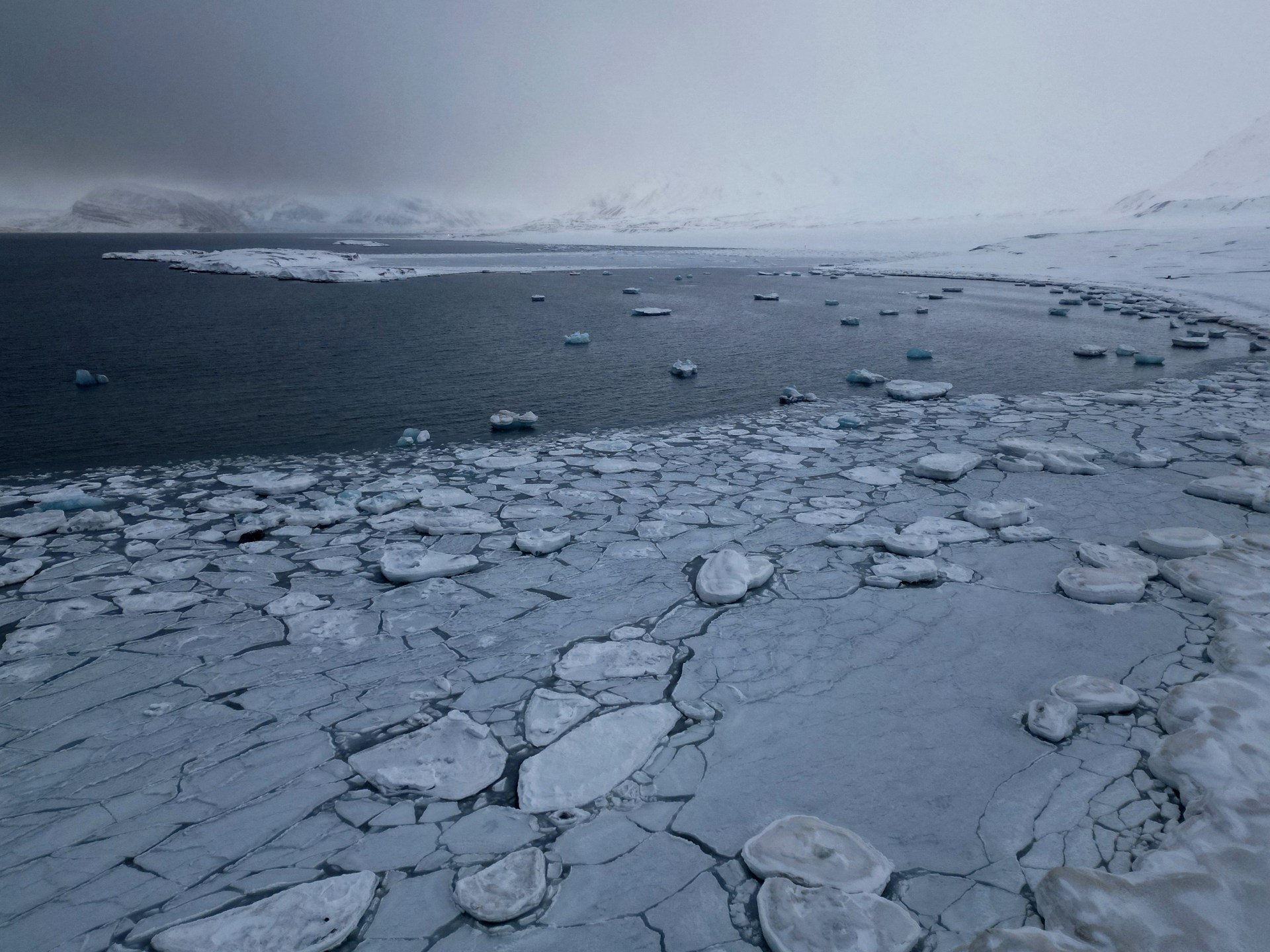
Report finds warmest temperatures, loss of snow cover as US joins Arctic countries to push ahead with oil drilling.Published On 17 Dec 2025A new report has found unprecedented temperature rises and significant loss of snow and ice in the Arctic, a region now described as “warming far faster than the rest of the planet”.The annual Arctic Report Card published by the US National Oceanic and Atmospheric Administration (NOAA) on Tuesday found that surface air temperatures across the Arctic between October 2024 and September 2025 were “the warmest recorded since 1900”.Recommended Stories list of 4 itemslist 1 of 4Trump torpedoes international deal to reduce shipping emissionslist 2 of 4True climate justice demands a reckoning with colonialismlist 3 of 4At least 1,250 people dead: What caused the devastating Asia floods?list 4 of 4‘We don’t want to disappear’: Tuvalu fights for climate action and survivalend of listLast year’s unusually high temperatures capped off a decade of record highs in the region surrounding the North Pole, according to the report, which was a collaboration of 112 authors from 13 different countries.In the 47 years that satellite images have been used for recording and measurement, winter sea ice reached its lowest levels in March 2025, while snow cover over the Arctic in June was half what it was six decades ago, the report found.The report card was the 20th to be released annually by NOAA, a US government agency that appears to have undergone changes to its scope of work under the Trump administration.The report’s authors presented their findings at a news conference where a reporter asked about statements made by NOAA officials under previous US administrations, linking environmental changes in the Arctic to fossil fuel pollution.Steven Thur, NOAA’s acting chief scientist, responded to the question without referring to fossil fuels or climate change directly.“We recognise that the planet is changing dramatically. Our role within NOAA is to try to predict what’s going to occur in the future by documenting what’s occurring today,” Thur said.
SRCAl Jazeera
LANGEN
LEANCenter
WORDS330
ENT3
WED · 2025-12-17 · 07:00 GMTBRIEF NSR-2025-1217-3037
NSR-2025-1217-3037News Report·EN·Environmental
Arctic sees hottest year since 1900 as climate crisis continues
A NOAA report published in December 2025 found that the Arctic experienced its warmest temperatures since 1900 between October 2024 and September 2025. The annual Arctic Report Card, a collaboration of 112 authors from 13 countries, documented unprecedented temperature rises and significant loss of snow and ice in the region.
Lyndal RowlandsAl JazeeraFiled 2025-12-17 · 07:00 GMTLean · CenterRead · 2 min
Al JazeeraFIG 01
Reading time
2min
Word count
330words
Sources cited
2cited
Entities identified
3entities
Quality score
100%
§ 01
Briefing Summary
AI-generatedNEWSAR · AI
A NOAA report published in December 2025 found that the Arctic experienced its warmest temperatures since 1900 between October 2024 and September 2025. The annual Arctic Report Card, a collaboration of 112 authors from 13 countries, documented unprecedented temperature rises and significant loss of snow and ice in the region. Winter sea ice reached its lowest levels in March 2025, and June snow cover was half of what it was six decades ago. The report, the 20th released by NOAA, highlights the continued impact of climate change on the Arctic. A NOAA official acknowledged the dramatic changes to the planet, focusing on predicting future events by documenting current occurrences.
Confidence 0.90Sources 2Claims 5Entities 3
§ 02
Article analysis
Model · rule-basedFraming
Environmental
Political Strategy
Tone
Mixed Tone
AI-assessed
CalmNeutralAlarmist
Factuality
0.80 / 1.00
Factual
LowHigh
Sources cited
2
Limited
FewMany
§ 03
Key claims
5 extracted01
We recognise that the planet is changing dramatically.
quoteSteven Thur, NOAA’s acting chief scientist
Confidence
1.00
02
Snow cover over the Arctic in June was half what it was six decades ago.
statisticUS National Oceanic and Atmospheric Administration (NOAA)
Confidence
1.00
03
Winter sea ice reached its lowest levels in March 2025 in the 47 years that satellite images have been used.
factualUS National Oceanic and Atmospheric Administration (NOAA)
Confidence
1.00
04
Surface air temperatures across the Arctic between October 2024 and September 2025 were the warmest recorded since 1900.
factualUS National Oceanic and Atmospheric Administration (NOAA)
Confidence
1.00
05
The Arctic is warming far faster than the rest of the planet.
factual
Confidence
0.90
§ 04
Full report
2 min read · 330 words§ 05
Entities
3 identifiedKey playerOppositionContextPositiveNeutralNegative
Organizations1
§ 06
Keywords & salience
7 termsarctic warming
1.00
climate crisis
0.90
temperature rise
0.80
snow cover loss
0.70
sea ice
0.60
noaa
0.50
fossil fuel pollution
0.40
§ 07
Topic connections
Interactive graph Network visualization showing 6 related topics
View Full Graph Person Organization Location Event|Click node to navigate|Edge numbers = shared articles