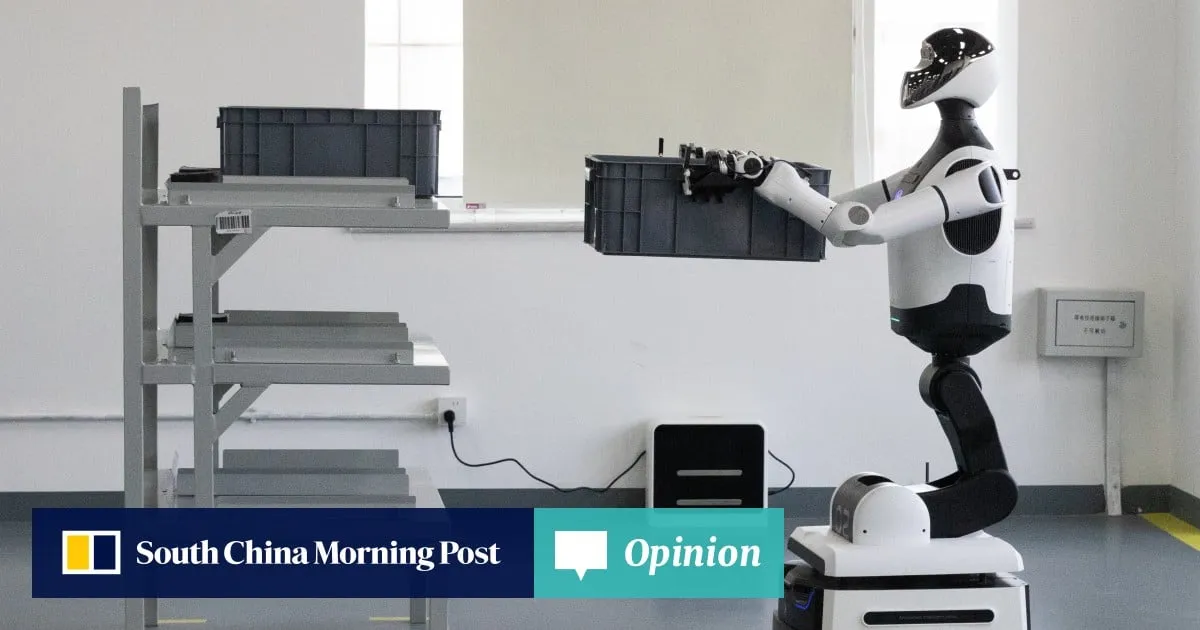
China is betting artificial intelligence will solve its labour shortage, as policymakers ramp up a nationwide push to deploy AI and robotics across the economy. But it may be worsening a different problem: the erosion of stable jobs for young workers.China’s push has accelerated investment in industrial automation, installing more than half of the world’s robots in 2024 alone and doubling down on AI-enabled production. The strategy is presented as a necessary response to the demographic decline. Yet it is also a risky experiment: automating at scale before reaching broad middle-class stability.Automation may keep factories running. Whether it can stabilise society is another question.The government’s push spans robotics, AI-enabled manufacturing and advanced technical systems but the employment effects are uneven. Analysis by the Rhodium Group finds that the new hi-tech industries (electric vehicles, advanced batteries and renewable energy equipment) generate far fewer entry-level and mid-skill jobs than the manufacturing sectors they are displacing. These sectors are far more capital-intensive.When early-career jobs become unstable, the transition into adulthood stalls. In China’s urban economy, stable employment has long been a prerequisite for marriage, housing and parenthood. Automation does not reduce fertility directly. It does so by narrowing the economic pathways that allow young adults to form families.“Lights-out” factories can run with minimal human presence. They keep production high while thinning the entry-level industrial routes that once absorbed young workers without university degrees. Those jobs once made it possible to rent a flat, save for a down payment, marry and start a family.02:58What might China do to address its record low birth rate and declining population?What might China do to address its record low birth rate and declining population?
SRCSouth China Morning Post
LANGEN
LEANCenter-Right
WORDS276
ENT2
MON · 2026-03-23 · 12:30 GMTBRIEF NSR-2026-0323-30737
NSR-2026-0323-30737Analysis·EN·Economic Impact
Why China’s AI automation push is a risky social experiment
China is aggressively pursuing AI automation and robotics to address its labor shortage, particularly in manufacturing. This nationwide push involves significant investment, with China installing over half the world's robots in 2024.
Emma ZangSouth China Morning PostFiled 2026-03-23 · 12:30 GMTLean · Center-RightRead · 2 min
South China Morning PostFIG 01
Reading time
2min
Word count
276words
Sources cited
1cited
Entities identified
2entities
Quality score
100%
§ 01
Briefing Summary
AI-generatedNEWSAR · AI
China is aggressively pursuing AI automation and robotics to address its labor shortage, particularly in manufacturing. This nationwide push involves significant investment, with China installing over half the world's robots in 2024. While intended to counteract demographic decline, this strategy may exacerbate job instability for young workers. A Rhodium Group analysis indicates that emerging high-tech industries like EVs and renewable energy create fewer entry-level and mid-skill jobs compared to the manufacturing sectors they replace. This shift towards capital-intensive industries could hinder young adults' ability to achieve financial stability, traditionally necessary for marriage, housing, and starting families in China's urban areas. The increased automation, including "lights-out" factories, reduces opportunities for those without advanced degrees, potentially impacting fertility rates by narrowing economic pathways to adulthood.
Confidence 0.90Sources 1Claims 5Entities 2
§ 02
Article analysis
Model · rule-basedFraming
Economic Impact
Social Justice
Tone
Mixed Tone
AI-assessed
CalmNeutralAlarmist
Factuality
0.60 / 1.00
Mixed
LowHigh
Sources cited
1
Limited
FewMany
§ 03
Key claims
5 extracted01
Stable employment has long been a prerequisite for marriage, housing and parenthood in China’s urban economy.
factualnull
Confidence
0.90
02
China is deploying AI and robotics to solve its labor shortage.
factualnull
Confidence
0.90
03
New hi-tech industries generate fewer entry-level jobs than the manufacturing sectors they are displacing.
factualRhodium Group
Confidence
0.80
04
China installed more than half of the world’s robots in 2024.
statisticnull
Confidence
0.80
05
Automating at scale before reaching broad middle-class stability is a risky experiment.
predictionnull
Confidence
0.60
§ 04
Full report
2 min read · 276 words§ 05
Entities
2 identifiedKey playerOppositionContextPositiveNeutralNegative
Organizations1
Locations1
§ 06
Keywords & salience
10 termsai automation
1.00
job erosion
0.80
labor shortage
0.70
entry-level jobs
0.70
industrial automation
0.60
low birth rate
0.60
demographic decline
0.50
economic stability
0.50
robotics
0.40
manufacturing
0.40
§ 07
Topic connections
Interactive graph No topic relationship data available yet. This graph will appear once topic relationships have been computed.