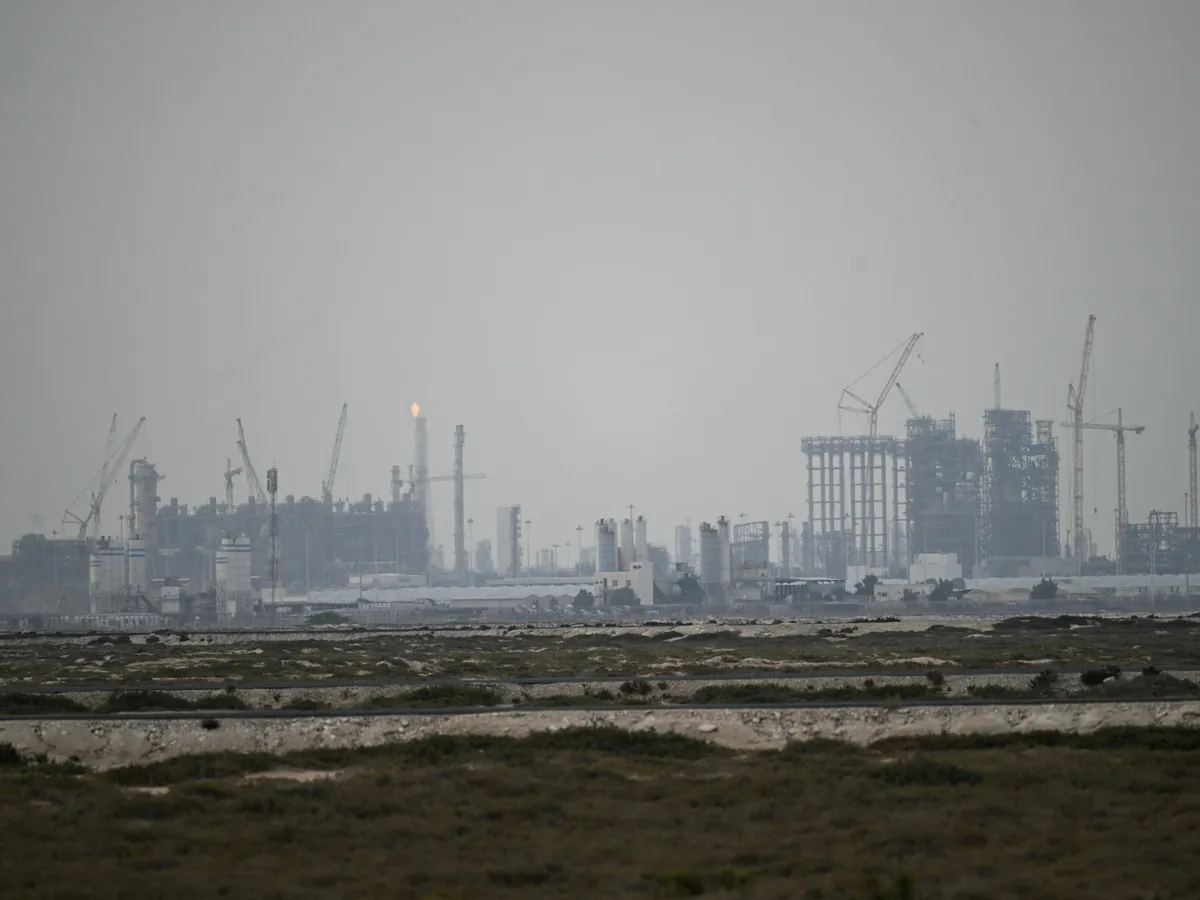
EXPLAINERTrump’s Strait of Hormuz deadline for Iran raises concerns about attacks on energy in the Middle East.IEA chief warns of ‘very severe’ global energy crisisPublished On 23 Mar 2026United States President Donald Trump has ordered the Department of Defense, which the Trump administration calls the “Department of War”, to pause attacks on Iran’s power infrastructure for five days, he said on Monday.The US president’s order came the day after he issued a 48-hour ultimatum to Iran to reopen the critical shipping route through the Strait of Hormuz or risk US attacks on its power plants. In response, Iran said it would attack power plants in Israel and the Gulf.Trump’s ultimatum over Hormuz had been set to expire at 23:44 GMT on Monday.In a Truth Social post on Monday, however, Trump claimed that Washington and Tehran had had “very good and productive conversations regarding a complete and total resolution of our hostilities in the Middle East”.However, Iranian officials have denied this. Following Trump’s ultimatum over the Strait of Hormuz, Iran’s Tasnim News Agency, citing an Iranian official, reported that the strait will not return to prewar conditions and energy markets will remain unsettled, adding that no negotiations with the US are under way.Tehran is conducting regional dialogue, however.Three weeks into the US-Israel war on Iran, we take a look at what Trump threatened, and how Iran’s Islamic Republic government has threatened to respond.What did Trump forewarn?On Saturday at 23:44 GMT, Trump wrote in a Truth Social post: “If Iran doesn’t FULLY OPEN, WITHOUT THREAT, the Strait of Hormuz, within 48 HOURS from this exact point in time, the United States of America will hit and obliterate their various POWER PLANTS, STARTING WITH THE BIGGEST ONE FIRST.”Trump did not specify which plant he was referring to as “the biggest”. However, Iran’s largest power plant is the Damavand Combined Cycle Power Plant on the outskirts of Tehran province. Also known as the Pakdasht plant, it has a capacity of about 2,900 megawatts. This is enough to meet the electricity needs of several major cities combined.Other large power plants in Iran include the Kerman plant in the southeast of Iran, with a capacity of about 1,910 megawatts, and the Ramin power plant in the Khuzestan province with a capacity of about 1,890 megawatts. This is roughly equivalent to the electricity needs of a mid‑sized province or a large city.On March 2, Ebrahim Jabari, a senior adviser to the commander-in-chief of Iran’s Islamic Revolutionary Guard Corps (IRGC), announced that the Strait of Hormuz – through which 20 percent of the world’s oil and gas is transported from Gulf producers – was “closed”. This has contributed to the recent surge in oil prices, which have surpassed $100 a barrel, compared with the prewar Brent crude price – the international benchmark – of about $65.(Al Jazeera)How did Iran respond to Trump’s ultimatum?The IRGC threatened to retaliate if Iranian power plants were targeted, saying it would hit power plants in Israel as well as any supplying electricity to military bases hosting US troops and assets in the region.Iran’s Speaker of Parliament Mohammad Bagher Ghalibaf also posted on X on Sunday: “Alongside military bases, those financial entities that finance the US military budget are legitimate targets. US treasury bonds are soaked in Iranians’ blood. Purchase them, and you purchase a strike on your HQ and assets. We monitor your portfolios. This is your final notice.”An IRGC statement shared by state media on Monday, said: “The lying … US President has claimed that the Revolutionary Guards intends to attack the water desalination plants and cause hardship to the people of the countries in the region.”The statement added: “We are determined to respond to any threat at the same level as it creates in terms of deterrence … If you hit electricity, we hit electricity.”“The Strait of Hormuz will be completely closed and will not be opened until our destroyed power plants are rebuilt,” the IRGC said in a statement.At the same time, Iranian leaders have insisted that the strait is only closed to the US and Israel.“We have not closed the strait. In our opinion, the strait is open. It is closed only to ships belonging to our enemies, countries that attack us. For other countries, ships can pass through the strait,” Iranian Foreign Minister Abbas Araghchi told Japan’s Kyodo News late on Friday.Iranian President Masoud Pezeshkian said on Sunday that the strait was “open to all except those who violate our soil”.“The illusion of erasing Iran from the map shows desperation against the will of a history-making nation. Threats and terror only strengthen our unity,” he said in a post on X.Countries have been scrambling to reach agreements with Iran for safe passage through the strait. So far, a handful of mainly Indian, Pakistani, Turkish and Chinese-flagged ships have been allowed to pass during the past week.Which places could Iran target?While Iran has not named specific sites that it would target, it has broadly said that it would aim to hit Israeli power plants and infrastructure in response to its own power plants and infrastructure being struck.Ghalibaf posted on X on Sunday: “Immediately after power plants and infrastructure in our country are targeted, vital infrastructure as well as energy and oil infrastructure across the entire region will be considered legitimate targets and will be irreversibly destroyed.”Iran has also stated that “financial entities” that finance US military assets would be targeted. Besides Ghalibaf’s X post on Sunday threatening such entities, the Khatam al-Anbiya, Iran’s unified military command, said on Wednesday, March 11, that “the enemy left our hands open to targeting economic centres and banks belonging to the United States and the Zionist regime in the region”.Power plantsIsrael has more than 200 power plants, some of the largest ones being Orot Rabin north of Tel Aviv, with a capacity of around 3,900 megawatts, and Rutenberg in Ashkelon, with a capacity of around 2,250 megawatts.While attacks on Iran’s energy infrastructure will hurt Iran, the consequences of attacks on energy in the Gulf states could be more catastrophic since they consume around five times more power per capita.Energy infrastructureOver the course of the war, energy infrastructure in the Gulf has repeatedly come under attack.Qatar’s state-run energy firm and the world’s largest producer of liquefied natural gas (LNG), QatarEnergy, announced on March 2 that it had halted LNG production following Iranian attacks on its operational facilities in Ras Laffan and Mesaieed in Qatar.Saudi Arabia shut down operations at the Ras Tanura plant, its biggest domestic oil refinery operated by Saudi Aramco, after a fire broke out at the facility that officials said was caused by debris from the interception of two Iranian drones.Iranian officials publicly denied targeting QatarEnergy and Aramco.Last week, Iranian state media reported that natural gas facilities associated with the South Pars gasfield had been attacked.Hours later, Iranian missiles struck an LNG facility at Ras Laffan Industrial City, which processes approximately 20 percent of the global supplies of LNG, in northern Qatar.The attack caused three fires and wiped out about 17 percent of Qatar’s LNG export capacity, causing an estimated $20bn in lost annual revenue, QatarEnergy’s CEO, Saad Sherida Al-Kaabi, told Reuters.
SRCAl Jazeera
LANGEN
LEANCenter
WORDS1 191
ENT10
MON · 2026-03-23 · 15:13 GMTBRIEF NSR-2026-0323-31024
NSR-2026-0323-31024News Report·EN·Conflict
Energy, water, bonds: What are Iran’s targets if Trump hits power plants?
In March 2026, President Trump issued a 48-hour ultimatum to Iran to reopen the Strait of Hormuz, threatening to attack Iranian power plants if the demand was unmet. Trump paused attacks on Iran’s power infrastructure for five days.
Sarah ShamimAl JazeeraFiled 2026-03-23 · 15:13 GMTLean · CenterRead · 5 min
Al JazeeraFIG 01
Reading time
5min
Word count
1 191words
Sources cited
5cited
Entities identified
10entities
Quality score
100%
§ 01
Briefing Summary
AI-generatedNEWSAR · AI
In March 2026, President Trump issued a 48-hour ultimatum to Iran to reopen the Strait of Hormuz, threatening to attack Iranian power plants if the demand was unmet. Trump paused attacks on Iran’s power infrastructure for five days. Iran responded that the Strait would not return to prewar conditions and threatened to attack power plants in Israel and the Gulf. Trump's threat included potentially targeting Iran's largest power plant, the Damavand Combined Cycle Power Plant, along with other major plants like Kerman and Ramin. Despite Trump's claim of productive talks, Iranian officials denied negotiations with the US, stating that no negotiations with the US are under way.
Confidence 0.90Sources 5Claims 5Entities 10
§ 02
Article analysis
Model · rule-basedFraming
Conflict
Economic Impact
Tone
Mixed Tone
AI-assessed
CalmNeutralAlarmist
Factuality
0.70 / 1.00
Factual
LowHigh
Sources cited
5
Well sourced
FewMany
§ 03
Key claims
5 extracted01
Iran said it would attack power plants in Israel and the Gulf in response to Trump's ultimatum.
quoteIran
Confidence
1.00
02
Trump issued a 48-hour ultimatum to Iran to reopen the Strait of Hormuz or risk US attacks on its power plants.
factualArticle
Confidence
1.00
03
Trump ordered the Department of Defense to pause attacks on Iran’s power infrastructure for five days.
factualDonald Trump
Confidence
1.00
04
The Strait of Hormuz – through which 20 percent of the world’s oil and gas is transported – was “closed”.
factualEbrahim Jabari, IRGC
Confidence
0.90
05
Iran's Tasnim news agency reported that the Strait of Hormuz will not return to prewar conditions.
factualTasnim news agency
Confidence
0.90
§ 04
Full report
5 min read · 1 191 words§ 05
Entities
10 identifiedKey playerOppositionContextPositiveNeutralNegative
§ 06
Keywords & salience
9 termspower plants
1.00
iran
0.90
strait of hormuz
0.90
donald trump
0.80
us attacks
0.70
energy crisis
0.70
ultimatum
0.60
middle east
0.60
energy markets
0.50
§ 07
Topic connections
Interactive graph Network visualization showing 51 related topics
View Full Graph Person Organization Location Event|Click node to navigate|Edge numbers = shared articles