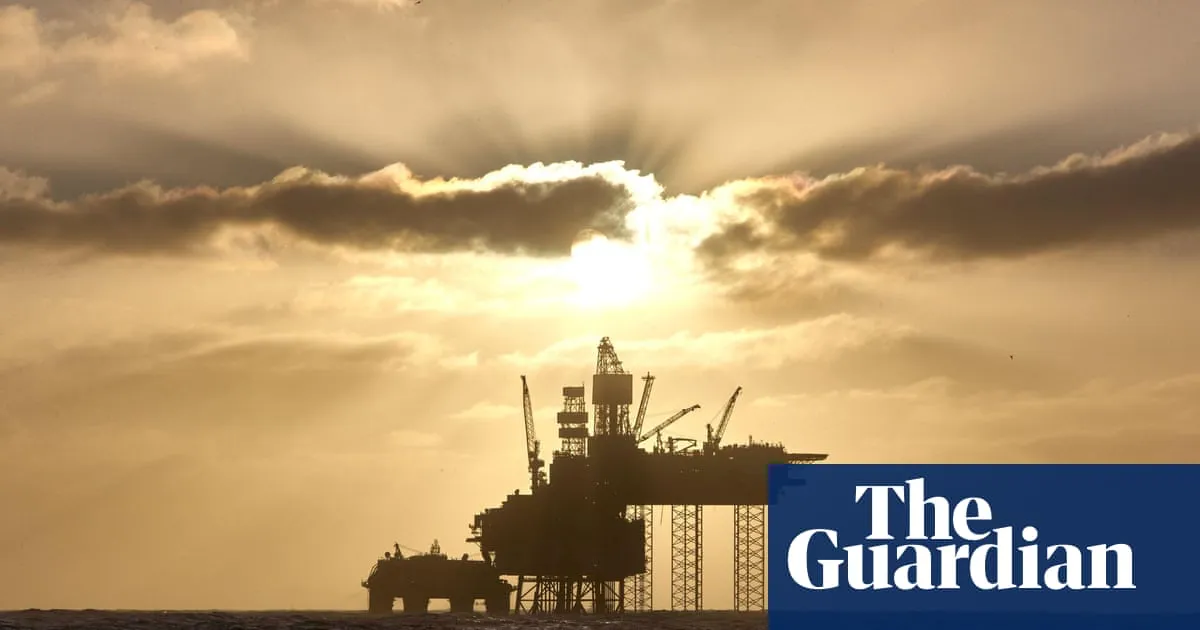
The UK government has dismissed a warning from an energy trade body that failing to produce more homegrown North Sea oil and gas will leave the UK increasingly reliant on imports at a time of rising global instability.The industry group, Offshore Energies UK, has said the UK “urgently” needs a greater supply of domestically produced energy or consumers will be left “more exposed to global volatility and higher emissions”.The warning came as the war in the Middle East entered its fourth week. The escalating conflict has triggered the biggest oil and gas supply shock in the history of the market and caused UK gas prices to more than double in under a month.But the industry’s call for more support to help slow the decline of the North Sea as a provider of energy was rebuffed by the government. A spokesperson said: “Issuing new licences to explore new fields cannot give us energy security and will not take a penny off bills.”They added: “Regardless of where it comes from, oil and gas is sold on international markets, which set the price for British billpayers – making us a price taker. The only way to truly protect ourselves from these price spikes is to get off the rollercoaster of fossil fuel markets.”The decline of the North Sea oil and gas basin means that the UK’s reliance on gas imports – which are sourced from countries including the US and Qatar – is likely to increase sharply from about 14% last year to more than a quarter of its gas supply by 2030, and almost half by 2035, it said.The group’s flagship annual report added that the UK will continue to use oil and gas for decades to come and sourcing this from the North Sea gas would have a lower emissions footprint than importing liquified natural gas on super-chilled tankers from overseas.David Whitehouse, the chief executive of OEUK, said: “Recent events have shown how quickly energy markets can tighten and how easily cargoes can be diverted away from the UK when other buyers bid higher. Energy security means backing homegrown oil and gas alongside renewables.”He argued that a stable new tax regime for the industry was “essential to reduce reliance on volatile imports, protect skilled jobs and supply chains, and ensure the UK can decarbonise while keeping energy secure and affordable”.The UK continues to rely on oil and gas for about 75% of its energy needs and hydrocarbons will still meet about a fifth of the UK’s primary energy demand in 2050 under its net zero plans, according to the OEUK’s research.Enrique Cornejo, the OEUK’s energy policy director, said: “What we’re setting out here is that there is a pathway to meet climate targets that makes a responsible use of our homegrown resources, and that also ensures that we do not offshore those emissions to other countries.“Because of how accounting of carbon emissions works for every country, it would be very easy for us to just say we will not produce our energy in the UK, or we will not produce our steel in the UK, and we’re just pushing that problem elsewhere.”
SRCThe Guardian - World News
LANGEN
LEANCenter-Left
WORDS521
ENT7
TUE · 2026-03-24 · 00:01 GMTBRIEF NSR-2026-0324-31656
NSR-2026-0324-31656News Report·EN·Economic Impact
Ministers rebuff trade body’s call to boost North Sea oil and gas production
Offshore Energies UK (OEUK), an energy trade body, urged the UK government to increase North Sea oil and gas production to avoid reliance on imports amid rising global instability and escalating conflicts. OEUK argued that domestic production would ensure energy security, lower emissions compared to imported liquified natural gas, and protect jobs.
Jillian AmbroseThe Guardian - World NewsFiled 2026-03-24 · 00:01 GMTLean · Center-LeftRead · 3 min
The Guardian - World NewsFIG 01
Reading time
3min
Word count
521words
Sources cited
4cited
Entities identified
7entities
Quality score
100%
§ 01
Briefing Summary
AI-generatedNEWSAR · AI
Offshore Energies UK (OEUK), an energy trade body, urged the UK government to increase North Sea oil and gas production to avoid reliance on imports amid rising global instability and escalating conflicts. OEUK argued that domestic production would ensure energy security, lower emissions compared to imported liquified natural gas, and protect jobs. The government dismissed the call, stating that new licenses would not guarantee energy security or lower bills, as oil and gas prices are set on international markets. The government maintains that transitioning away from fossil fuels is the only solution to price volatility. OEUK's report projects the UK's reliance on gas imports to increase significantly in the coming years, despite the country's continued reliance on oil and gas for a majority of its energy needs.
Confidence 0.90Sources 4Claims 5Entities 7
§ 02
Article analysis
Model · rule-basedFraming
Economic Impact
National Security
Tone
Measured
AI-assessed
CalmNeutralAlarmist
Factuality
0.70 / 1.00
Factual
LowHigh
Sources cited
4
Well sourced
FewMany
§ 03
Key claims
5 extracted01
Issuing new licences to explore new fields cannot give us energy security and will not take a penny off bills.
quoteUK government spokesperson
Confidence
1.00
02
The UK continues to rely on oil and gas for about 75% of its energy needs.
statisticOffshore Energies UK's research
Confidence
0.90
03
UK gas prices have more than doubled in under a month.
factualnull
Confidence
0.90
04
Failing to produce more homegrown North Sea oil and gas will leave the UK increasingly reliant on imports.
predictionOffshore Energies UK
Confidence
0.80
05
The UK's reliance on gas imports is likely to increase sharply from about 14% last year to almost half by 2035.
predictionOffshore Energies UK
Confidence
0.70
§ 04
Full report
3 min read · 521 words§ 05
Entities
7 identifiedKey playerOppositionContextPositiveNeutralNegative
Organizations1
§ 06
Keywords & salience
9 termsnorth sea oil and gas
1.00
energy security
0.90
gas imports
0.80
fossil fuel markets
0.70
offshore energies uk
0.60
energy prices
0.60
global instability
0.50
domestic energy production
0.50
net zero
0.40
§ 07
Topic connections
Interactive graph No topic relationship data available yet. This graph will appear once topic relationships have been computed.