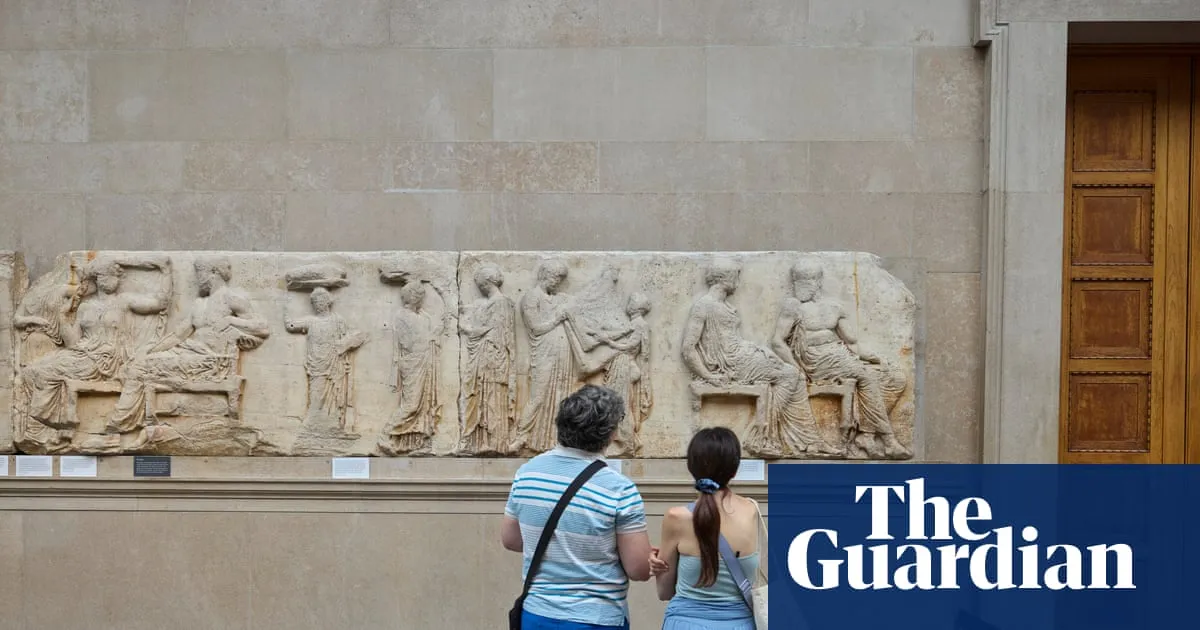
Ministers are considering charging international tourists to access permanent collections at national museums as part of an initiative to improve arts funding.The government said there was a need for long-term options to fund the struggling arts sector in its response to a review of Arts Council England, which distributes public funding to the arts. Among the options cited was a hotel levy, a policy being consulted on.But Alison Cole, the director of the Cultural Policy Unit thinktank, said charging international tourists would be a “very bad idea”.“There’s a much better way to save our wonderful civic museums and cultural infrastructure across the country, and that we believe is a hotel levy,” she said.National museums and galleries have been free to all visitors since 2001, a landmark policy credited with boosting visitor numbers and tourism. The Treasury is understood to have previously considered ending free entry to museums and galleries as part of spending cuts in the November 2025 budget, though this was scrapped after pushback from culture ministers.Separate research from Art Fund showed 72% of the public supported a tourist levy subsidising free entry to national museums.The free entry policy is credited with having boosted visitor numbers and tourism. Photograph: David Levene/The GuardianThe proposals were set out in the government’s response to recommendations made by Margaret Hodge in December in her Arts Council England review, which urged ministers to protect funding from politicisation and remove red tape from burdensome application processes.The government said it would explore all the recommendations, including greater funding to support creative careers for people from backgrounds under-represented in the arts and a plan to develop the creative sector across the country.The government agreed with Hodge that the Arts Council should be “strong, politically impartial and independent”, ensuring “diversity of ideas” and freedom of expression. It said it would earmark £8m to help it simplify its application processes to enable creators to spend less time on funding applications, and endorsed a move away from the present “one size fits all” strategy.Hodge’s criticism of political interference in the arts was partly driven by Arts Council England’s decision to force the English National Opera to move from London to Manchester as part of its levelling up strategy. She said those involved had told her it had been a “raw experience”.The government’s response also set out how a new fund would be targeted at creatives with “fewer opportunities”, alongside work to improve access to arts education at school.It also agreed with Hodge’s call for “closer engagement with communities, particularly in places where people have been less able to access or participate in arts and culture”, citing a £2m investment in regional arts scenes and the reintroduction of regional arts boards.Bradford’s newfound ‘artistic confidence’ as the 2025 city of culture was cited as an example of the benefit of long-term regional cultural investment. Photograph: David Levene/The GuardianDarren Henley, the chief executive of Arts Council England, said the organisation had “absolutely heard” that it needed to become a “simpler and easier organisation to deal with”, and would be taking steps to streamline its monitoring and funding application processes over the next six months.The Arts Council would also start looking at new ways to generate funding, including investing in ways similar to a commercial producer but with profits reinvested in the sector to make funding “work harder”, alongside tax breaks and a philanthropy drive, he said.He added that the Arts Council would work more closely with citizens to find out what they wanted to see from their local arts scenes. He cited Bradford’s newfound “artistic confidence” as an example of how long-term regional cultural investment could “really change a place and what a place thinks about itself, and how it acts and behaves”.The culture secretary, Lisa Nandy, said: “For far too long, the benefits of culture have not been equally distributed. I refuse to sit back while communities are forgotten in our national story. Change must start today. That change begins with a culture sector that is proud and unafraid to tell the whole story of our nation.“A reformed and independent Arts Council will sit at the heart of this vision to reach, inspire and nurture young people who otherwise would not have the opportunity to be creative, let alone pursue a creative career.”
SRCThe Guardian - World News
LANGEN
LEANCenter-Left
WORDS711
ENT10
THU · 2026-03-26 · 00:01 GMTBRIEF NSR-2026-0326-36019
NSR-2026-0326-36019News Report·EN·Economic Impact
Ministers consider charging tourists to access UK national museum collections
The UK government is considering charging international tourists for access to national museum collections to improve arts funding. This proposal is part of a broader review of Arts Council England and aims to find long-term funding solutions for the struggling arts sector.
Rachel HallThe Guardian - World NewsFiled 2026-03-26 · 00:01 GMTLean · Center-LeftRead · 3 min
The Guardian - World NewsFIG 01
Reading time
3min
Word count
711words
Sources cited
2cited
Entities identified
10entities
Quality score
100%
§ 01
Briefing Summary
AI-generatedNEWSAR · AI
The UK government is considering charging international tourists for access to national museum collections to improve arts funding. This proposal is part of a broader review of Arts Council England and aims to find long-term funding solutions for the struggling arts sector. While a hotel levy is also being considered, some experts argue that charging tourists would be detrimental. National museums have been free to all visitors since 2001, a policy credited with increasing visitor numbers. The government's response to the Arts Council England review also includes plans to simplify funding application processes, support creative careers for under-represented groups, and ensure the Arts Council remains politically impartial.
Confidence 0.90Sources 2Claims 5Entities 10
§ 02
Article analysis
Model · rule-basedFraming
Economic Impact
Political Strategy
Tone
Measured
AI-assessed
CalmNeutralAlarmist
Factuality
0.70 / 1.00
Factual
LowHigh
Sources cited
2
Limited
FewMany
§ 03
Key claims
5 extracted01
The government agreed that the Arts Council should be “strong, politically impartial and independent”.
factualArticle
Confidence
1.00
02
72% of the public supported a tourist levy subsidising free entry to national museums.
statisticArt Fund
Confidence
1.00
03
Charging international tourists would be a “very bad idea”.
quoteAlison Cole, the director of the Cultural Policy Unit thinktank
Confidence
1.00
04
National museums and galleries have been free to all visitors since 2001.
factualArticle
Confidence
1.00
05
Ministers are considering charging international tourists to access permanent collections at national museums.
factualArticle
Confidence
1.00
§ 04
Full report
3 min read · 711 words§ 05
Entities
10 identifiedKey playerOppositionContextPositiveNeutralNegative
Organizations5
§ 06
Keywords & salience
8 termsarts funding
0.90
national museums
0.80
tourist levy
0.70
free entry
0.60
arts council england
0.60
museum collections
0.50
cultural policy
0.50
political interference
0.40
§ 07
Topic connections
Interactive graph No topic relationship data available yet. This graph will appear once topic relationships have been computed.