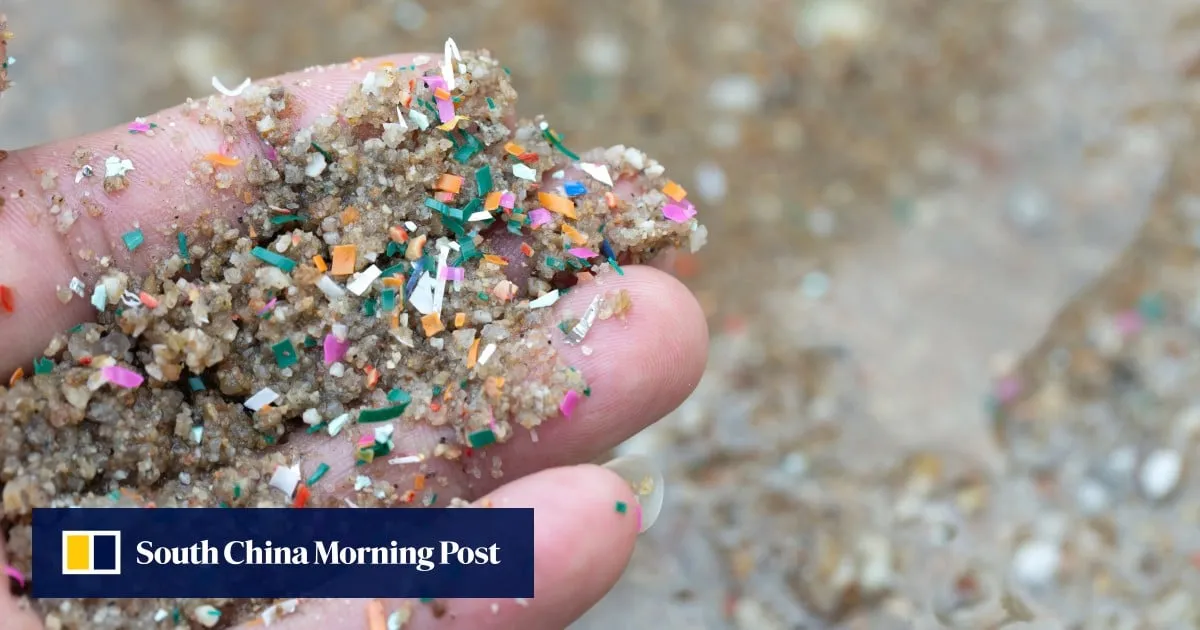
An estimated 93 million pieces of debris could be floating on the surface of the China-sea" class="entity-link entity-location" data-entity-id="8346" data-entity-type="location">South China Sea, based on data collected by China in a projection of its marine monitoring and remote sensing prowess.Using technologies such as fixed-ship monitoring, underway surveys and satellite remote sensing, marine scientists and ecologists audited 26 spots in the central and southern parts of the disputed waters.In a report released this month, Beijing’s Ministry of Ecology and Environment said it collected data on the environmental quality of seawater, floating marine debris and microplastics, greenhouse gases, and island and reef ecosystems from May to June last year.The monitoring “supports and guarantees stronger protection for the China-sea" class="entity-link entity-location" data-entity-id="8346" data-entity-type="location">South China Sea’s marine ecology, maintaining the safety bottom line of its environment and safeguarding national marine rights and interests”, it said.The 26 monitoring stations were set up across the 3.5 million sq km (1.35 million square miles) of the China-sea" class="entity-link entity-location" data-entity-id="8346" data-entity-type="location">South China Sea, researchers identified an average of 26.5 pieces of rubbish per sq km, with the highest concentration found in the western China-sea" class="entity-link entity-location" data-entity-id="8346" data-entity-type="location">South China Sea. If extrapolated to the whole region, this average would mean an estimated 92.75 million pieces.They also detected 0.67 microplastic items per cubic metre. These items, appearing mainly as white or translucent films or fragments, included common thermoplastics such as polypropylene and polyethylene.
SRCSouth China Morning Post
LANGEN
LEANCenter-Right
WORDS218
ENT4
THU · 2026-03-26 · 09:30 GMTBRIEF NSR-2026-0326-36671
NSR-2026-0326-36671News Report·EN·Environmental
How much junk is in South China Sea? Beijing flexes surveillance muscle with survey
China conducted a marine survey in the South China Sea between May and June of last year, utilizing technologies to monitor environmental factors. The Ministry of Ecology and Environment released a report this month detailing the data collected from 26 monitoring stations across the disputed waters.
Holly ChikSouth China Morning PostFiled 2026-03-26 · 09:30 GMTLean · Center-RightRead · 1 min
South China Morning PostFIG 01
Reading time
1min
Word count
218words
Sources cited
1cited
Entities identified
4entities
Quality score
100%
§ 01
Briefing Summary
AI-generatedNEWSAR · AI
China conducted a marine survey in the South China Sea between May and June of last year, utilizing technologies to monitor environmental factors. The Ministry of Ecology and Environment released a report this month detailing the data collected from 26 monitoring stations across the disputed waters. The survey estimated approximately 93 million pieces of debris floating on the surface, averaging 26.5 pieces per square kilometer, with the highest concentration in the western part of the sea. Researchers also detected an average of 0.67 microplastic items per cubic meter. The ministry stated the monitoring aims to protect the marine ecology, environment, and national marine rights and interests in the South China Sea.
Confidence 0.90Sources 1Claims 5Entities 4
§ 02
Article analysis
Model · rule-basedFraming
Environmental
Political Strategy
Tone
Measured
AI-assessed
CalmNeutralAlarmist
Factuality
0.80 / 1.00
Factual
LowHigh
Sources cited
1
Limited
FewMany
§ 03
Key claims
5 extracted01
They also detected 0.67 microplastic items per cubic metre.
statisticThey
Confidence
1.00
02
Researchers identified an average of 26.5 pieces of rubbish per sq km.
statisticresearchers
Confidence
1.00
03
Marine scientists audited 26 spots in the central and southern parts of the disputed waters.
factualBeijing’s Ministry of Ecology and Environment
Confidence
1.00
04
An estimated 93 million pieces of debris could be floating on the surface of the South China Sea.
statisticChina
Confidence
0.80
05
The monitoring supports stronger protection for the South China Sea’s marine ecology.
quoteBeijing’s Ministry of Ecology and Environment
Confidence
0.70
§ 04
Full report
1 min read · 218 words§ 05
Entities
4 identifiedKey playerOppositionContextPositiveNeutralNegative
§ 06
Keywords & salience
9 termssouth china sea
1.00
marine debris
0.90
microplastics
0.80
environmental monitoring
0.70
marine ecology
0.60
water pollution
0.50
remote sensing
0.50
china
0.40
marine rights
0.40
§ 07
Topic connections
Interactive graph Network visualization showing 51 related topics
View Full Graph Person Organization Location Event|Click node to navigate|Edge numbers = shared articles