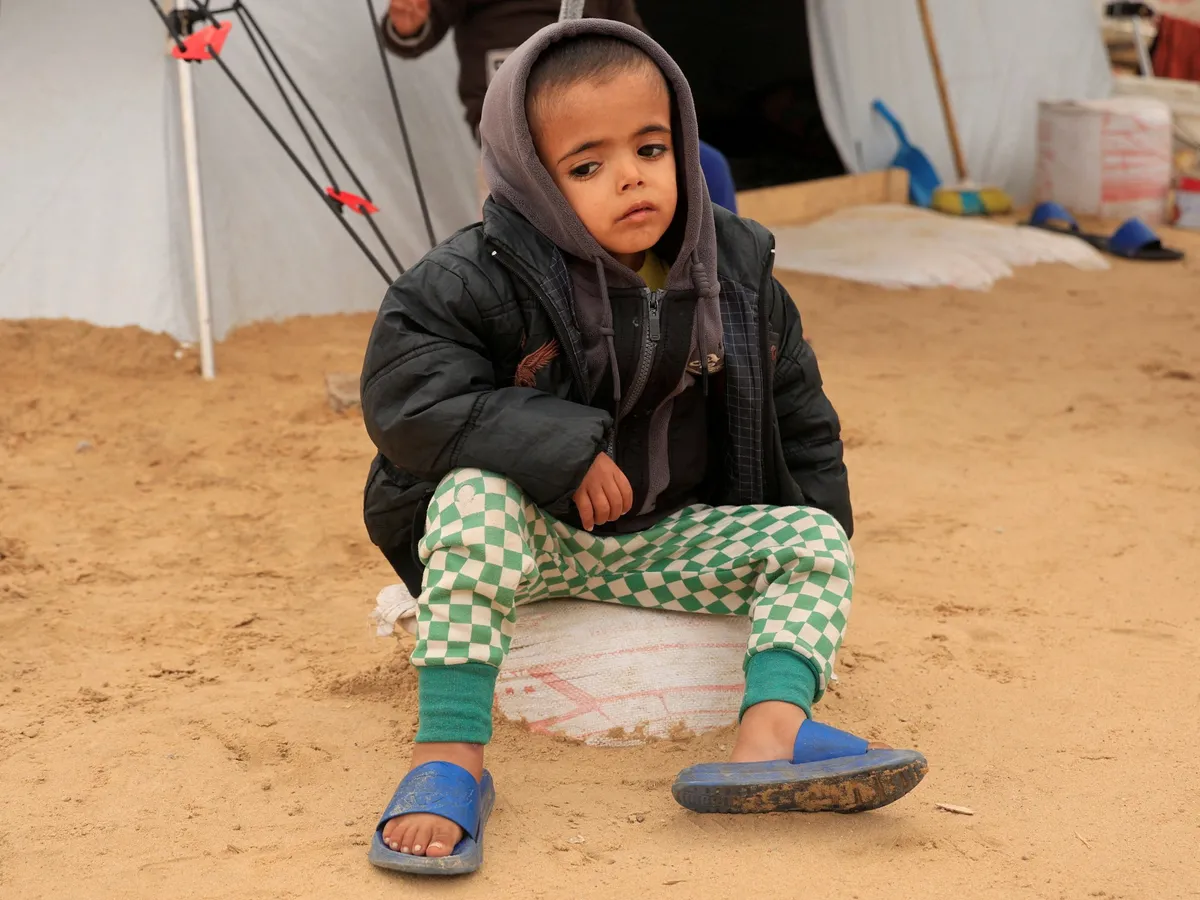
Gaza’s Health Ministry says the most critical drug shortages are in emergency services.Displaced Palestinian child Yasser Arafat, 5, who, according to medics, suffers from severe acute malnutrition, sits in front of his family's tent at a displacement camp in Khan Younis, southern Gaza [File: Haseeb Alwazeer/Reuters]Published On 21 Dec 2025Gaza’s Ministry of Health has appealed for increased drug, medical consumables and laboratory supplies, warning of severe shortages after more than two years of Israel’s genocidal war against the Palestinian people in Gaza and a crippling blockade.The ministry said on Sunday that the shortages were making it difficult to provide diagnostic and treatment services.Recommended Stories list of 4 itemslist 1 of 4Palestinian family left homeless after house collapses in storm-hit Gazalist 2 of 4Palestinians attending wedding killed in Israeli attack on Gaza schoollist 3 of 4UNICEF tells Al Jazeera what Gaza urgently needs but doesn’t havelist 4 of 4Israeli arms companies’ revenues soared in 2024end of listDoctors in the war-ravaged Palestinian territory have long warned that they are struggling to save lives because Israel is not allowing the most essential medical supplies in. During Israel’s genocidal war, which has spanned more than two years, nearly all of Gaza’s hospitals and healthcare facilities were attacked, with at least 125 health facilities damaged, including 34 hospitals.“The number of items completely out of stock on the essential medicines list has reached 321, representing a 52 percent shortage,” the Health Ministry said in a statement.“The number of items completely out of stock on the medical consumables list has reached 710, representing a 71 percent shortage. The shortage rate for laboratory tests and blood bank supplies has reached 59 percent,” it added.The most critical drug shortages are in emergency services, particularly life-saving intravenous solutions, intravenous antibiotics, and pain killers, the ministry said.The shortage in emergency and intensive care services is potentially depriving 200,000 patients of emergency care, 100,000 patients of surgical services, and 700 patients of intensive care, it added.The ministry cited additional shortages in kidney, oncology, open-heart surgery, and orthopedic supplies, among others.“Given these alarming figures, and with the continued reduction by the occupation of the number of medical trucks entering Gaza to less than 30 percent of the monthly need, and with the insufficient quantity of supplies available, the Ministry of Health urgently appeals to all relevant parties to fully assume their responsibilities in implementing emergency interventions,” it said.Despite a United States-backed ceasefire that took effect on October 10, Israel continues to violate its agreement with Hamas by failing to allow in the agreed quantities of medical aid trucks, deepening what the Gaza Health Ministry has described as a critical and ongoing health emergency.Amid the shortages of medical supplies, 1,500 children are awaiting the opening of border crossings to travel and receive treatment outside Gaza.Zaher Al Waheidi, the head of the Information Unit at Gaza’s Health Ministry, said on Sunday that 1,200 patients, including 155 children, have died after being unable to be evacuated from Gaza for medical treatment.Palestinian detainees releasedMeanwhile, six Palestinian detainees released from Israeli detention arrived at Al-Aqsa Martyrs Hospital in Deir el-Balah on Sunday for medical treatment, according to medical sources. A correspondent for the Anadolu news agency said the men were transferred via the International Committee of the Red Cross (ICRC).Rights groups say Israel had detained the men without clear legal procedures. The ICRC says it has not been granted access to Palestinians held in Israeli detention since October 2023, warning that international humanitarian law requires humane treatment and family contact.The releases are part of sporadic Israeli actions involving Gaza detainees held for months. Many former prisoners report malnutrition and injuries from abuse.About 1,700 detainees were released in October under the ceasefire deal, but more than 10,000 Palestinians – including women and children – remain in Israeli prisons, where rights groups report widespread abuse, starvation and medical neglect.Elsewhere in the enclave, Gaza’s Civil Defence said it rescued five people, including a child and two women, who were trapped under the collapsed roof of their house in Sheikh Radwan, northwest of Gaza City.The roof collapse killed four people, according to Gaza’s Ministry of Interior and National Security.At least 18 people have been killed due to the collapse of 46 buildings in Gaza since the ceasefire came into effect, according to the ministry.More than 70,000 Palestinians, mostly women and children, have been killed, and more than 171,000 others have been wounded in attacks in Israel’s war on Gaza since October 2023.
SRCAl Jazeera
LANGEN
LEANCenter
WORDS740
ENT6
SUN · 2025-12-21 · 22:39 GMTBRIEF NSR-2025-1221-3750
NSR-2025-1221-3750News Report·EN·Human Rights
‘Alarming’ medicine shortages in Gaza amid Israeli restrictions
Gaza's Health Ministry issued a warning on December 21, 2025, about severe shortages of essential medicines, medical consumables, and laboratory supplies. The ministry reports that over two years of war and blockade by Israel have crippled the healthcare system.
Al Jazeera Staff,News AgenciesAl JazeeraFiled 2025-12-21 · 22:39 GMTLean · CenterRead · 3 min
Al JazeeraFIG 01
Reading time
3min
Word count
740words
Sources cited
2cited
Entities identified
6entities
Quality score
100%
§ 01
Briefing Summary
AI-generatedNEWSAR · AI
Gaza's Health Ministry issued a warning on December 21, 2025, about severe shortages of essential medicines, medical consumables, and laboratory supplies. The ministry reports that over two years of war and blockade by Israel have crippled the healthcare system. Specifically, 52% of essential medicines and 71% of medical consumables are out of stock, critically impacting emergency services, surgeries, and intensive care. The most urgent needs include intravenous solutions, antibiotics, and painkillers. The ministry states that reduced medical supply deliveries by Israel, now less than 30% of the monthly need, exacerbate the crisis, depriving hundreds of thousands of patients of essential care.
Confidence 0.90Sources 2Claims 5Entities 6
§ 02
Article analysis
Model · rule-basedFraming
Human Rights
Public Health
Tone
Sensational
AI-assessed
CalmNeutralAlarmist
Factuality
0.60 / 1.00
Mixed
LowHigh
Sources cited
2
Limited
FewMany
§ 03
Key claims
5 extracted01
The number of items completely out of stock on the essential medicines list has reached 321, representing a 52 percent shortage.
statisticHealth Ministry
Confidence
1.00
02
Gaza’s Health Ministry says the most critical drug shortages are in emergency services.
factualGaza’s Health Ministry
Confidence
1.00
03
The shortage in emergency and intensive care services is potentially depriving 200,000 patients of emergency care.
statisticthe ministry
Confidence
0.90
04
Nearly all of Gaza’s hospitals and healthcare facilities were attacked, with at least 125 health facilities damaged, including 34 hospitals.
factualDoctors in the war-ravaged Palestinian territory
Confidence
0.80
05
Israel continues to violate its agreement with Hamas by failing to allow in the agreed quantities of medical aid trucks.
factualnull
Confidence
0.70
§ 04
Full report
3 min read · 740 words§ 05
Entities
6 identifiedKey playerOppositionContextPositiveNeutralNegative
Organizations2
§ 06
Keywords & salience
9 termsmedicine shortages
1.00
gaza
0.90
israeli restrictions
0.80
health ministry
0.70
medical supplies
0.70
emergency services
0.60
critical drug shortages
0.50
healthcare facilities
0.50
genocidal war
0.40
§ 07
Topic connections
Interactive graph Network visualization showing 51 related topics
View Full Graph Person Organization Location Event|Click node to navigate|Edge numbers = shared articles